Balkan Journalists Trained in Podcast Production and Distribution Skills

Journalists from six Western Balkan countries recently gathered online for a specialized training session on Podcast Production and Distribution led by international and regional professionals.

On July 18 and 19, over 40 journalists participated in this engaging online training, a key component of the Western Balkans Media for Change project’s learning circles.

Representing media outlets from Albania, Montenegro, North Macedonia, Serbia, Bosnia and Herzegovina and Kosovo, the journalists honed skills crucial for modern newsrooms. This training empowered them to launch their own podcasts and foster discussions on sensitive and impactful topics.

The training was led by Wojciech Oleksiak, Katz Laszlo and Zeljko Crnjakovic. Laszlo, a producer and reporter for The Europeans, weekly independent podcast focusing on the affairs over the continent, specializes in narrative podcasting, focusing on climate change and the intersection of politics and personal lives from her base in Amsterdam.

Oleksiak, a Warsaw-based producer, sound designer and reporter for The Europeans, created the English-language podcasts Stories From The Eastern West and The Final Curtain. He brought expertise in human rights issues and sound design for narrative episodes.

Crnjakovic, an internet entrepreneur and founder of Solutium, a digital audio and video production agency, is a seasoned podcast author and producer who coordinates the Inspirahub coworking centre and contributes his knowledge to the Thomson Foundation.

Day one focused on launching a podcast. Topics included podcast launchpads, recording and narration techniques, crafting engaging audio stories, and practical steps to bring podcast ideas to life. Laszlo presented narrative techniques for addressing gender-sensitive and underreported topics.

The second day covered the podcasting toolbox, guiding participants from concept to global audience. It explored different podcast formats, technical essentials for starting a podcast, tools for seamless online recording, postproduction tips and strategies for distribution and promotion.

Albina Vickovic, Director for Development and Innovation at RTV Slon, showcased their successful podcasts Tuzla Calling and Taboo Show. She shared insights on their inception, the ideas and topics they cover, and monetization possibilities.

The training highlighted the importance of careful planning in podcast production, topic and guest selection, and ensuring audience engagement. The use of the Engaged Citizens Reporting tool, developed by BIRN through the Media for All project, was emphasized as giving added value, bringing citizen voices into podcasts. The potential of podcasts as a medium for covering gender-sensitive topics and under-represented communities was also discussed.

The Western Balkans Media for Change project, funded by the UK government and implemented by the British Council in partnership with the Balkan Investigative Reporting Network, Thomson Foundation, and The International NGO Training and Research Centre (INTRAC), supports the work of media outlets and individual journalists across the Western Balkans.

Call for Applications: Reporting Digital Rights and Freedoms – Fellowship 2024

The Balkan Investigative Reporting Network (BIRN) is announcing an open call for the Digital Rights and Freedoms Journalist Fellowship 2024, designed to mentor journalists and media outlets in producing investigative stories that highlight the critical challenges of digital rights violations.

Empowering Journalism in the Digital Age

Awarded journalists will have a unique opportunity to collaborate closely with BIRN editors and our specialized digital rights team. As part of the fellowship, you will gain access to BIRN’s comprehensive monitoring database along with other valuable resources to support your investigative work. This collaboration is designed to equip you with the tools and knowledge necessary to delve deep into digital rights issues and produce impactful journalism. Ultimately, your written content, upon editors’ approval, will be showcased as a long-form investigative piece on one of the BIRN channels – including but not limited to Balkan Insight, BIRD and local BIRN websites – offering a platform for amplifying your work with the aim of informing and engaging a wide audience.

Fellowship Overview

In an era where digital rights and freedoms are under increasing threat, the need for vigilant, informed and courageous journalism has never been more crucial. From the misuse of algorithms and the spread of hate speech to breaches of privacy and unchecked surveillance, digital spaces are becoming battlegrounds for rights and freedoms. The Digital Rights and Freedoms Project Fellowship aims to equip journalists with the financial support, mentoring and training they need to navigate and report on these complex issues, fostering an informed public discourse.

What We Offer

  • Grants of 1,000 euros for individual journalists or collaborative teams, intended to support six months of research focused on in-depth storytelling related to digital rights and freedoms.
  • On-the-job mentoring from BIRN editors and our Digital Rights Support Team, plus a two-day online training session to hone your investigative skills.
  • Networking opportunities with like-minded journalists and tech researchers across the region, building a network of professionals dedicated to safeguarding digital rights.

Who Can Apply?

  • Professional journalists and tech researchers, both individuals and teams, from media outlets from Albania, Bosnia and Herzegovina, Kosovo, Montenegro, North Macedonia, Serbia and Turkey.
  • Previous participants in BIRN trainings are especially encouraged to apply.
  • We welcome cross-border team applications, to foster regional collaboration.

Application Process

To apply for the Digital Rights and Freedoms Project Fellowship, please use this Google Form to submit your application. Ensure you include:

  • A detailed proposal outlining your intended story or investigation, focusing on its relevance, originality and potential impact.
  • Your professional CV, with an emphasis on your past work in journalism or digital rights research.
  • A declaration form, affirming the authenticity of the information provided and your commitment to the project’s ethical standards.

Submission Deadline: August 6, 2024

Selection Criteria

Applications will be evaluated based on:

  • Relevance and significance of the proposed story
  • Feasibility and originality
  • Applicant’s professional qualifications and experience

A committee established by BIRN’s editorial team and an external professional will review the proposals.

Contact Us

For more information, please contact [email protected].

Join us in our mission to defend digital rights and freedoms. Apply now for the Digital Rights and Freedoms Project Fellowship 2024!

Meet the Mentors Strengthening Bosnia’s Media Landscape: Dzana Brkanic

Dzana Brkanic joined the BIRN team in May 2013. She has been a journalist since 2005, starting her career as a reporter for Radio Free Europe. Since December 2019, she has been Deputy Editor in BIRN BiH.
Dzana is also a mentor in the Western Balkans Media for Change project. Find out more about this important role in strengthening Bosnia and Herzegovina’s media landscape.

  1. What type of support do you offer media outlets?

As a mentor, I provide support in the development of capacities, skills, sustainability, innovation in creating more interesting, high-quality and gender-sensitive content, for the media that are part of the Western Balkans Media for Change. This mentorship is in line with the project`s overall aim, to support independent media and journalists. I work with the media in the selection of topics, ensuring that they are of importance to minorities, women, the elderly, people with disabilities, or youth.

In my role as mentor, I guide media outlets to use Engaged Citizens Reporting (ECR), to reach a larger and different target audience. Sometimes, I also advise how they can analyse data collected for their stories. I also share editorial suggestions with them on how to further improve their texts or articles, as well as contacts of interlocutors and other colleagues with whom I can collaborate on joint domestic projects or regional stories.

Through our monthly meetings, I discover other challenges they face and propose solutions based on similar experiences I had in my work as a journalist and editor. My support does not interfere with their editorial work. My role is advisory and focused on supporting the media in coming up with solutions, and taking a more inclusive approach, aiming to positively influence changes in our society.

  1. What does the mentorship process look like?

The process begins with the media and the mentor getting to know each other, which usually takes time. You have to understand the media outlet, the way their newsroom breathes, their needs, capacities, and capabilities and get the best out of them, providing them with experiential and best practices based on your personal experience. It is really important that the mentored newsrooms accept me as a part of their team. I am an outsider with whom they share ideas, thoughts, but also difficulties and challenges.

Monthly meetings are mandatory, but with members often showing a desire for greater development, these meetings turn into more frequent gatherings, invitations, exchanges of materials, mutual compliments, and, I can safely say, friendship.

Through being a mentor, I am also learning a lot. One of the most important lessons is to have a greater understanding of others, which I believe I now possess to a greater extent. Mentoring is also a trust, a mutual development, networking, sharing, learning to listen and helping someone in choosing and achieving goals, and then sharing in the happiness brought by the results of work.

  1. What were the biggest successes achieved through this type of mentorship?

The biggest success for me is the impact of the stories we came up with together. For example, when there is a reaction from the authorities or institutions after an irregularity has been discovered, when laws are changed after writing in the media where I was a mentor and others. Then, success is seeing the increasing confidence of the newsrooms where you are a mentor, more professional work, selection of topics and interlocutors with special empathy towards marginalized groups, and improved content. Success is seeing them search for new goals themselves, striving for them, and achieving them.

  1. What reactions have you received from the media outlets supported through this process?

The reactions of the media with whom I have collaborated so far have been really positive. Most of them have focused on the support provided by the project in their work and development, as well as financial sustainability. I am happy to see reactions that I was for them during the process – and that my advice helped and improved their ideas.

The Western Balkans Media for Change project is funded by the UK government and implemented by the British Council in partnership with the Balkan Investigative Reporting Network, Thomson Foundation and The International NGO Training and Research Centre, INTRAC.

Delve into the Balkans: Apply Now for BIRN’s Travel & Reporting Grants

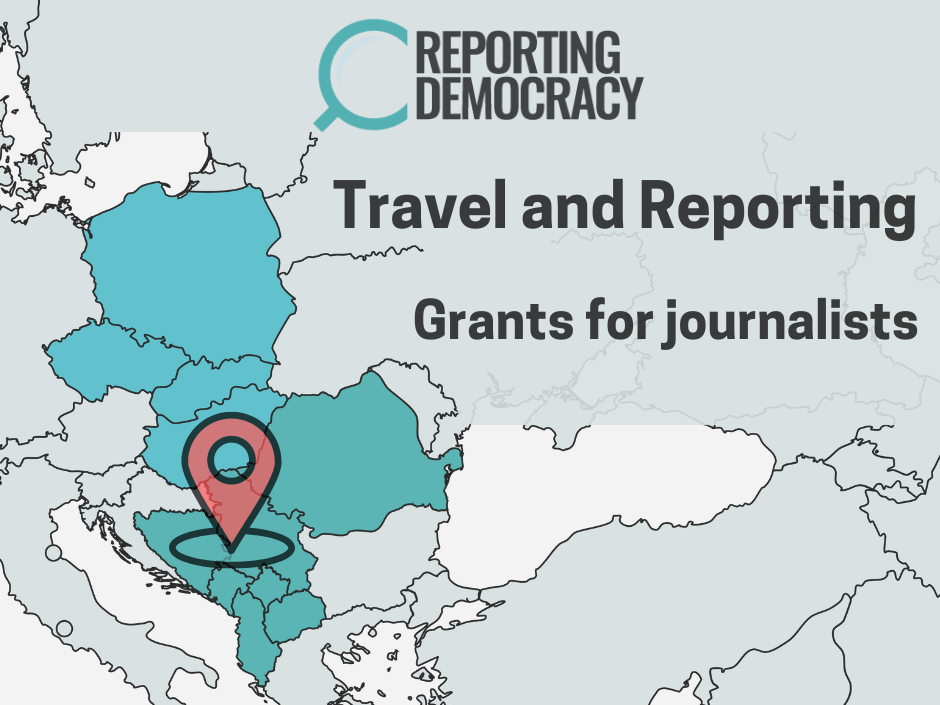
BIRN’s Reporting Democracy Travel & Reporting Programme invites journalists from the Visegrad region (Poland, Hungary, Czech Republic and Slovakia) to apply for grants covering fees and field research expenses. This unique opportunity allows journalists to delve into Balkan reporting, fostering deeper insights into this dynamic region.

In line with our commitment to nurturing journalistic collaboration and strengthening relations between the two regions, we are launching the call for applications for our Travel & Reporting Grants Programme. This exclusive opportunity provides financial assistance, regional expertise, and on-the-ground support in countries where BIRN network has offices (Albania, Bosnia and Herzegovina, Kosovo, North Macedonia, Romania, Serbia, and Montenegro).

Journalists interested in covering stories in the Balkans are encouraged to apply for this opportunity, which is designed to foster on-the-ground reporting and a deeper understanding of the region in all its complexities. Participation in the programme should result in the journalistic output being published in the local media in the applicant’s country, with the possibility of the content being republished also on BIRN’s Reporting Democracy platform and in local media in the Balkan region.

What We Support

We encourage the submission of projects for the production of relevant journalistic content. We support various forms, including analysis, investigations, features and interviews. Cross-border stories, serialized articles and multimedia content – including videos, photos, and/or radio/podcast productions – are encouraged.

Enhance your journalistic pursuits, extend your impact and contribute to a dynamic media environment. Apply now with an idea for a story that resonates across the borders.

Who Can Apply?

Journalists from Poland, Hungary, the Czech Republic and Slovakia can apply for this grant. We welcome applications from a diverse range of applicants, including:

  • Individual journalists, whether working within newsroom structures or as freelancers;
  • Collaborative teams of reporters, producers, photographers and video editors;
  • Media organizations eager to pursue international and cross-border stories.

In this grant cycle, we will award up to 10 grants to the most deserving applicants.

Grant Details

Successful applicants will receive a grant of €2,500 to undertake in-depth and impactful journalistic stories.

Important Dates:

Application Deadline: August 9, 2024

Grant Completion Deadline: February 28, 2025

Each applicant may submit only one application under this grant scheme.

Application Guidelines

To be considered for this grant, your application should include:

  • Engaging Topics: Clearly articulate the compelling topic(s) you intend to report on, showcasing their relevance for your target audience.
  • Balkan Expedition: Present your plans for visiting one or more countries within the Balkan region, supported by a tentative timeline that demonstrates your commitment to thorough research and reporting.
  • Publishing and Dissemination Plan: Outline a robust and strategic plan for sharing your journalistic output. Highlight the platforms and channels you will use to maximize the impact of your work.

Eligible Expenses

The grant covers a broad range of essential expenses, including:

  • Professional fees
  • Travel costs
  • Accommodation expenses
  • Subsistence allowances during fieldwork
  • Various production costs, such as translation services, fixers, photographers, etc.

How to Apply

Interested individuals and organizations should use the designated application form. Two types of application forms are available: one for individual journalists and teams, and another for media organizations.

Any additional documentation required can be submitted in an online format.

The Application Form must be completed in English.

Ensure all information is clear and comprehensive, as requests for clarification will only be made when the information provided is insufficient for objective assessment.

Submit your completed application to: [email protected] by 23:59 CET on August 9, 2024.

Application Forms:

Application for individual journalists and teams

Application for media organizations

For any further inquiries or assistance, please do not hesitate to contact us. We are here to support you throughout the application process.

Evaluation and Selection Process

Step I: Technical Evaluation

BIRN staff will conduct a thorough technical evaluation to ensure applicants have adhered to the application procedures and submitted all required documents.

Step II: Editorial Board Evaluation

The editorial board will then assess the applications based on the quality of the proposed idea, feasibility of the plan, and the potential to effectively reach the intended audience.

Step III: Notification of Applicants

All applicants will be promptly notified of the outcomes. Successful applicants will be notified by August 25, 2024.

We appreciate your patience during the evaluation period and assure you that we will provide timely updates about your application. We value your dedication to journalistic excellence and eagerly anticipate the opportunity to work with the selected individuals and organizations.

Telecom Companies in Albania Ranked on Freedom of Expression and Privacy – Report

In collaboration with RDR, BIRN produced a follow-up report of its initial findings about Albanian telecommunications companies after a merger.

In its latest report, BIRN analysed the practices of Vodafone Albania and ONE Albania in several key areas linked to freedom of expression and privacy.

Since early 2023, Albania has had two operators in the telecommunications market, Vodafone Albania and One Albania. One Albania was created by the merger of ALBtelecom, the historical operator of fixed phone lines, which also operated a mobile operator named Eagle, and One Telecommunications, a company founded in 1995 as Albania Mobile Communication, a state-owned mobile operator.

The merger follows a consolidating trend in the country’s telecommunication market that has continued since 2017, when Plus Communication, the fourth mobile operator in the market, decided to get out.

The market is almost evenly divided, with Vodafone having 51 per cent of active users and One Albania, 49 per cent. Financial data from 2023 were not yet available by the time of publication but data from 2022 showed that Vodafone had revenues of some 16 billion leks while One Communications’ revenues were 9.6 billion. Data from ALBtelecom has not been published.

Overall, Albanians spent 38.1 billion leks on communication services in 2022.

Research found that Vodafone Albania performs satisfactorily in terms of access to its Terms of Service (ToS) and notifying users about changes to the ToS, but room for improvement remains. Access to Vodafone Albania’s ToS is relatively good; the ToS for both prepaid and postpaid mobile services are easily accessible and presented in a clear and understandable manner. Similarly, ONE Albania provides convenient access to its ToS.

However, ONE Albania’s Privacy Policy lacks a clear description of what data the company collects and how it handles it.

Both companies’ broad statements about collaborating with authorities, without distinguishing between administrative and judicial bodies, are a matter of concern.

Vodafone’s and One Albania’s ToS lack summaries and visuals for better legibility. Vodafone notifies users of ToS changes via SMS and media but doesn’t maintain a public archive. Both companies’ ToS enforce overbroad content restrictions and lack transparency on enforcement. They don’t disclose data on content restrictions, government demands or private requests. Privacy policies are available but vague on data handling and third-party information collection.

Recommendations outlined by the report include improving transparency, archiving ToS changes, and clearer privacy policies. The research showed that both companies should consider reporting periodically on the number of cases when public authorities or private parties seek to block access to certain information and why. Companies should also explain to their customers in a more detailed way what access the authorities have to their communications and data, based on what laws, and for what purposes.

Albania has some 611,000 customers with broadband internet access. One Albania is the largest operator with some 135,000 customers, followed by Vodafone with 128,000. Other smaller operators hold 56 per cent of the market.

In 2006, Albanian telecom companies were embroiled in a scandal involving Bosnian businessman Damir Fazlic, who allegedly demanded a $1 million investment for Albania’s Democratic Party to secure a telcos contract. Fazlic and his US partners planned to offer VoIP services through ALBtelecom. In 2017 and 2020, Albanian telcos faced investigations for price manipulation and for creating an oligopoly by raising tariffs and reducing services. In 2020, the Hungarian company 4iG bought significant shares in ALBtelecom and One Telecommunications, raising concerns about market duopolisation.

Meet the People Behind BIRN: Svetoslav Todorov

Svetoslav Todorov has been Balkan Insight’s correspondent from Bulgaria since 2020.

The increase of disinformation in Bulgaria amid the Russian invasion of Ukraine and recurring ideological clashes in parliament are integral topics to Svetoslav Todorov’s work.

Svetoslav graduated in Bulgarian Philology and Visual Culture from Sofia University’s Faculty of Slavic Studies. He has experience as an art curator and speaker at events organised by the Sofia International Literature Festival, the Rhodope Documentary Film Festival and Romania’s Alternativa Sociale. Let’s find out more about his professional situation.

  1. Your original background is in arts and culture writing, and you have also covered topics related to history, education, and human rights. So, how did you become a Bulgaria correspondent for Balkan Insight?

I know some of the previous journalists who have contributed to BIRN from Sofia so I was encouraged to apply for the position. Air pollution, water shortages, gender-based violence and gambling scandals were among the first topics I worked on, right before the pandemic hit.

Being part of BIRN has been a big learning experience about the region, and although all countries have influenced each other culturally in countless ways, there’s always a new layer to explore (I’m yet to fully grasp how elections in Bosnia actually work). It’s a cliche but it’s indeed true how close these countries are geographically, yet how little we know about each other.

As I’m still writing regularly about society, arts and culture for local outlets, I’m essentially leading a double life between my work in Bulgarian and my work in English. Not sure which one is Dr Jekyll and which one is Mr Hyde.

  1. You have been working for Balkan Insight since 2020, right before the onset of the pandemic and the beginning of the anti-government protest wave in Bulgaria. Since then, there has been significant turmoil on a global level. How have these events affected the topics you cover?

It was like being thrown in cold water but finding yourself swimming. Bulgaria has been in a non-stopping rollercoaster of turmoil in the last few years, whether that’s a healthcare crisis, a breach of someone’s rights, yet another election, or a short-lived coalition. There’s a general feeling that, as a society, we’re sleepwalking into vague but scary territory and there’s little international attention given to the destructive processes here.

Following these events and finding the right words and context to explain them has brought about a different layer of understanding; you see how certain issues are even more deep-rooted than expected. But the Balkans are a fertile ground for drama, aren’t they?

  1. What was the most challenging part of your journalistic career so far?

Through my whole professional path that would be my indecipherable handwriting. During my experience as part of BIRN, translating any quote from a leading local politician automatically makes them sound more intelligent than in the original. It’s a challenge to translate the erosion of public speaking.

  1. What Balkan Insight stories did you work on that made you most proud, and why?

The Bulgarian context is hard to explain to foreign readers as, after 2021, when the election spiral here started, there’s been many new figures on the political scene and bubbling movements that come and go, or stay and transform into something bigger. Yesterday’s friends become foes and vice versa in the space of months. The far-right resurgence – with pro-Russia party Revival as a major vehicle for this – has been a particular interest of mine and a curious case for anyone who deals with how disinformation is spread around here.

Also, explaining to an English-language audience how the main Socialist party remains conservative to its core will never stop being entertaining!

Last year, I was traveling by bus to the other end of the town for a club gig and suddenly the bus was stopped at a crossroad because of a protest by locals against the erasure of green spaces by an ambitious developer. I had the eureka feeling that I’d literally stumbled upon a story. This eventually turned into a feature about that neighbourhood’s spirit and endurance. Actually, it was a success story as well, as the protest scared the developer away.

  1. Knowing what you know after years of working in journalism, what would you change regarding your journalistic beginnings?

I would be less anxious about reaching out and pitching to international outlets, collaborating with editors and writers from abroad and working on cross-border stories. Amassing experience is, surprisingly, not a linear thing, especially in the current media landscape, where we constantly have to adapt to new ways of storytelling (or resist them, in some cases). If you think about it, you should do it.

  1. What one message would you like to send to young journalists?

I recently saw a new adaptation of Shakespeare’s Macbeth by a young troupe of local actors and there was a particular line that stayed with me: “there’s daggers in men’s smiles”.

I think one of the challenges of the profession, and one which I might not have been that aware of early on, is that readers and subjects often might express support because a certain article or an opinion fits their narrative, and they might turn against you when you no longer serve this purpose. One must fight very hard for integrity in a climate that is increasingly user-orientated, algorithmic and fragmented. The bigger picture has turned into a mosaic and young journalists must also protect their vision and their sanity (usually after a decade in, quite literally) so they can pick and arrange the pieces.

So my advice would be: be aware of the daggers.

Media Innovation Europe Renewed: Eight Grant Schemes Over the Next Two Years

IPI-led initiative to support innovation and experimentation in journalism will continue to develop projects that help European organizations achieve sustainability.

The programme will:

  • Include 8-month accelerator and incubator programmes
  • Introduce opportunity to media that need to pilot and validate their business ideas
  • Provide intensive cohort and one-on-one immersive training, mentoring and hackathons
  • Include grants of up to €20,000 to news organizations

Media Innovation Europe (MIE), a multidisciplinary, multi-project programme that has funded over 50 news organizations in the past two years, is kicking off its second edition.

The programme provides business needs assessments and personalized advisory, grants, training, hackathons and mentorship to media managers journalists working in and building newsrooms that are moving ahead towards a full digital transition. The goal is to empower media outlets to navigate a changing media industry, providing tools and guidance to align their journalistic products, business structures, and means of discovery and distribution in an audience-focused and sustainable way.

MIE will continue its immersive training approach, focusing on networking-building and providing consultancies and guidance to participating newsrooms.

The first edition was launched in June 2022 to energize the European ecosystem for independent and local journalism, stimulating innovation, sustainable business models, and collaboration among media outlets.

Who is behind the programme

Led by the Vienna-based International Press Institute (IPI), the consortium brings together the Thomson Media (TM),  The Fix Foundation (TFF) and the Balkan Investigative Reporting Network (BIRN).

The programme will continue to be co-funded by the European Union.

The programme

The MIE programme includes several projects that will leverage the strengths of its partners to mobilize networks, manage granting and mentoring programs, and support media innovation. MIE is a response to the challenging environment media operate in, including growing hostility to media freedom, lack of trust in journalism as well as the disruption of media by the digital transformation and economic threats. Each partner brings a deep understanding of the needs and challenges facing European media today, alongside proven strategies to respond and invest in developing successful independent news products. .

Participants of all the programmes will be selected by independent juries.

Here is a list of the projects MIE will continue:

Project Description Run by
Transition Accelerator * 18 established news organizations

* 8-month innovation accelerator with training, advisory, coaching and solutions development

* grants of up to €20,000 each

IPI
New Media Incubator * 15 early-stage independent news organizations

* 8-month innovation incubator with training, coaching and solutions development

* grants of up to €15,000 each

IPI
Early Stage Digital Validation * 15 media companies will be selected

* Up to €5,000 grants each

* Review, design and validate digital media business plans

Thomson Media
Advanced Business Consultancies * 6 independent media organizations

* grants of up to €30,000 each

* implementing new digital products

Thomson Media
Audience Engaged Journalism Grants * 15 media outlets (two cross-border and 11 country-based)

* Promotes the development of 13 investigative stories

* Up to €5k grant per story.

Balkan Investigative Reporting Network
Journalism Innovation and Ideation Hackathons * Two, three-day focused creative media events aimed at establishing cross-border and cross-company ties in the media sector.

* Minimum of 10 projects per hackathon

The Fix Foundation
Peer-to-peer journalism mentoring * A project that will match journalists and newsrooms with mentors that will help with ideation and feedback around news products, technologies and business models IPI

Press contacts

IPI: Ryan Powell, [email protected]

Thomson Media: Davor Marko, [email protected]

The Fix Foundation: Daryna Shevchenko, [email protected]

BIRN Network: Gentiana Murati, [email protected]

Co-funded by the European Union. Views and opinions expressed are however those of the author(s) only and do not necessarily reflect those of the European Union or European Commision. Neither the European Union nor the granting authority can be held responsible for them.

Applications Open for BIRN Summer School of Investigative Reporting in Croatia

The BIRN Summer School of Investigative Reporting returns this August to the Croatian coastal village of Mlini, with a number of award-winning journalists and editors as trainers.

The 14th edition of the Summer School is taking place from August 19 to August 24 in Mlini, close to Dubrovnik in Croatia. Thirty selected journalists from Southeast, Eastern and Central Europe will take part in a week-long intensive training aimed at mastering their investigative skills.

Participants in BIRN’s flagship capacity building programme will learn from experienced and award-winning journalists and editors and other media professionals led by Blake Morrison, investigative projects editor at Reuters in New York.

Journalists will be introduced to the fundamentals of investigative reporting, including work on complex cross-border stories, data journalism and visual storytelling, as well as on how to preserve their own digital security while reporting.

Jonathan Soma, a programmer and educator specializing in making complex data accessible, who has worked with ProPublica and The New York Times, among others, will provide guidance on navigating the challenges posed by AI.

Elena Kostychenko, an independent Russian journalist and civil rights activist, winner of the European Press Prize, will share many of her experiences with School participants, including those on reporting in and on Russia.

She was a special correspondent of Novaya Gazeta for more than 15 years until the newspaper was shut down at the beginning of the invasion of Ukraine. She covers the war in Ukraine and collaborates with Russian media in exile. In 2023, Elena published a book, I love Russia: Reporting from a lost country.

Investigative journalist Maria Georgieva and her colleague Ali Fegan from the Swedish public broadcaster will be showcasing a large cross-border collaboration by a team of award-winning journalists and editors from four public television and radio broadcasters in Sweden, Norway, Denmark and Finland about “Putin’s shadow war” in the Nordic area.

The Summer School is also hosting sessions focused on visual storytelling, sustainable media industry and business models with Jakub Górnicki, reporter and co-founder of Outriders, a media publication combining art, journalism and technology.

BIRN will also showcase some of its own work at the cross-section of investigative and engagement journalism and digital rights violations monitoring. It will share its experience in covering transitional justice issues and documenting war crimes, relevant in view of reporting on the Russian invasion of Ukraine and the Israel-Palestine conflict.

Continued collaboration with The Self-Investigation foundation will provide important discussions on mental health and well-being in the newsrooms. The setting in Mlini is familiar – it will be the third Summer School in this beautiful village on the Croatian coast – and will help us to combine hard work with time for self-care. BIRN will also provide space for networking and future collaborations beyond the Summer School.

As every year, BIRN is providing 30 full scholarships for selected participants. Journalists from the following countries are eligible to apply: Albania, Bosnia and Herzegovina, Bulgaria, Croatia, Czech Republic, Georgia, Greece, Hungary, Kosovo, Montenegro, North Macedonia, Ukraine, Poland, Romania, Russia, Serbia, Slovakia, Turkey, Tajikistan and Uzbekistan. This will cover a full stipend for participation in the programme, accommodation, meals, as well as transportation expenses of up to €200.

The focus remains on journalists from the Balkans, while the list of eligible countries has expanded over the years following BIRN’s increased coverage of the wider region of Southeast and Central Europe, and also to enable further exchange of knowledge and incentivise cross-border collaboration. This year we would like to particularly encourage journalists from Ukraine to apply for the School, as we believe it is crucial to provide capacity building support to those pursuing investigative stories in the times of war.

In addition to training, editorial support and mentorship, through our Investigative Initiative Story Fund, BIRN will provide selected participants with funds to support story development and production.

Participants are requested to prepare a proposal for an investigative story and present it during the week in Croatia, to be worked on in the months following the School, either alone or in a cross-border team. On the last day of the School, a jury composed of BIRN editors and trainers will award the best pitches with editorial, financial and publication support.

Limited spots are also available for international participants who want to take part in the training and cover their own costs. They need to cover an all-inclusive fee of €1,500, covering full board at the hotel Astarea in Mlini, where the Summer School is taking place. No extra charges are requested for tuition.

Applications close on July 7, 2024.

Click here to apply!

Internet Freedom Meet in North Macedonia: Solving Challenges Requires Society’s Involvement

Educating citizens about the sharing of data on the Internet, where gender-based violence, disinformation and other harmful narratives abound, is a necessity, BIRN’s Internet Freedom Meet conference in Skopje heard.

The Internet Freedom Meet (IFM), organised by the Balkan Investigative Reporting Network (BIRN) with the support of the European Union, brought together experts from different spheres of society this year to discuss ongoing and new challenges in the online sphere.

David Geer, Head of the Delegation of the European Union in North Macedonia, said solving Internet challenges requires the involvement of the whole of society. “They are not just challenges for governments to tackle but for all of us and all relevant addresses of Internet governance, from the private sector, government, academia, technology companies, to civil society and the media,” Geer said.

Speaking about foundations, consequences and solutions for the misuse of data on the Internet, Kosovo’s Commissioner for Information and Privacy, Krenare Dermak, said the first step is to teach citizens the basics of Internet searches. He suggests we should never agree to give access to all cookies, because that means giving access to all of our information, while at the same time, the user usually does not know where that data goes and to whom.

Journalists at the Internet Freedom Meet drew attention to gender-based violence, which is common online and mostly aimed at the sexual freedom of women. They stated that thousands of men are sharing intimate content on girls and women without their permission. The victims are often minors, which is an additional motive for the involvement of prosecutors. Recently, several leaders of Telegram groups were arrested in one action.

Telegram, it was noted, is an attractive app for those who intend to break the law, participate in creating or joining extremist groups, or are part of huge disinformation networks. Anonymity, protection of exchanged messages, and the lack of cooperation from Telegram owners with local prosecutors, all contribute to the popularity of the application.

While it can be used benignly and positively, it has also caused significant damage to individuals and society as a whole, experts concluded at the conference. Strict regulation of the use of artificial intelligence (AI), expert Arvin Kamberi mentioned, may not be the best solution. However, in the long run, AI’s monopoly on knowledge could become problematic.

Participants in Skopje also discussed the need for and reasons behind the use of public surveillance cameras, which must be strictly regulated, as well as the way in which camera data is used.

Finally, panelists touched on the problem of elections and pre-election campaigns, which are increasingly challenged by misinformation and the use of artificial intelligence, AI, to undermine the integrity of institutions or political opponents.

The IFM concluded with the presentation of BIRN’s project “Reporting Digital Rights and Freedoms”, emphasizing how cooperation with independent experts and institutions can be achieved.

BIRN Contributes to First Global Index on Responsible AI

The first edition of the Global Index on Responsible AI 2024 was launched on June 13 at the closing keynote panel of the USAID Global Digital Development Forum. The forum included various hybrid events worldwide.

The Global Index on Responsible AI, GIRAI, is the first tool to set globally relevant benchmarks for responsible AI and assess them in countries around the world.

This study constitutes the largest global data collection on responsible AI to date. In its first edition, the Index represents primary data collected by researchers from 138 countries, including 41 countries from Africa, between November 1, 2021 and November 1, 2023.

During the panel, the 1st edition report and an interactive portal providing open access to all the data gathered as part of the project were made available online at global-index.ai.

Balkan Investigative Reporting Network, BIRN HUB, contributed to the Index, leading the research for Albania, Bosnia and Herzegovina, Croatia, Greece, Hungary, Kosovo, Montenegro, North Macedonia, Romania and Serbia.

“Working on the first edition of GIRAI was both a privilege and a challenge. As we delved into the data and sought relevant evidence, we observed a significant discrepancy between countries. While some nations lead in AI use and initiatives, much remains to be done regarding ethical AI development,” said Ivana Jeremic, BIRN’s Digital Rights Programme Content Lead and GIRAI Southeast Europe Research Team Leader.

“The index will become a valuable tool for tracking progress and an excellent resource for journalists and researchers. This process has been a learning experience, and I believe the next round will be even better, hopefully including more countries, given the importance of this topic,” she added.

The GIRAI is a flagship project by the Global Center on AI Governance that tracks and measures countries’ commitments and progress towards responsible AI. The tool is comprehensive and multidimensional, involving data collection and analysis from 138 countries to provide a comprehensive understanding of how nations are addressing the ethical, social, and regulatory challenges posed by AI technologies.

The Index highlights global trends and gaps in responsible AI, serving as a critical tool for policymakers, researchers, and stakeholders to understand the current landscape and drive improvements. It promotes international cooperation, encourages the adoption of human-centric AI frameworks, and fosters a sustainable and ethical future for AI.