BIRN Kosovo Concludes Series of Property Rights Workshops

Several hundred participants upped their skills and knowledge on property-related issues at BIRN-led workshops held all over the country.

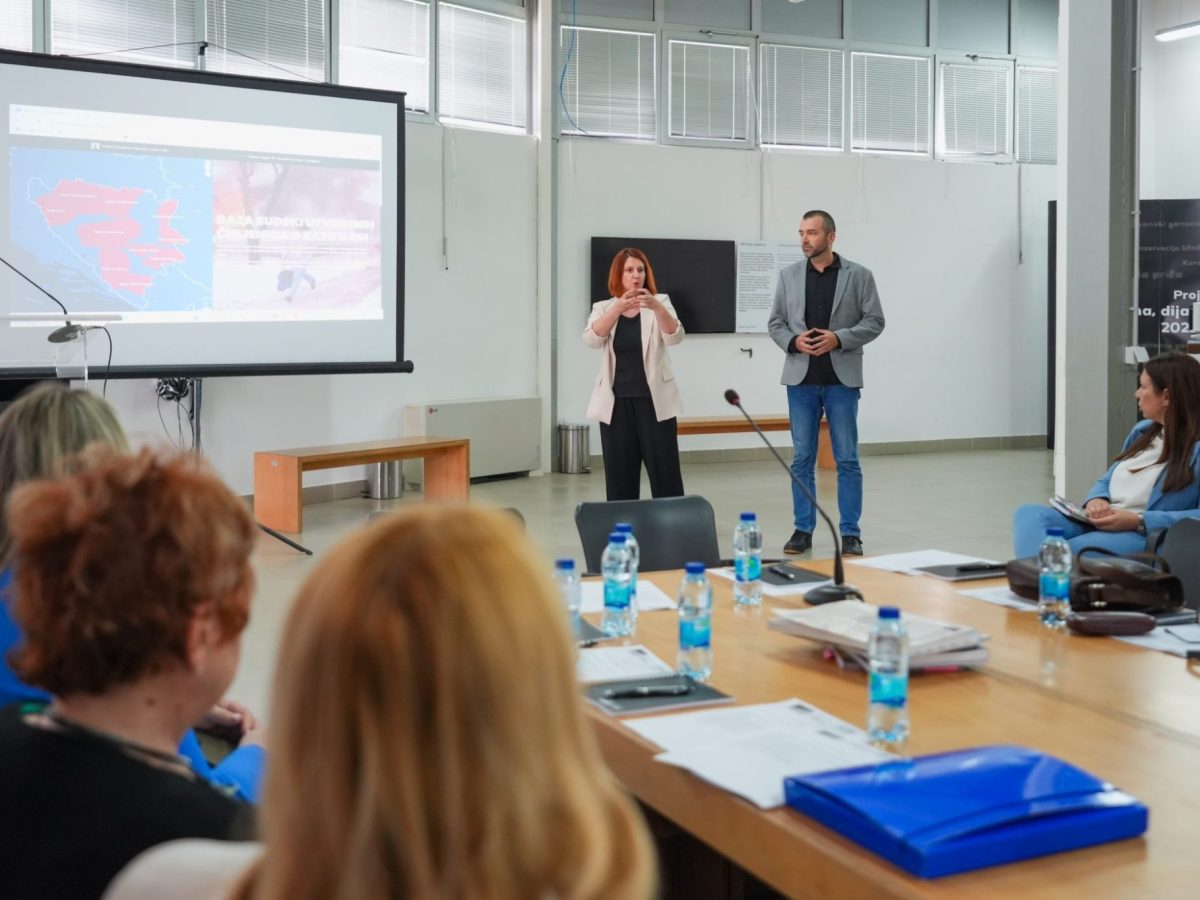
Over 100 participants took part in seven one-day workshops on property rights led by BIRN Kosovo in early June across different regions of Kosovo in cooperation with the Chamber of Private Enforcement Agents and other institutional actors.

Guided by Professor of Legal Relations Isuf Jahmurataj, attendees – including enforcement agents, notaries, cadastral officers, lawyers and mediators – shared common practices and enhanced inter-institutional cooperation in line with the legal framework and practical realities.

The goals were to improve inter-institutional cooperation between enforcement agents and other relevant institutions, such as cadastral offices, notaries, mediators, courts and municipal administrations; and to deepen knowledge of enforcement procedures and relevant legal documents, including executive titles, notarial documents, mediation agreements, property decisions, etc.

The workshops were held on June 2, 2025, in Gjakova; on June 3 in Prishtina; June 4 in Ferizaj; June 5 in Gjilan; June 9 in Peja; June 10 in Prizren; and June 12 in Mitrovica. Of the 106 participants, 43 were women and 63 were men.

This followed seven earlier one-day workshops held in May with the Chamber of Notaries and other actors under Bashkim Preteni, Professor of Notarial and Contract Law at the Faculty of Law. During these workshops, over 110 participants, including 55 women and 56 men, responded to the invitation to contribute to discussions on property issues.

At the end of April, BIRN concluded a training session with cadastral officers and one-day workshops in seven municipalities of Kosovo, bringing together municipal cadastral officers, lawyers, private enforcement agents, geodesists and notaries to discuss the role of Cadastral Offices in property issues, promote cooperation among institutions and reduce barriers.

About 150 participants took part in these workshops, held in Prishtina, Prizren, Ferizaj, Gjilan, Mitrovica, Peja, and Gjakova, led by senior legal expert and professor Haxhi Gashi.

A BRN workshop in February with cadastral officers, lawyers, enforcement agents and other actors fostered discussion among participants from various municipalities and professional backgrounds, aiming to develop communication skills across professions on property-related matters.

Participants learned more about property registration procedures, legal documents, ownership types, mortgages, long-term leases, servitudes, transparency, privacy, and inter-institutional coordination.

In parallel with this, in early February, BIRN Kosovo also launched capacity-building training sessions with municipal cadastral officers. The sessions, delivered by legal expert Xhevat Azemi and cadastral specialist Drenushë Jonuzi Kukaj, were also attended by cadastral officers from the Serbian community at a one-day training in Gračanica.

BIRN Kosovo also organised seven trainings in December 2024 on property rights with journalists, influencers, civil society organisations, etc., enhancing their knowledge of property issues, identifying challenges and improving the reporting and coverage of publicly relevant topics.

In October and November 2024, two trainings were organised with women held at the Lipjan Correctional Centre on property rights. Attendees were informed about the services of the Free Legal Aid Agency and, among other things, developed skills to address the property-related challenges faced by their families.

These activities were held as part of the “Public Information and Awareness Services for Vulnerable Communities in Kosovo (PIAKOS)” project, funded by the World Bank – State and Peacebuilding Fund.

Balkan Dispatch: Apply Now for BIRN’s Travel and Reporting Grants

BIRN’s Reporting Democracy Travel & Reporting Programme invites journalists from the Visegrad region to apply for a grant that covers professional fees and field reporting expenses. This is a unique opportunity to report from the Balkans and gain deeper insights into the region.

As part of our ongoing commitment to fostering journalistic collaboration and knowledge exchange between regions, we are pleased to launch the 2025 cycle of our Travel & Reporting Grants Programme.

This programme offers a unique chance to embark on a reporting assignment, backed by financial support, editorial guidance, and on-the-ground assistance in countries where BIRN has established offices: Albania, Bosnia and Herzegovina, Kosovo, North Macedonia, Romania, Serbia, and Montenegro.

We encourage journalists with a strong interest in the Balkans to apply and produce impactful stories for audiences in their home countries. Selected stories may also be featured on BIRN’s Reporting Democracy platform and in leading media outlets across the region.

We welcome pitches for a variety of journalistic formats, including analysis, investigative pieces, feature stories and interviews. Cross-border reporting, serialised stories and multimedia outputs such as video, photography, radio or podcast content are also strongly encouraged.

Who Can Apply?

We invite applications from journalists based in Poland, Hungary, the Czech Republic and Slovakia. Applications are welcome from:

  • Individual journalists, whether affiliated with a newsroom or working as freelancers
  • Teams that may include reporters, editors, producers, videographers or photographers
  • Media outlets with an interest in cross-border or international reporting

A maximum of ten (10) grants will be awarded during this call.

Grant Amount

Each successful applicant will receive 2,500 euros to support the production of high-quality, original journalism.

Important Dates:

Application Deadline: July 10, 2025, by 23:59 CET

Project Completion Deadline: February 2026

Each applicant may submit only one application per grant cycle.

What Should the Application Include?

To be considered, your application should include the following:

Topic Overview: A clear description of your proposed story idea and why it is relevant.

Balkan Fieldwork Plan: An outline of your planned reporting trip(s) to one or more Balkan countries, including a rough timeline.

Publishing Strategy: A distribution plan explaining where and how you intend to publish or broadcast your story.

Eligible Costs Covered by the Grant:

  • Professional fees
  • Travel and transport expenses
  • Accommodation
  • Daily allowances during fieldwork
  • Production costs (e.g., fixers, translation, photo/video services, etc.)

How to Apply

To submit your application, please complete the online application form available at this LINK. At the start of the form, you’ll be asked to choose whether you are applying as an individual journalist/team or as a media outlet — the relevant version of the form will then open automatically based on your selection.

All applications must be submitted in English.

Please ensure that your responses are clear and thorough, as we will only follow up if essential information is missing and prevents an objective evaluation.

The deadline for applications is July 10, 2025.

If you have any questions or need assistance during the application process, feel free to contact us at [email protected]. We’re here to help.

Evaluation Process

Step 1: Technical Review

BIRN staff will conduct a technical check to confirm all required documents have been submitted correctly.

Step 2: Editorial Evaluation

An editorial board will assess applications that pass the technical review based on the story idea’s originality, feasibility, and potential impact.

Step 3: Notification of Results

All applicants will be notified of the outcome. Successful applicants will be informed by August 5, 2025.

We look forward to receiving your proposals and supporting your work in producing compelling journalism that bridges regions and tells important stories across borders.

BIRN and Goethe-Institut Join Forces to Empower Public Service Media in the Western Balkans

Public service broadcasters and media professionals from across the Western Balkan in Podgorica, Montenegro, attended a two-day training designed to strengthen audience engagement and enhance cross-border collaboration in journalism.

On June 3 and 4, the Balkan Investigative Reporting Network (BIRN) and Goethe-Institute.V. organised the event “Empowering Public Service Media for Greater Citizen Engagement and Cross-Border Collaboration”. The event was also hosted by RTCG, Montenegro’s public broadcaster.

This initiative brought together media professionals from public broadcasters in Albania, Bosnia and Herzegovina, North Macedonia, Montenegro and Serbia, providing practical tools and strategies to foster stronger connections with audiences and to collaborate across borders on shared issues.

“Audience engagement is a concept we at BIRN have been implementing over the past three years. We developed a digital tool that is now successfully used by more than 50 media outlets across the Western Balkans and Visegrad countries – a tool through which award-winning stories have been produced,” Vuk Maras, BIRN Montenegro’s Director, said.

Gentiana Murati, BIRN’s Deputy Director, presented the scheme for the content production grants, which are available for public broadcasters.

The training aimed to address pressing challenges, such as declining viewership and rising mistrust, and harness new opportunities for meaningful public engagement.

“At RTCG, we believe in innovation that serves the public good, and we are proud to host initiatives like this that bring together regional partners to learn from each other and work towards stronger, more trusted journalism across the Western Balkans,” Boris Raonic, RTCG’s Director General, said.

During the training, participants explored participatory journalism methods, innovative audience formats, and successful case studies from the region and beyond.

Boris Raonic and Georgia Trismpioti

“At a time when public trust and audience engagement are more important than ever, public service media must evolve – not just to inform, but to listen, include, and co-create with their communities,” said Georgia Trismpioti, Regional Team Leader for the “Innovation. Media. Minds” Programme.

“We know the challenges – shrinking audiences, rising mistrust – but we also know that innovation and collaboration can open new doors. This training is a chance to explore tools, share experiences, and develop ideas that can travel across borders,” she added.

This event is part of the “Innovation. Media. Minds Programme: Support to Public Service Journalism in the Western Balkans”, funded by the European Union and managed by the Goethe-Institut on behalf of the European Commission and in collaboration with its implementing partner, DW Akademie.

It is also part of the EU-funded project “Strengthening Quality News and Independent Journalism in the Western Balkans and Türkiye II”, which BIRN and seven other partners implement. It aims to provide systemic support to improve quality and professionalism in journalism in the Western Balkans and Türkiye.

Meet the People Behind BIRN: Perparim Isufi

Perparim Isufi is Balkan Insight’s editor and Kosovo correspondent. He joined BIRN Kosovo in 2014, as an editor of KALLXO.com.

Before Perparim started to work as a journalist at several media outlets in Kosovo, he studied political science at the University of Prishtina. Explaining how he imagined his career when he studied, he says:

“They are not far away from each other. Studies have been done on the juncture and disjuncture between political sciences and journalism, and when I look at them, I see that both sides have their points. However, I kept my determination to stick to my passion with journalism, despite sporadic attractions elsewhere.”

Speaking of that, he worked as a Press Assistant at the OSCE Mission in Kosovo, maintaining contacts with the Kosovo media, but it was difficult for him to adjust to working with the press from that perspective.

“But it served as a good lesson for me. Before my experience with the OSCE, I often became upset with the press offices of different organisations, when my questions were not addressed properly or were ignored. I found a different reality, a complex machine, which means press officers often are unjustly criticized by journalists,” he says.

“Switching to the other side came as work for journalists started to become more and more difficult and unaffordable. I started with the OSCE exactly on the day when I turned 10 years in journalism,” he says.

And then, life had some other surprises for Perparim; he started working with BIRN.

“I knew it would be a challenge, and I was right. I came to BIRN in May 2014, and in the first six years worked as editor with BIRN Kosovo’s flagship news site Kallxo.com. Over the years, I used to contribute to Balkan Insight, so when the opportunity came to fully switch to Balkan Insight, I grabbed it with both hands. It came very naturally. I am under the same roof, I just changed the room,” he says.

In his own words, he would lie if he said his expectations had been to stay in BIRN for such a long time.

“Eleven years and counting! Since day one, working with BIRN has always been intriguing to me. Different countries, cultures, and even time zones. A different approach to the job compared to local newsrooms in our geographical area is something I would have missed if I had not experienced it in my career,” he says.

Every journalist has their favourite and least favourite topics. Living and reporting from a country with an enduring political and security crisis, Perparim’s career has been dominated by current affairs stories, be they news, analysis, features, or interviews.

“When I need a fresh restart, I happily switch to culture stories. They are refreshing to me and offer me the chance to be more creative. Yes, it is the light stories I would want to re-read, when I am no longer in this job,” he says.

As in any other profession, journalism has its ups and downs. In Perparim’s view, they are intertwined.

“Your day starts from scratch. No matter how well you did the day before, today you have a new day ahead, which demands your full availability. And as the day goes by, you feel the best part of the job is when you switch off, with concrete results from your work – until the next morning.”

Perparim also mentors young journalists on the Media Innovation Europe project that BIRN implements.

“I have a feeling that both I as mentor and the journalists I mentor cherish it. It is always exciting to get the perspective of a young journalist. It takes me back to my old self, when I was in need of a more experienced journalist, an editor, to guide me throughout the work.”

Working with different editors in the past helped him shape himself as a person, a journalist, and now as an editor. He understands well what young journalists find hard in their profession nowadays.

“So many things have changed. In our region, young local journalists face more difficulties than before because the market is no longer the same. But when I work with them, I see their eagerness to prove themselves outside their usual boundaries,” he says.

And for any young person striving to become a journalist in the region, he has a clear message.

“Be resilient! It is common in our region to feel neglected, but just try to see who wants to make you feel that way. There will always be a powerful person or government who will try to threaten or even tempt you, just to prevent you from doing the job properly. There will always be someone who does not want your article to get across. Remember that many before us had it far more difficult, and succeeded through their resilience.”

Speaking of finishing his professional career, he explains: “Did the time come to think about it? I don’t see it coming in the future, but when the day comes, I will have many things to reflect upon. As the saying goes, once a journalist, always a journalist.”

One passion will occupy his attention and time – reading.

“When that day comes, besides my family duties, I am already planning the reading list. I recently came across an expression: Tsundoku. It is about a person who buys books but piles them up and waits for another time to read them. My pile of books of all sorts is already waiting on the shelves.”

BIRN at POINT 13 Conference: Digital Security for Activists, Media, and CSOs in Western Balkans

Sarajevo conference puts focus on increasing challenges in protecting freedom of speech, privacy and security in the digital environment.

BIRN participated in the POINT 13 conference held on May 29-30, 2025, in Sarajevo, which brought together key participants from civil society, journalism, technology and activism, focusing on digital security and infrastructure for journalists, activists and civil society organisations in the Western Balkans.

On the first day, Azra Milić, Digital Rights Programme Coordinator at BIRN Hub, moderated the panel session “Digital Security and Infrastructure for Activists, Media and CSOs in the Western Balkans”. The discussion focused on the increasing challenges in protecting freedom of speech, privacy and security in the digital environment. The panelists were Nikola Ristić, activist and co-founder of OG Sviće, Andrijana Ristić, a researcher from the Share Foundation, and Michael J Oghia from the Journalism Cloud Alliance. Two of the speakers were directly targeted in smear campaigns by the Serbian tabloid Informer due to their participation in the conference.

Nikola Ristić, in addition to being targeted because of his participation at the conference, had previously been a victim of digital surveillance, including the hacking of his phone by the Serbian Intelligence Agency (BIA) and the release of footage from security cameras at Belgrade airport to the tabloids. He noted the importance of protecting privacy and data, highlighting basic measures like strong passwords and selecting the right devices.

“You need to understand the infrastructure you use. For instance, those little keys you get at POINT Conferences to secure your data and passwords – they’re simple, but important. And yes, it matters who manufactures your phone,” he said.

In the discussion about the challenges faced by civil society organisations, it was pointed out that attacks on individuals often lead to broader attacks on the organisations themselves. Andrijana Ristić, who was also target of smear campaign last week, noted that while there is a growing focus on digital security, more attention needs to be paid to data privacy, which is often overlooked.

“Right now, it feels like the focus is overwhelmingly on security — but we need to think more about protecting our privacy too,” she warned.

Another key issue raised was the importance of secure cloud services for journalists, especially those working on investigative reporting and data analysis. Michael J Oghia stressed the significance of these tools, speaking about a project launched last year at the International Journalism Conference in Perugia. The project aims to bring together members and partners from various sectors with the goal of making cloud services more secure, accessible, and sustainable, which would help reduce costs.

The POINT 13 conference served as an important platform for exchanging experiences and solutions. Speakers agreed that progress in digital security and privacy protection is essential, as well as building the infrastructure that enables secure work in the digital environment, free from the fear of attacks, censorship, or violence.

Kosovo Fellowship for Journalistic Excellence – Applications Open

BIRN Kosovo is pleased to announce the official launch of the Kosovo Fellowship for Journalistic Excellence 2025. The program is modelled on the renowned Balkan Fellowship for Journalistic Excellence, which has been supporting investigative journalism since 2007.

Funded by the European Union, the six-month fellowship offers a unique opportunity for 10 aspiring and mid-career journalists aged 18–35 to develop in-depth, high-quality investigative stories on issues of public interest.

Fellowship benefits:

  • €2,000 bursary to support the production of a long-form investigative article;
  • Professional editorial mentorship from award-winning BIRN Kosovo editors with long experience of investigative journalism;
  • Wide publication opportunities, including republication on leading BIRN platforms such as KALLXO.com or Prishtina Insight.

Topics of focus:

Fellows will investigate and write stories that explore critical issues including:

  • Corruption and public procurement
  • Public spending and transparency
  • Environment, healthcare and education
  • Human rights (minorities, women, workers, LGBTI+ community)
  • Media financing and interethnic media cooperation

Fellows will produce one original investigative article in Albanian, Serbian, or English, and select the media outlet for publication. BIRN Kosovo will ensure the article reaches a broad audience through its partner platforms – KALLXO.com or Prishtina Insight.

Who can apply?

  • Journalists with at least three years of professional experience;
  • Applicants from broadcasting, online, public and private media outlets;
  • Journalists working in Albanian, Serbian and minority languages are encouraged to apply;
  • Women and members of non-majority communities are strongly encouraged to apply. BIRN is committed to ensuring that at least 50 per cent of selected fellows are women, and at least three fellowships will be awarded to journalists from non-majority communities.

Application details:

  • Deadline: Midnight, June 16, 2025
  • Submit to: [email protected]
  • Languages: Applications may be submitted in Albanian, Serbian or English

For questions about the fellowship or the application process, please contact: [email protected] by June 8, 2025.

Application form in English

Application form in Albanian

Application form in Serbian

Sample Class on Srebrenica Genocide Held, Based on BIRN BiH’s Database of Judicially Established Facts

History professor Melisa Foric Plasto and Detektor journalist Haris Rovcanin held a class on the Srebrenica genocide based on materials from the Database of Judicially Established Facts about the war in Bosnia – with the aim of using this knowledge to avoid misinterpretations.

On May 29, the Srebrenica Memorial Centre and Balkan Investigative Reporting Network of Bosnia and Herzegovina, BIRN BiH, organised a sample class in Potocari for teachers, representatives of education ministries and pedagogical institutes and students. The class was dedicated to the case study of the genocide committed in Srebrenica.

Speaking about the history of studying the conflicts in the 1990s in Bosnia and Herzegovina, Professor Melisa Foric Plasto, from the Faculty of Philosophy at the University of Sarajevo, recalled that the first content was introduced in textbooks in 1993 and 1994, and that following the signing of the 1995 Dayton Peace Agreement, the media became active about having content about the war reviewed and parts considered potentially offensive removed.

She added that, in 2000, the Parliamentary Assembly of the Council of Europe advocated the temporary suspension of teaching about the 1992-1995 period until historians in Bosnia had established a common approach to studying this period in schools.

She explained that the Sarajevo Canton was the first to introduce the study of the War in Bosnia into the educational system in 2018. After that, it was introduced in Republika Srpska, and then also in other cantons in the Federation entity.

Analyzing the available textbooks, Foric Plasto said that there was a noticeably different interpretation of the nature of the 1992-1995 war, and a selective presentation of facts, and the qualification of the war itself varied depending on where the topic was studied.

Where students learn Bosnian and Croatian languages, textbooks state that aggression was committed in Bosnia and Herzegovina, she said, while in Republika Srpska, they state it was a civil war.

She added that in cantons with Bosniak majority, the term “genocide” is mentioned in textbooks, while this term is not mentioned in textbooks in Republika Srpska or in cantons with a Croatian majority.

“I would like to recall the role of history, especially in conflict and post-conflict societies, as it can actually help better understanding, tolerance and trust among peoples, and can be a means of supporting peace,” Foric Plasto said, after which she presented what a school class could look like and suggested performing certain activities with students aimed at teaching them about the genocide committed in Srebrenica.

BIRN BiH journalist Haris Rovcanin presented the Database of Judicially Established Facts for the region of Srebrenica, where, as he said, the facts about genocide and other crimes were established in 11 verdicts delivered by the International Criminal Tribunal for the former Yugoslavia, ICTY.

He added that the Database was not intended only for ministries of education, professors and students, but also for everyone who was interested in the topic of the War in Bosnia and the genocide committed in Srebrenica, and that the goal was to create a tool for a joint fight against denial and minimization of crimes and established facts.

“The goal was not to determine who was convicted for which individual act, but to record what trial chambers established in several cases, regardless of whether individual criminal responsibility was determined or not,” Rovcanin said, adding that the verdicts stated a huge number of crimes in the area of Srebrenica and the wider region.

BIRN BiH director Denis Dzidic recalled that this agency was founded principally to monitor all war crime trials, and that it represented a pioneering process of striving to make the knowledge, expertise, and what has been established by court judgements, more accessible to the educational system.

“We visited all education ministries in the past few months hoping that this will be accepted as a platform that would depend mostly on your work, because you are the ones who have the knowledge and can make this alive,” Dzidic told the participants, including representatives of the education ministry, pedagogical institutes and teachers.

Emir Suljagic, Director of the Srebrenica Memorial Centre, said there was nothing that had a permanent effect on reality like knowledge, adding that the goal of the sample class was to come up with a document or framework from which “students in Bihac and Gorazde will learn the same about Srebrenica”.

He said one basic problem was the fact that the dominant part of what we know about Srebrenica has emerged from court proceedings, which do not focus on the broader historical context and establishing the truth, but on witnesses and survivors recounting only what was relevant for the acts charged against the defendants in court.

This year, BIRN BiH is a strategic partner of the Srebrenica Memorial Centre in marking the 30th anniversary of the genocide.

BIRN Launches Database on Religious Communities’ Assets in North Macedonia

A new BIRN database puts a spotlight on the property portfolios of North Macedonia’s two main faith institutions.

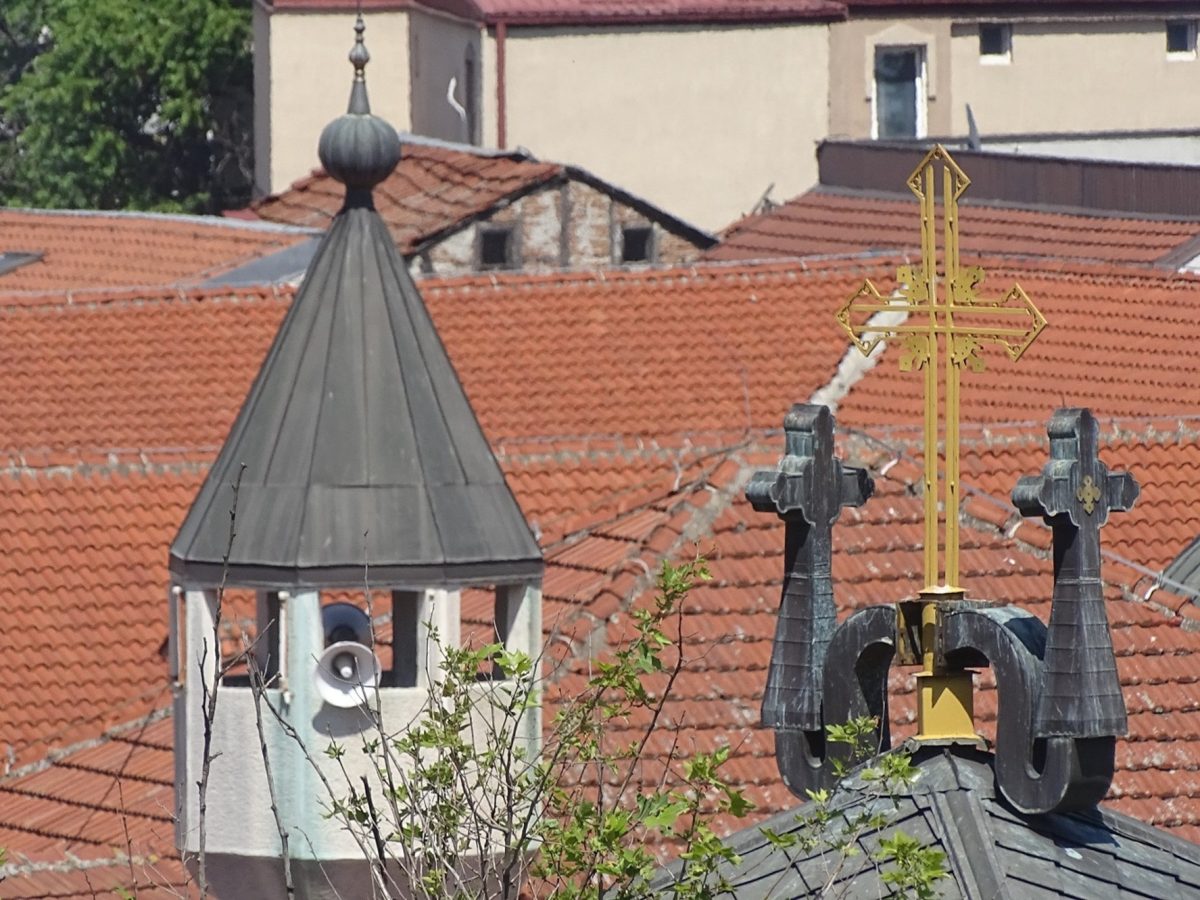
From forests and meadows to lakeside hotels and mountain slopes, the Macedonian Orthodox Church – Archdiocese of Ohrid (MPC-AO) owns roughly 100 square kilometres of property in North Macedonia, according to a new BIRN database that sheds fresh light on the Church’s assets.

In “Religious Properties Uncovered”, BIRN identified a total of 14,757 individual pieces of property in cadastral records over which the Macedonian Orthodox Church, its dioceses and individual churches owns, or has other rights to.

The Islamic Religious Community (IRC), its muftis’ offices and mosques, are listed as having ownership or other rights over 5,363 properties, covering 13 square kilometres.

The Religious Properties Uncovered database allows readers to view several parameters, such as the number and land area of ​​the properties of the two religious communities.

They can also search the properties by purpose, the municipality in which they are located, or the diocese or mufti whose jurisdiction they fall under.

Other key findings from the database:

  • MOC-AO controls about one-third of the Galicica mountain and large parts of the Macedonian side of the Jablanica mountain range. The IRC’s largest land parcel is located on the southern slopes of Vodno mountain, near the capital.
  • Over 80 per cent of the MOC-AO’s property consists of forests, meadows and pastures, covering around 8,100 hectares, while the IRC holds 3,200 hectares of forest.
  • MOC-AO owns 1,300 hectares of agricultural land, while the IRC controls 1,700 hectares.
  • MOC-AO has about 140,000 m² of residential space, and the IRC holds over 37,000 m², including new residential buildings in Skopje, Bitola, Tetovo, and other cities.
  • The Church owns commercial properties in the old bazaars of Skopje, Bitola, Ohrid and Prilep, while the IRC manages Debar’s market, a shopping complex in Gostivar, and properties in Struga, Tetovo and Bitola.
  • MOC-AO is the registered owner of the Izgrev and Biser hotels on Lake Ohrid, while the IRC owns an apartment in the Park Lakeside hotel in Ohrid.

The “Religious Property Uncovered” database was prepared over one year, is publicly accessible and aims to promote transparency and raise awareness about the scale and structure of religious institutions’ property holdings in the country.

Fellowship for Journalistic Excellence Winners Announced at Ceremony in Vienna

The winners of the Fellowship for Journalistic Excellence were announced at a ceremony in Vienna on 16 May, honouring three powerful stories that reveal pressing environmental, political, and social challenges across Europe.

First prize of €3,000 was awarded to Zuza Nazaruk, a journalist from Poland currently based in the Netherlands, for her compelling story on the escalating crisis in the Białowieża Forest. The story examines how this UNESCO World Heritage site is being transformed into a militarised zone, where environmental degradation, heightened military presence, and migration converge. Through vivid reporting, Nazaruk reveals how thousands of migrants and soldiers are clashing in a forest once celebrated for its rich biodiversity, now caught in the crossfire of geopolitical tensions.

Jury member, and a correspondent for the Austrian daily, Der Standard, Adelheid Wölfl said: “Zuza Nazaruk shows the impact of geopolitical battles on the vulnerable and abused. She sheds light on those invisible in the thicket and portrays colourfully parts of our nature: plants, animals, and humans. She not only shows how much money and effort is spent in today’s Europe on preventing migration, but also the impact this has on our ecosystem. Zuza Nazaruk proves that we need journalism that gives a voice to those we cannot hear, and simultaneously safeguards something we all need: dignity.”

The second award of €2,000 went to Greek journalists Ioanna Louloudi and Paschalina Kapetaniou for their investigation into the Greek state’s repeated failure to accept responsibility and deliver justice to victims of police brutality, accidents, and disasters. Despite existing laws that mandate state compensation, the authorities frequently appeal rulings and prolong legal proceedings, forcing citizens into years-long battles for recognition and redress. Their story highlights the frustration and mistrust that this persistent denial of accountability fosters among the public.

“It is a Kafkaesque story, which happens now, in a democracy, where paradoxically the state fights against its citizens. It is a story about a human battle for dignity and civil rights,” said the jury member and Director of the Albanian Media Institute, Remzi Lani.

The third award of €1,000 went to Zuzana Vlasata from the Czech Republic for her story about a toxic leak on a Czech river. Her report shows how a factory linked to former Prime Minister Andrej Babiš should have been a prime suspect over the incident, but evaded official scrutiny. Jury member and editor at Bellingcat, Gyula Csák, said: “Zuzana Vlasata’s powerful and engaging investigative piece demonstrates state capture and systemic failure through the story of a factory accident in the Czech Republic.”

The ceremony marked the conclusion of the 2023 edition of the Fellowship.

In addition to jury members Adelheid Wölfl, Remzi Lani and Gyula Csák, this year’s panel included Milorad Ivanović, representing the FJE alumni network; Florian Hassel, Central and Eastern Europe correspondent for the German daily Süddeutsche Zeitung; Elena Panagiotidis, editor at the Swiss daily Neue Zürcher Zeitung; and Kristof Bender, deputy chairman of the European Stability Initiative.

With the end of this year’s programme, seven fellows join the FJE alumni network – consisting of more than 150 journalists from 14 Central and Eastern European countries who promote the highest standards of professional journalism.

Launched in 2007, the Fellowship for Journalistic Excellence is now in its eighteenth year. The programme fosters professional growth, cross-border cooperation, and in-depth reporting on key issues across central, eastern and south-eastern Europe. Each year, ten fellows receive financial and editorial support to develop long-form stories on complex regional and European topics.

The Fellowship is implemented by the Balkan Investigative Reporting Network and supported by ERSTE Foundation.

BIRN Journalists Win Two Prestigious Awards For Investigative Journalism

The first prize for the Dejan Anastasijevic Award, named after the late highly respected Serbian journalist, in investigative journalism was handed to Aleksa Tesic for the series on the wiretapping of Serbian activists. The third prize was won by Sasa Dragojlo and Avi Scharf for their series on Serbia’s arms exports to Israel.

Aleksa Tesic, a BIRN Serbia journalist, received the prestigious first Dejan Anastasijevic Award for investigative journalism, which was awarded on May 8 by the Independent Journalists Association of Serbia (NUNS). 

The award was given to him for the series of articles “Silent Spying: How Serbian Intelligence Hacks Activists’ Phones – Without Them Knowing”, in which it was revealed Serbia’s Security Information Agency (BIA) used the Israeli technology Cellebrite to unlock the phones of activists it interrogated. Some phones were infected with NoviSpy, a spyware developed in Serbia. The research used the findings of a digital forensic analysis conducted by Amnesty International.

“For me, this award is an incentive to continue doing investigative journalism,” said Tesic. “This story revealed the core of espionage in Serbia, which started with the appearance of mobile phones and their mass usage in our country, from the purchase of spyware as early as 2012. 

“Today, our whole lives are on the phone. The phone knows more about us than our parents, our closest people. The police, the government, and the secret services want to discover our deepest secrets. It is one of the biggest topics currently in the digital space, it should be the focus of investigative journalists,” said Tesic. 

“We will continue to work on this topic. This is not the end, there is still a lot to say. Thank you to Amnesty International, the partners in the project, and the newsroom for their absolute support. I would also like to thank the editor, Milorad Ivanovic, who made all this possible, with whom I worked on this story. We don’t stop here, our appetites are big. Competitiveness is healthy in the journalistic world because it brings better stories.”

The jury described Tesic’s story as “terrifying and complete in equal measure”. It continued: “A society that can produce such stories and such journalists cannot be without hope for the future. Ironically, it is a story about those who try to extinguish that hope.” 

The jury consisted of BIRN founder and investigative editor Gordana Igric, investigative reporter and founder of CINS, Branko Cecen, Radio Free Europe investigative editor Mirjana Jevtovic, and reporter, editor and trainer Sasa Lekovic.

The second prize and audience award went to KRIK newsroom journalists Stevan Dojcinovic and Bojana Jovanovic for their research “Sky messages: Struggle in Novi Sad’s SNS over money and affection of Andrej Vucic“.

Balkan Insight/BIRN Serbia journalists Sasa Dragojlo and Avi Scharf were awarded the third prize for their series of articles “Regardless of War Crimes Claims, Serbia’s Arms Sales to Israel Soar.”

“I am so glad that this story was awarded, because I think it is, or should be a number one topic globally,” said Dragojlo. “The Serbian ruling regime has increased its ammunition export to Israel by 30 times, in a year marked by one of the most horrific and cynical crimes in Gaza – crimes that have been ignored or even supported by the most powerful Western countries that often label themselves as bastions of humanism. 

“I am also happy because of the collaboration with Haaretz, a media outlet that faces pressures in Israel, as well as BIRN in Serbia. We showed that there are no taboo topics for us and that professional journalism is always at the forefront of the fight for truth and justice, no matter the obstacles.”

Special awards for investigative stories about the Novi Sad train station disaster, and for local journalists

Special awards this year were awarded to Nova Ekonomija journalists Filip Rudic and Aleksandra Nenadovic, and Forbes Srbija journalist Ivan Radak. The jury considered they deserved special recognition because of the subject of their reports.

“The fascinating speed with which they mastered a very complex – but also the most important – topic in Serbia did not affect their high standards in their continuous discovery of key facts about what we were all feverishly interested in – the reconstruction of the railway station in Novi Sad and its tragic collapse,” the jury said. “In short, they showed why there can be neither democracy nor justice without free and professional media.”

As a sign of support for local journalists who work in particularly demanding conditions, NUNS awarded Juzne Vesti journalist Tamara Radovanovic for the report: “Millions for two companies in the last 4 years of the SNS government in Nis“. In its explanation, the jury pointed out that the report was used as evidence by investigators in the indictment against the recent mayor of Nis, Dragana Sotirovski.

For 20 years, the Independent Journalists Association of Serbia has been giving awards for investigations on key topics for citizens, which reveal previously unknown facts using journalistic expertise. This year, there were 51 applications, and 14 were shortlisted. Among the shortlisted were two more BIRN stories: “Changes in public transportation: Private individuals close to Zvonko Veselinovic are preparing to take over the job in Belgrade” by Jelena Zoric and Gordana Andric, and “Parallel Government: How Vucic Turned Serbia’s Constitution on its Head” by Sasa Dragojlo.