Making a Difference: How BIRN Nurtured Independent Journalism in the Balkans

Over the two decades since BIRN was founded, it has grown into a leading media NGO in the Balkan region, working across borders to produce high-quality investigative journalism but also supporting the development of independent media.

By Hamdi Firat Buyuk

When the Balkan Investigative Reporting Network was established in 2005, it was a small, struggling initiative that some believed would not succeed.

BIRN produces in-depth investigative journalism, trains and mentors journalists, and promotes media freedom, transparency and accountability across the Balkans through independent reporting and public interest projects.

BIRN also produces Balkan Insight, its flagship English-language publication, which has grown from a weekly email newsletter to an internationally respected website, and runs dozens of projects at the local, regional and international levels.

Influencing decision-makers
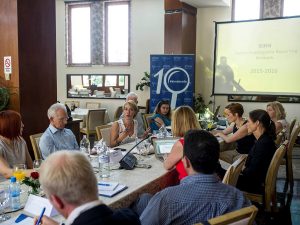
Journalists attend BIRN’s Summer School of Investigative Reporting in 2023 in Thessaloniki, Greece. Photo: BIRN.

Gordana Igric was one of the five founders of BIRN in 2005, and the organisation’s regional director until 2018. “The five people at the beginning have grown up to some 200 people across the region now,” Igric said.

BIRN country offices produce investigative reports, train local journalists, monitor courts and public spending, and support press freedom and civic accountability through workshops, data tools and legal reporting on issues such as corruption, war crimes and public procurement. They also publish their own reports in local-language websites across the Balkans: Reporter in Albania, Detektor in Bosnia and Herzegovina, Kallxo in Kosovo, Birn.me in Montenegro, Prizma in North Macedonia, Sinopsis in Romania and Birn.rs in Serbia.

Over two decades, Balkan Insight has published more than 70,000 items in English. In 2024, the website had 5.5 million views, one and a half times more than in 2023.

It has become a key source of information about developments in the region, said Nerma Jelacic, one of BIRN’s founders, who went on to become a leading global expert in transnational justice.

“I see from New York to London or when you go to elsewhere that Balkan Insight has the ear of the policy-makers and the decision-makers, and they do read what is being reported,” Jelacic said.

While providing coverage of news and current affairs in the Balkan countries, BIRN has also widened its focus to report from Czechia, Hungary, Poland and Slovakia as part of its Reporting Democracy programme, which scrutinises the issues shaping the future of democracy in Central European EU member states, including the rise of political populism and illiberal regimes.

Multiple awards
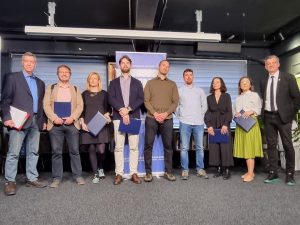
Aleksa Tesic and Sasa Dragojlo of BIRN among the recipients of the Dejan Anastasijevic Award for investigative journalism in Serbia in 2024. Photo: BIRN.

One of BIRN’s landmark programmes is the Fellowship for Journalistic Excellence, which aims to nurture high-quality journalism across a region spanning 14 countries, from Poland and the Czech Republic to Greece and Romania.

The Fellowship has been running since 2007 and more than 150 journalists from the region have so far participated in the programme winning multiple local, regional and international awards.

“We needed to train journalists, first of all, in order to have somebody to work with, honestly,” said Dragana Zarkovic Obradovic, the director of BIRN Serbia and the regional director of the Fellowship programme. The programme focuses on in-depth, long-form articles and helps participants improve their skills through mentoring by experienced international editors.

Zarkovic Obradovic said it provides “enough resources and enough time for mid-career journalists to take their careers to the next level through this quite unique experience”.

Kosovo-based journalist Serbeze Haxhiaj was selected to participate in the Fellowship in 2016.

“The topic I chose was sensitive and difficult: the protection of witnesses in war crimes trials,” said Haxhiaj.

Since then, she has won a total of 19 journalism awards for pieces published by BIRN including one about babies born to Kosovo Albanian women raped by Serbian forces during wartime in Kosovo. The story won the first prize in EU Investigative Journalism Awards in Kosovo in 2019.

Since its foundation, BIRN has won 155 local, regional and international awards for its reporting on issues like war crimes, corruption and human rights violations, including prizes for journalism awarded by the European Union, the United Nations, Reporters Without Borders and the Organisation for Security and Co-operation in Europe (OSCE).

But the organisation’s journalistic success over 20 years would not have been possible without people who work in areas like programmes, logistics and finance.

Maida Selmanovic, financial manager at BIRN Hub in Sarajevo, is one of them. Over the past 16 years, she has watched the organisation grow.

“I joined BIRN in January 2008 as a financial officer. At that time, BIRN was still a relatively young organisation, and I was excited about the opportunity to be part of a dynamic team working to make a difference through investigative journalism and media development,” Selmanovic said.

“It has been inspiring to see how BIRN has grown from a smaller regional initiative into a robust network with a wide range of activities across multiple countries.’

There were, of course, many challenges during those years.

“One of the biggest challenges has always been managing complex donor requirements, financial reporting, and compliance in an ever-changing environment. Each project comes with its own set of rules and expectations, which requires precision, flexibility, and constant coordination,” Selmanovic explained.

New challenges
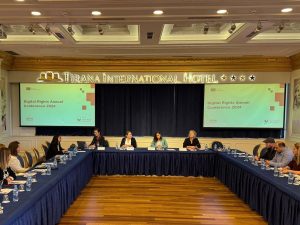
BIRN’s Digital Rights Annual Conference in Tirana in 2024. Photo: BIRN.

The media environment in the Balkans has changed significantly over the past two decades, with the rise of social media, tabloid-style TV channels and clickbait ‘news’ websites. In many countries, growing authoritarianism, right-wing populism and pressure on the media from governments have posed additional challenges, while the funding of independent media has remained a critical problem for its continued survival.

Selmanovic cites BIRN’s “ability to adapt to new challenges while maintaining a commitment to high-quality investigative journalism” as key to its success.

High-quality reporting is the focus of BIRN’s annual Summer School of Investigative Journalism, which brings journalists together with award-winning editors, top investigative reporters and data journalism experts to explore new developments and boost skills. This year’s Summer School will be held in Pristina, Kosovo.

But as well as programmes aimed at increasing journalistic capacities, BIRN maintains its focus on rights and freedoms with initiatives like its Digital Rights Programme, established in 2019 to promote and protect human rights online.

“The main motivation behind launching the Digital Rights Programme was the growing need to protect citizens and journalists’ digital rights – which are in essence human rights in the digital space – in a time when freedom of expression and access to information are increasingly shifting into the digital sphere,” said Azra Milic, BIRN’s digital rights programme coordinator.

Milic said that as technology advances, so do challenges like surveillance, censorship, disinformation and the misuse of personal data.

“BIRN recognised the importance of these issues and the need for journalists, activists and citizens to be informed and empowered to protect themselves in the digital environment,” she said.

BIRN regularly monitors digital rights violations in ten countries in south-east and central Europe, publishes a Digital Rights Violations Annual Report, prepares policy papers, trains local journalists via grants and fellowships, organises conferences and contributes to Balkan Insight’s coverage of the issues.

As an organisation that grew up in the internet era, in a highly challenging region for independent media, BIRN has come a long way since it was founded in 2005 – but even as the organisation adapts to changing times, its focus on human rights and democratic values remains constant.


BIRN Report Reveals Ongoing Challenges for Freedom of Information in Balkans

New report says legal safeguards regarding FoI have not translated into action in the six WB countries – where journalists continue to face stonewalling and harassment in their work.

The legal framework guaranteeing freedom of information in the six Western Balkan countries remains strong on paper but its practical enforcement continues to fall short amid “administrative silence”, bureaucratic hurdles and political resistance, a new report by the Balkan Investigative Reporting Network, BIRN, has revealed.

Launched on Monday, the report is based on BIRN journalists’ work during 2024 and provides a comprehensive analysis of Freedom of Information, FOI, practices across Albania, Bosnia and Herzegovina, Kosovo, Montenegro, North Macedonia and Serbia.

BIRN journalists filed a total of 1,015 FOI requests across the region last year. While there were some improvements compared to previous years, the report found that transparency remains elusive.

“Compared to previous reports, some improvement was detected when it came to public institutions’ responses to BIRN journalists’ FOI requests,” the report noted, pointing to a quantitative increase in responses.

The rate of full responses rose modestly to 55.86 per cent, while the share of unanswered requests — so-called “administrative silence” — dropped significantly from 56.7 per cent in 2022 to 23.35 per cent in 2024.

However, nearly half of all requests still ended in rejection, partial responses or silence, a tactic that remains widespread to avoid accountability. The problem was particularly acute in Bosnia and Herzegovina and Kosovo.

Over the years, BIRN’s reports have documented a consistent pattern of FOI requests being neither formally rejected nor answered, with authorities resorting to silence, delays, irrelevant responses or complex bureaucratic obstacles. These practices effectively deny journalists access to public information.

“BIRN journalists reported frequent institutional obstruction, such as excessive bureaucratic requirements, procedural delays and deliberate misdirection. These barriers, combined with weak appeal mechanisms in some countries – notably Serbia – often render legal guarantees meaningless in practice,” the report explains.

The report also highlighted increasing hostility toward journalists, including legal intimidation through strategic lawsuits against public participation (SLAPPs) and institutional non-cooperation, especially when journalists investigate sensitive topics such as corruption, environmental damage and AI surveillance.

Political will for genuine transparency remains limited across the region. Even when reforms are introduced, they often fail to produce swift results. The report cited examples such as Bosnia’s Brčko District, North Macedonia and Serbia, where legal reforms were initiated in 2024 but have yet to demonstrate tangible improvements.

Montenegro has yet to complete reforms launched four years ago.

Oversight bodies meant to enforce FOI laws are frequently underfunded, understaffed and lack true political independence. This means public institutions that refuse to comply with the law often face no real consequences.

“Across the region, public institutions continue to exploit broad legal exemptions, often citing data secrecy, confidentiality clauses or ongoing investigations to withhold information, even in cases of high public interest,” the report highlighted. “This trend is exacerbated by the uneven enforcement of FOI laws, with oversight bodies frequently under-resourced and lacking effective sanctioning mechanisms.”

Recommendations

The report called on governments to promote transparency by:

  • Proactively publishing information and engaging with the media
  • Reforming legal frameworks in a transparent way
  • Digitising and centralising FOI processes
  • Protecting journalists from retaliation, including banning and penalising SLAPPs and other forms of intimidation

Independent FOI institutions were urged to strengthen enforcement by advocating for tougher laws, holding institutions accountable, prioritising journalists’ complaints and investing in staff capacity-building.

The report also encouraged journalists and media associations to pursue strategic litigation and to document and publicise obstruction by producing reports or databases tracking public institutions’ responses to FOI requests. Investing in legal teams and training was also advised to better protect journalists’ rights.

The findings were unveiled at a launch event that gathered journalists, the report authors, institutional representatives, donors and civil society experts committed to advancing democratic accountability in the Western Balkans.

The launch featured:

– A five-year retrospective on FOI developments in the region
– Presentation of key findings from the 2024 FOI report
– Country-level reflections shared by BIRN journalists
– A panel discussion with institutional representatives on improving FOI practices

Institutional panelists included:

  • Slavoljupka Pavlović, Representative of the Commissioner for Information of Public Importance and Personal Data Protection, Serbia
  • Plamenka Bojcheva, Director, Agency for the Protection of the Right to Free Access to Public Information, North Macedonia
  • Krenare Sogojeva Dërmaku, Commissioner, Information and Privacy Agency, Kosovo
  • Biljana Božić, Head of Department, Agency for Personal Data Protection and Free Access to Information, Montenegro
  • Edin Ibrahimefendić, Legal Advisor, Institution of Human Rights Ombudsman of Bosnia and Herzegovina

Despite slow progress, the report concludes that sustained pressure from journalists, civil society, and independent institutions is crucial for ensuring that freedom of information becomes a genuine right rather than an empty promise across the Western Balkans.

The event was supported by the Austrian Development Agency-funded project “Paper Trail for Better Governance IV.”

You can read the full report here.

‘Our Countries Needed Us’: How Five Balkan Women Built BIRN

Back in 2005, five women from countries recovering from brutal wars defied the odds to establish what would become a major independent media organisation – Balkan Investigative Reporting Network. Marking the 20th anniversary, this is their story.

By Hamdi Firat Buyuk

In 2005, Gordana Igric, Nerma Jelacic, Ana Petruseva, Dragana Solomon and Jeta Xharra were sitting in Solomon’s kitchen in Belgrade, discussing what to call their new independent media project. They settled on the Balkan Investigative Reporting Network – BIRN for short – as the name for the organisation which this week celebrates its 20th anniversary.

“We chose to be watchdogs, not lapdogs,” Solomon says.

“Our countries needed us,” adds Igric, the founding regional director of BIRN.

Igric was a well-respected journalist at the time and was the Balkan project manager at IWPR, from 1999 until August 2005, during which time the organisations Balkan reporting won numerous press awards.

“Our purpose was to produce investigative reporting. The only way was to fund raise to produce that, to cover all these issues, like corruption, [war] crimes and all those problems that were bothering us in our countries. We did not want to be interfered with and controlled by governments,” Igric says.

Continuing the legacy of wartime reporting

Ana Petruseva (centre) and Gordana Igric (first on the right) at a meeting in Skopje in 2016, just after BIRN’s 10th anniversary. Photo: BIRN

When BIRN’s founders decided to establish their media NGO, many believed that the idea would fail because they assumed that the Balkans would enter a period of democratic stability after the fall of Slobodan Milosevic’s authoritarian nationalist regime in Serbia, which had been involved in much of the warmongering in the 1990s.

“At the time, many people internationally thought, ‘Oh, this is all over. Milosevic fell. There is going to be peace, unity, brotherhood and democracy and Balkan countries will join the EU in a short time.’ However, I knew, coming from here, it was far from [resolved] and we can see that now,” Igric says.

Nerma Jelacic, who came from Bosnia and ended up in the UK as a refugee fleeing the war, worked for The Observer, the Daily Telegraph, the Financial Times and IWPR before joining up with the other BIRN founders.

Jelacic was also told that setting up a new NGO, especially a regional one operating across borders in the Balkans, was impractical and unlikely to succeed.

“I remember speaking to both and international partners in Bosnia and across the Balkans. They asked us: ‘Are you crazy?’” Jelacic recalls.

The pessimists were proved wrong, however. Twenty years later, BIRN has become a major independent network with its headquarters in Bosnia and Herzegovina as well as country organisations in Albania, Bosnia, Kosovo, Montenegro, North Macedonia, Romania and Serbia. The organisation has also won 155 local, regional and regional press freedom awards.

Jelacic describes this achievement as “beyond success”.

“The fact that the network has been established and still exists two decades later, is crucially important,” she says. “Beyond doubt, it also served as an inspiration for similar efforts to be set up, not only in the Balkans, but also in other conflict areas.”

Balkan Insight, BIRN’s flagship English-language publication, was first published in September 2005 as an emailed newsletter. Its first story focused on the perpetrators of a war crime in Kosovo. Since then it has continued to cover the consequences of the 1990s conflicts, even as many war crimes were ignored by other domestic media across the region and denied by nationalist politicians.

‘We needed non-nationalist media’

One of the first ‘Jeta ne Kosove’ TV programmes made by BIRN Kosovo in 2005. Photo: BIRN.

Jeta Xharra, from Kosovo, was the only Albanian speaker among BIRN’s fine founders. She has worked for the BBC during the war in her home country and then afterwards, as a young journalist and graduate student, for IWPR in London.

After finishing her master’s studies in the UK, Xharra intended to go back to Kosovo, where she believed she could make a difference to its war-ravaged society.

“The countries [in the Balkans] were so fragile, hurt and traumatised that balanced reporting was essential to make peace work in the Balkans. It was a time when we needed to make our countries functional, as the ethnic wars were still casting a shadow over the post-war period,” she says.

“Nationalism would have prevailed if we did not have balanced, non-nationalist media.”

Xharra said she joined BIRN for its non-nationalist and pluralist approach – a contrast to most of the media organisations in the Balkan region.

“I felt this was a team that treated me unlike any way Albanians had been treated in former Yugoslavia,” she says.

“Now, you have to understand, historically and traditionally, this matters a lot, because culturally, Albanians were treated like second-class citizens in former Yugoslavia. Yes, and this team treated me as an equal. It was quite important.”

Ana Petruseva, the director of BIRN’s North Macedonia office and the managing editor of Balkan Insight until 2016, also recalled the days they started BIRN and Balkan Insight.

Before joining BIRN, Petruseva was the Macedonia country director for IWPR. She previously worked as a journalist for a variety of media outlets in North Macedonia and internationally, including Reuters, Deutsche Welle, Telma TV and daily newspaper Dnevnik.

Petruseva was first in contact with Igric in 2001 while she was reporting on the Ohrid Framework Agreement that ended the brief conflict between the Macedonian security forces and ethnic Albanian insurgents.

However, as they were working for online media, which was newly emerging at the time, they only met in person in 2004. Petruseva’s online involvement led her to the helm of Balkan Insight, which she says she wanted to be seen as an “ethical and responsible” publication as well as “a very reputable source of information”.

“I’m really proud of what Balkan Insight has become,” she added.

From the original five, only Petruseva and Xharra are still with BIRN: Petruseva is head of BIRN Macedonia and Xharra is head of BIRN Kosovo.

Igric retired in 2018, while Solomon and Jelacic have enjoyed successful careers at an international since leaving BIRN.

Jelacic is now a leading global expert in justice in post-war countries, a topic that BIRN has covered extensively.

“And that was kind of also a natural progression because the Bosnian BIRN was focusing very much on transitional justice and accountability issues,” she says.

She is now director for management and external relations at the Commission for International Justice and Accountability, CIJA, a non-governmental organisation dedicated to collecting evidence up to a criminal law standard in order to further criminal justice efforts to end impunity, domestically or internationally.

Before this, she was running communications and outreach programmes for the International Criminal Tribunal for the Former Yugoslavia in The Hague.

Like Jelacic, Solomon worked for international organisations after leaving BIRN. She was on the staff of the OSCE’s missions in Serbia, Kosovo and Ukraine, and now works for the British government.

‘Completely fresh and new’

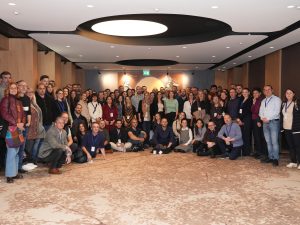
BIRN staff at a regional meeting in 2022 in Tirana. Photo: BIRN.

According to Igric, BIRN’s main purpose was to bring international journalism standards to the Balkans at a point when domestic media outlets were poorly funded and were not doing in-depth investigative reporting, or even properly editing what they were publishing.

“Many media outlets just took whatever journalists would write and published it without checking, without structure, without proper sourcing of the stories,” she says. This situation was an inspiration for one of BIRN’s first training programmes, the Fellowship for Journalistic Excellence, which develops the skills needed for solid investigative reporting.

It was in this environment that the fledgling BIRN started to build a reputation for “fantastic, revealing investigative stories”, recalls Igric – an initiative that was “completely fresh and new for the Balkans”.

The second instalment of this series on July 1 looks at the development of BIRN from 2005 to the present day.

BIRN Bosnia Signs Collaboration Deal with University in Sarajevo

The Balkan Investigative Reporting Network of Bosnia and Herzegovina, BIRN BiH, has signed a deal with the International University of Sarajevo with the aim of mutually enhancing activities and information exchange.

Improving knowledge in the field of law and exchanging specialist and scientific information are some of the goals in a new collaboration between BIRN and the International University of Sarajevo.

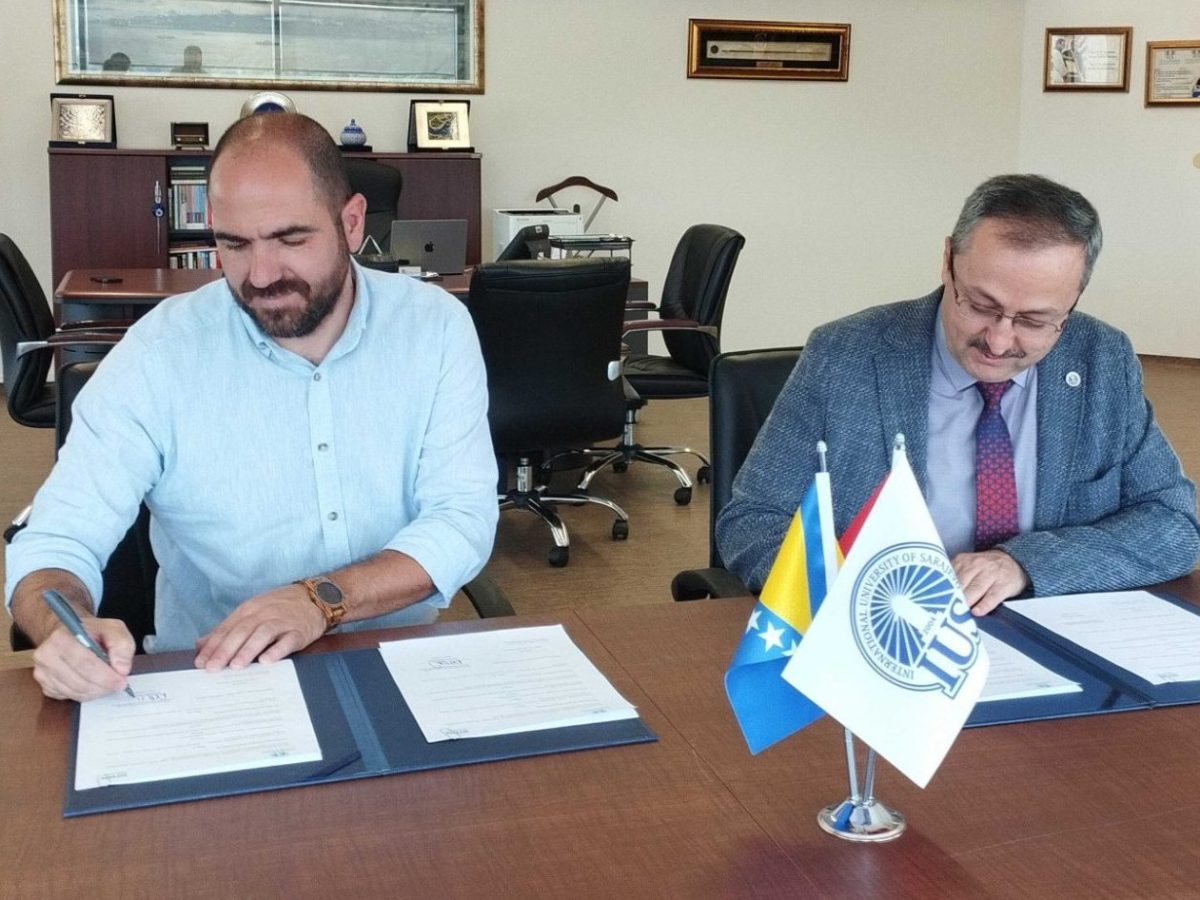
The deal, signed by IUS rector Ahmet Yıldırım and BIRN BiH director Denis Dzidic, aims to improve science, practice, and education in the field of law, implement new projects and increase the  exchange of experiences between the two organisations. 

IUS assistant professor Mirza Ljubovic said the deal originated from a desire for increased collaboration within the NGO sector among institutions that promote media values, develop a culture of research and expertise in media law. This was why BIRN BiH was chosen as  a partner.   

Ljubovic said that, through this collaboration, joint lectures, conferences, and other activities offering students practical experiences outside the classroom would be set up. 

“We want to offer students this practical experience too, because of very important projects and lectures, which will be significant for the public, too – on transitional justice, restorative justice, and development of a culture of remembrance,” Ljubovic said. 

Dzidic said BIRN BiH was happy to build as many partnerships with academic institutions as possible in order to ensure synergy between the academic community and researchers, alongside investigative journalism and BIRN’s experiences, especially in the areas of transitional justice and the rule of law. 

“This is the best way for our materials to be used for educational purposes and for assisting in building a better society long-term,” Dzidic said. 

Previously, BIRN BiH signed several memoranda in different cantons, enabling teachers and professors to use an interactive platform when implementing programme content in history teaching.

BIRN Bosnia Helps Mark 30th Anniversary of Srebrenica

Documentaries, a summer school and a memorial room are part of a collaboration between BIRN and the Srebrenica Memorial Center to mark the anniversary in 2025.

This year the Balkan Investigative Reporting Network of Bosnia and Herzegovina (BIRN BiH) will be a strategic partner of the Srebrenica Memorial Center in order to mark the 30th anniversary of the genocide.

This year the Balkan Investigative Reporting Network of Bosnia and Herzegovina (BIRN BiH) will be a strategic partner of the Srebrenica Memorial Center in order to mark the 30th anniversary of the genocide.

The centre will screen three documentaries, hold a summer school, run sample classes and open a memorial room based on a long running project, entitled ‘The Lives Behind the Fields of Death’, alongside other activities.

BIRN BiH has cooperated with the Srebrenica Memorial Center previously. The largest project has been “The Lives behind the Fields of Death”, which began in October 2020, when 100 testimonies of surviving genocide witnesses were filmed. They are now part of a permanent exhibition alongside items the survivors donated for preservation in the memorial room set up in the Memorial Center in February 2022. Following a series of positive reactions, the project continued by filming another 100 oral histories.

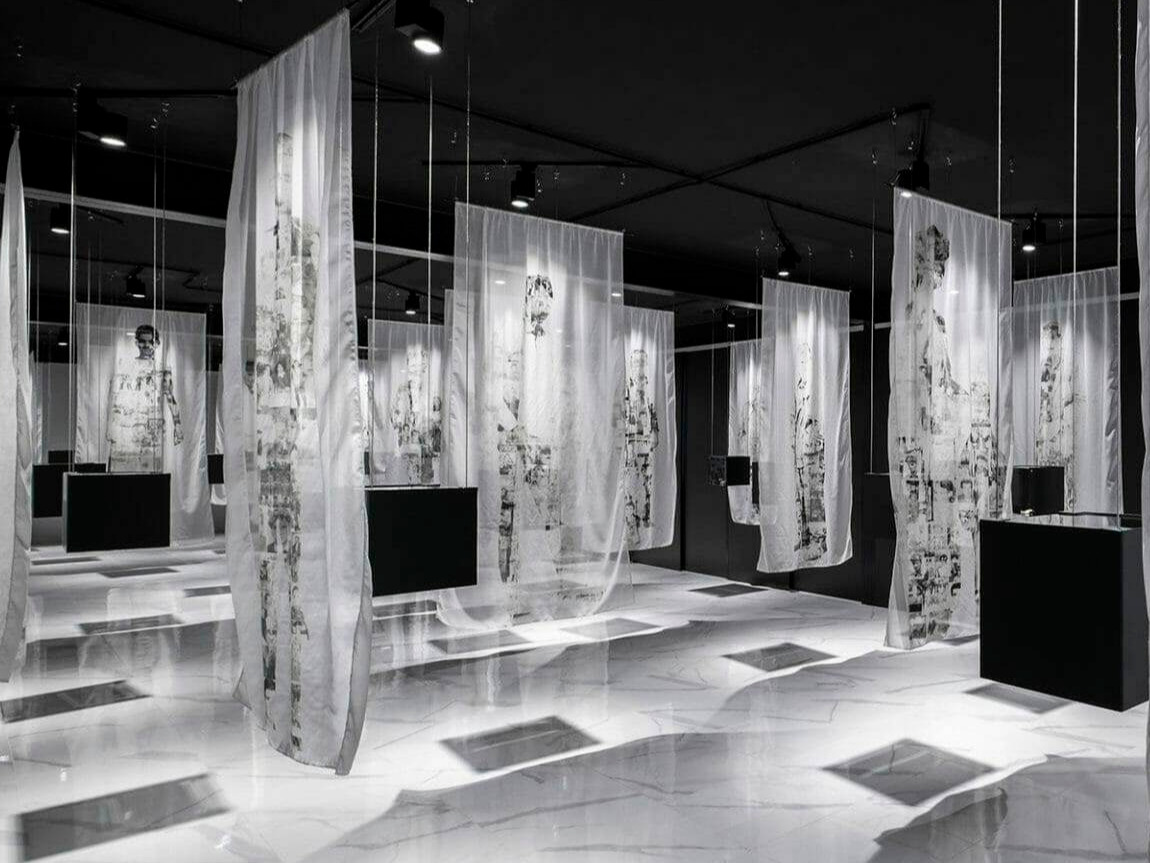
Earlier this month the Memorial Center and BIRN BiH opened an exhibition titled “From Words to Violence: The Lives Behind the Felds of Death” at the United Nations Headquarters in New York to mark the International Day of Reflection and Commemoration of the 1995 Genocide in Srebrenica. The exhibition consists of 12 displays from the material previously recorded by BIRN BiH and the Memorial Center, alongside around 200 more testimonies during an oral history project.

The memorial room previously placed in the administrative building will be relocated to a separate exhibition space in a former battery factory, where visitors will have the opportunity to listen to 100 short interviews with genocide survivors, in addition to visiting a small cinema space and see artifacts donated or found in mass graves.

The space will be multimedia-equipped, and BIRN BiH’s documentary “Samir Mehic Bowie – Letters from Srebrenica” will also be exhibited there.

The film follows written conversations between members of a rock’n’roll band from Srebrenica, whom the war separated in the spring of 1992. Drummer Faruk left Srebrenica, while guitarist Samir stayed in the town. Through their letters, they dreamt of reuniting until July 1995. As part of the 30th anniversary, the documentary was screened in Zagreb, Tuzla, Mostar, and Visoko.

“Visitors to the memorial room in Potocari contact us every day with positive experiences, and we are really proud and satisfied that this exhibition will become a permanent exhibition at the Memorial Center. But also that we have managed to tell the stories of survivors in a way that we have managed to preserve their voices,” Dzidic said.

Emir Suljagic, director of the Srebrenica Memorial Center, pointed out the importance of this collaboration, especially given the sensitivity and complexity of reporting on genocide.

“This year, on the 30th anniversary, our message is that the story of Srebrenica will be told by survivors from Srebrenica. This is our story. That is why it is important for us to have partners who are proven friends, and who have the respect and trust of our community, and these are certainly the journalists and editors of BIRN BiH, who have a proven sensibility for such topics,” Suljagic said.

BIRN BiH’s documentary “Pravda i правда” [Justice and Truth] which deals with peace and transitional justice, as well as experiences of Bosnia and Herzegovina and war-torn Ukraine, will be screened at the SrebrenicaDocs Festival on June 25.

The third film by BIRN BiH to be screened in Srebrenica and Sarajevo is an animated documentary titled “Fahrudin”. The story of Fahrudin Muminovic, a boy who survived a massacre in Orahovac, is one of the most devastating testimonies of the brutality of the genocide and the power of human survival. Fahrudin was only seven when he and his father were taken to be shot together with other men and boys from their community. His father did not survive, while Fahrudin, who was hit with bullets and covered with bodies of the dead, stayed alive.

The films “Fahrudin” and “Samir Mehic Bowie – Letters from Srebrenica” will be screened for participants in the Memorial Center’s summer school in Srebrenica.

As a contribution by BIRN BiH to the commemoration of the 30th anniversary of the genocide, sample classes on the Srebrenica genocide were held in Tuzla and Srebrenica using materials available in the Database of Judicially Established Facts about the War in Bosnia and Herzegovina.

Detektor will report on these and other activities of the Memorial Center, and during the commemoration in Potocari on July 11.

BIRN Summer School of Investigative Reporting: Applications Open

BIRN Summer School brings top investigative journalists to Pristina this August.

This August, Pristina becomes the epicentre of investigative journalism as the 15th BIRN Summer School of Investigative Reporting takes place between August 25 to 30, 2025.

Over the course of six days, 30 journalists will dive deep into the art of investigative reporting, guided by some of the most acclaimed editors and award-winning journalists.

Whether you’re chasing your next big story or aiming to take your reporting to the next level, this is where promising investigative journalists connect with leading professionals in the field. 

Pristina awaits. Are you ready to learn more about investigative journalism?

Journalists will sharpen their investigative skills under the guidance of award-winning editors, data experts, and seasoned reporters. The lead trainer for the week is Blake Morrison, Investigative Projects Editor at Reuters in New York, whose Pulitzer-nominated stories have driven policy changes and criminal convictions. From shaping story ideas to structuring impactful narratives, Blake will work closely with participants throughout the programme.

Investigative techniques using data will be a strong component of the curriculum. Jonathan Soma, Professor of Data Journalism at Columbia University and director of its Data Journalism and Lede Programs, will teach advanced methods for analysing and visualising data, and explore how artificial intelligence is transforming the way we investigate complex stories.

Participants will also look at how to access and investigate public records, particularly in the areas of environmental and climate reporting. Alexenia Dimitrova, an ICIJ member, Pulitzer-winning journalist, and author of five acclaimed books, will share her open-source intelligence (OSINT) expertise and demonstrate how public documents and datasets can be turned into compelling investigations.

Further developing OSINT skills, Reade Levinson of Reuters will lead practical exercises in geolocation and satellite image analysis, helping participants verify information and uncover wrongdoing with digital tools used in leading international newsrooms.

Pristina, a city full of energy, culture, and contrasts, offers the perfect setting to strike that vital balance between intense investigative work and self-care. From lively cafés and historic streets to vibrant debates in the classroom, the city invites you to both dig deep and breathe out.

Recognising that powerful journalism depends on journalists’ well-being, the Summer School will also include sessions on mental health, resilience, and communication. In partnership with The Self-Investigation foundation, Emma Thomasson, a journalist and certified coach, will lead training on managing conflict, stress, and burnout — equipping participants with strategies to sustain their careers in a high-pressure profession.

Set in the heart of Kosovo, the Summer School offers not only high-calibre training but also a meaningful connection to the region’s post-conflict context. Leading the local dimension of the programme is Jeta Xharra, Director of BIRN Kosovo and one of the region’s most prominent investigative journalists. Drawing on her work in transitional justice and her role as anchor of Life in Kosovo, Jeta will guide participants through the ethical and practical challenges of uncovering hidden truths in transitional societies. Participants will also visit The Reporting House and Kallxo.com, gaining first-hand insight into one of Southeast Europe’s most active anti-corruption platforms.

Beyond the workshops and lectures, BIRN will also provide dedicated space for networking, collaboration, and community building, because some of the best stories start with a shared coffee or a cross-border connection made in moments between the hard work.

In Pristina, you won’t just grow as a journalist — you’ll connect with a community that shares your passion!

As every year, BIRN is providing 30 full scholarships for selected participants. Journalists from the following countries are eligible to apply: Albania, Bosnia and Herzegovina, Bulgaria, Croatia, Czech Republic, Georgia, Greece, Hungary, Kosovo, Montenegro, North Macedonia, Ukraine, Poland, Romania, Russia, Serbia, Slovakia, Turkey, Tajikistan and Uzbekistan. This will cover a full stipend for participation in the programme, accommodation, meals, as well as transportation expenses of up to €200.

In addition to training, editorial support, and mentorship, BIRN will offer selected participants funding through our Investigative Initiative Story Fund to support the development and production of their investigative stories.

Participants are expected to arrive at the School with an initial idea for an investigative story, which they will develop further during the week in Pristina. 

Throughout the sessions, participants will receive mentoring and guidance to refine their story proposals. By the end of the week, each participant or cross-border team will pitch their investigative story idea to a jury composed of BIRN editors and trainers. The best pitches will be awarded with editorial guidance, financial support, and publication opportunities to carry out the investigation in the months following the BIRN Summer School.

Limited spots are also available for international participants who want to take part in the training and cover their own costs. They need to cover an all-inclusive fee of €1,500, covering full board at the Mercure Hotel in Pristina, where the BIRN Summer School is taking place. No extra charges are requested for tuition.

Applications close on July 13, 2025.

Click here to apply!

BIRN Kosovo Conducts Training on Countering Extremism and Terrorism

BIRN Kosovo last week conducted a one-day training session on countering terrorism and security threats at a local level.

Training was given to officials from the Municipality of Deçan on the state strategy for preventing and countering terrorism and strengthening local capabilities in addressing these security challenges.

Present at the one-day training were Labinot Leposhtica from the Legal Office and Monitoring Coordinator at BIRN Kosovo, a member of the Working Group for the National Strategy for Preventing and Countering Terrorism, and Milot Sfishta from the Ministry of Internal Affairs. 

Labinot Leposhtica emphasized the crucial role local communities play in combating extremism and terrorism, particularly through public pressure and grassroots initiatives.

Milot Sfishta highlighted the vital role that local authorities play in achieving the goals of the Strategy, informing participants about the latest developments in this field, and the work done at a more central level on countering various forms of extremism. 

During the training, participants discussed the challenges of preventing terrorism and violent extremism in Kosovo and shared their views on how terrorism and extremism should be dealt with and how important it was to be cautious, both at a local and central level, in order to tackle various forms of extremism.

The training was part of the Resilient and Inclusive Community Programme funded by Global Community Engagement and Resilience Fund (GCERF), through Advocacy Training and Resource Center (ATRC), and implemented by BIRN Kosovo.

BIRN Albania Holds Project Management Training

The Balkan Investigative Reporting Network in Albania held a training session on project management for civil society and media organisations in Tirana in May.

As part of this project, six civil society organisations and non-profit media outlets received grants that aim to strengthen media freedom, resilience and professional reporting.

Sessions focused on key aspects of the project management, such as monitoring and evaluation, record keeping, narrative and financial reporting procedures, and visibility standards.

The organisations were grantees of the second phase of an EU-funded project called ‘Strengthening Media Freedom, Professionalism and Journalists’ Safety in Albania’.

The project was launched in January 2024 and is being implemented by BIRN Albania, in partnership with the Center for Science and Innovation for Development (SCiDEV) and the Faktoje Center, both also based in Albania. Its goal is to strengthen the resilience of local media and journalists to provide independent, fact-based information in order to aid people’s understanding and inform participation in public debate.

The sub-grantees will later receive training on fact-checking provided by Faktoje, and on digital security and safety of journalists provided by SCiDEV. Each training session will be followed by on-the-job mentoring.

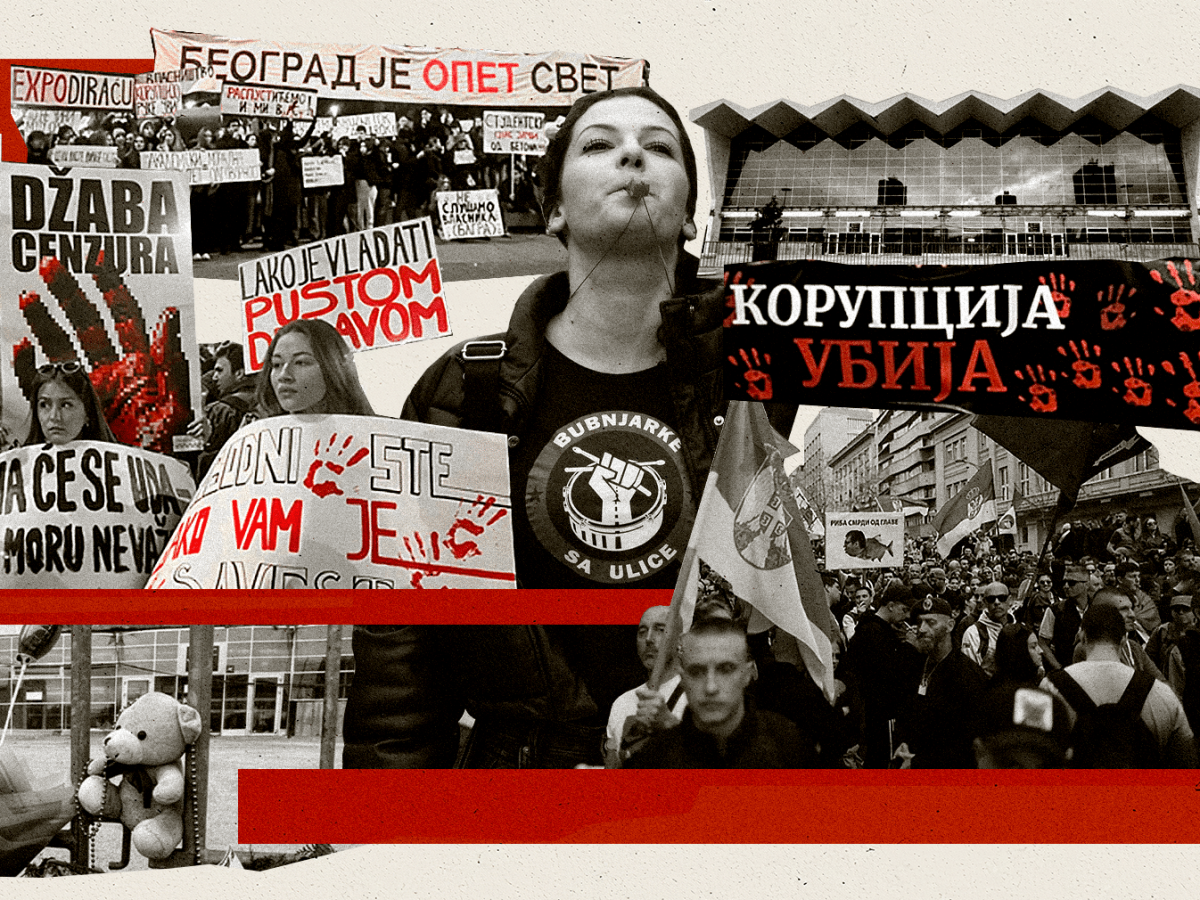
‘Serbia on the Streets’: BIRN Publishes Free E-Book of Protest Reporting

Months of reports published by Balkan Insight about the student-led protest movement in Serbia have been compiled into a new e-book for free download.

BIRN on Thursday published “Serbia on the Streets”, a comprehensive collection of reports by Balkan Insight about Serbia’s mass protest movement from November 2024 to May 2025.

The e-book is free to download in PDF and EPUB formats. It opens with the first report published by Balkan Insight about the Novi Sad railway station disaster of November 1, 2024, which left 16 people dead – the initial spark for the protest movement.

In the aftermath of the disaster, people took to the streets all over Serbia, accusing the authorities of corruption and negligence.

The reports compiled in the e-book document how students took the lead in the movement with faculty occupations, street blockades, pickets, marches and rallies. Analysis pieces, interviews and on-the-spot reportage articles look deeper into the issues raised by the protests.

“Balkan Insight’s journalists have covered the protest movement since the beginning and have produced a wealth of in-depth reportage and analysis as it developed. The material compiled in this e-book represents an important document of a complex period,” Gentiana Murati, BIRN’s deputy regional director, said.

“It includes numerous voices from the streets and squares, but also valuable expert views on the crisis, which is still ongoing,” Murati added.

The e-book is available to download here.

Exhibition of Srebrenica Genocide Testimonies Opens at UN Headquarters

New exhibition of survivors’ testimonies, organised by the Srebrenica Memorial Centre and BIRN Bosnia and Herzegovina at UN headquarters in New York, is ‘a moral call for humanity to not forget’.

“From Words to Violence: Lives Behind the Fields of Death” opened on Tuesday at UN headquarters in New York to mark the 30th anniversary of the Srebrenica genocide in eastern Bosnia.

The exhibition includes 12 displays based on testimonies collected from survivors during an oral history project led by BIRN Bosnia and Herzegovina and the Srebrenica Memorial Centre.

During the process, surviving family members donated items belonging to loved ones who were killed in the genocide and shared their stories, so they can be preserved for a historical record.

Denis Dzidic, director of BIRN Bosnia and Herzegovina, said at the opening of the exhibition that he was proud of the journalistic work done on the project but felt most grateful to everyone who told their own stories and the stories of those killed in July 1995.

“Thirty years after the genocide, at the very location where the [UN General Assembly] resolution on Srebrenica was adopted, there is nothing more appropriate than to put the focus on the personal stories of those who are no longer with us and on those who have dedicated their lives to ensuring their loved ones are remembered and honoured,” Dzidic said.

In May last year, the UN General Assembly voted to designate July 11 as an annual International Day of Reflection and Commemoration of the 1995 Genocide in Srebrenica.

Emir Suljagic, head of the Srebrenica Memorial Centre, said people had fought for the right to tell their stories and speak the truth.

“We had the privilege of experiencing justice as people, at least partially. We saw the generals and presidents who were behind the genocide, as they stood before the face of justice [in court],” Suljagic said.

“And today, when July 11 is on the United Nations calendar, we know we are not forgotten, neither us nor our truth. That is the message we’re sending for the 30th anniversary of the genocide,” he added.

Bosnia’s UN representative, Zlatko Lagumdzija, said the exhibition was “more than an artistic and documentary display – it is a moral call for humanity to not forget.

“Srebrenica is not only a symbol of genocide but also a symbol of the responsibility of all of us to prevent future crimes,” Lagumdzija said, adding that, in a time of denial and revisionism, the exhibition stands as proof of established facts.

The “Lives Behind the Fields of Death” project started in October 2020, when 100 testimonies from surviving witnesses of the genocide were recorded.

These formed part of a permanent exhibition, along with items donated by survivors, at the Srebrenica Memorial Centre, opened in February 2022. After drawing positive reactions, 100 more oral testimonies were recorded.

The exhibition at UN headquarters was organised by Bosnia’s Permanent Mission to the United Nations, with the support of the Office of the Special Adviser for the Prevention of Genocide and the UN Global Communications Department.