Sustainable Energy Journalism Award for Western Balkans 2023

BIRN HUB

Summary

The project Sustainable Energy Journalism Award for Western Balkans 2023 aims to make society more aware of climate change, and of the need and role of energy transition in addressing it.

It intends to support the production of news and investigations related to sustainable energy, and provide recognition to journalists working in this field. BIRN believes that if news and journalists investigating topics related to climate and energy are awarded, and if journalists are encouraged to investigate this field, there will be more news covering these topics and society will be more informed about them and increase its awareness.

Towards achieving this objective, changes are expected by awarding media representatives at the same time as increasing awareness among politicians, non-governmental organisations, and communities – ordinary people, academics and students, businesses and startups.

Donor

European Climate Foundation

Main Objectives

To make society more aware of climate change, and of the need and role of energy transition in addressing it, through awarding local journalists for their sustainable energy stories.

Specific Objectives

  1. To support the production of news and investigations related to sustainable energy and
  2. To provide recognition to journalists working in this field through the Sustainable Energy Journalism Award for Western Balkans 2023

Main Activities

  1. Open call to national and regional media outlets and individual journalists for the Sustainable Energy Journalism Award for the Western Balkans
  2. Promotion of the call for the Sustainable Energy Journalism Award for the Western Balkans
  3. Establishment of jury committee.
  4. Evaluation of submitted applications. Three best stories will be selected whose authors will be awarded 3,000 euros (1st prize), 2,000 euros (2nd prize), and 1,000 euros (3rd prize).
  5. Awards ceremony and debate with experts and journalists covering energy and climate.

Target groups

National and regional media outlets and individual journalists from the Western Balkans

Main Implementer

Balkan Investigative Reporting Regional Network (BIRN Hub)

European Climate Foundation (ECF)

DONOR
The European Climate Foundation (ECF) is a major philanthropic initiative working to help tackle the climate crisis by fostering the development of a net-zero emission society at the national, European, and global level.

The ECF supports over 700 partner organisations to carry out activities that drive urgent and ambitious policy in support of the objectives of the Paris Agreement, contribute to the public debate on climate action, and help deliver a socially responsible transition to a net-zero economy and sustainable society in Europe and around the world.

It was founded in 2008 by philanthropists to develop solutions and activate political engagement and public consciousness around this global emergency. For the last 15 years, the ECF has been a galvanising force in promoting Europe’s climate leadership.

ECF is part of a highly supportive global network to stimulate climate-related policy work worldwide.

Web: https://europeanclimate.org/

Meet the People Behind BIRN: Lamija Grebo

Each month, BIRN introduces you to a different member of its team. For October, meet Lamija Grebo, a BIRN BiH Journalist.

Lamija joined BIRN BiH in January 2014 as a web archive assistant and intern. She wanted to contribute to the betterment of society and to changes in the postwar country and was recently awarded by the EU. Let’s meet her!

  1. Why did you decide to become a journalist?

I became a journalist probably because I wanted somehow to contribute to the betterment of society and to the changes we faced as a postwar country. I guess that’s something that motivated most of my colleagues in those early days. Love for this job, even with all the difficulties, is something that still makes me want to do my job the best I can.

  1. What was the most challenging situation during your career so far?

I can’t think of a specific one, but I think it is normal that now and then, with the situation in the country, region, or even on a global level, you ask yourself, is it all in vain, is it worth it, if they come, then why are the changes so slow? The stories that we do are worth it. They matter and should be told. The people we talk about within our stories should have a way for their voices to be heard, and we can give them that space and tell their stories in the most professional way.

  1. What are the three words that should describe journalism?

Truth, freedom, professionalism.

  1. You recently won the EU Investigative Journalism Award for an investigation into court verdicts over the past ten years for hate crimes (but that’s not the only award you won). Can you tell us more about this and its importance?

This is my first individual award that I share with my deputy editor, Džana Brkanić. For its groundbreaking work in covering transitional justice topics, BIRN Bosnia and Herzegovina was given the European Press Prize Special Award for 2020, so that is the one that I share with all my coworkers.

When it comes to the EU Investigative Journalism Award for 2023, Džana and I appreciate that the jury recognized the importance of our investigative story. Many hours of browsing through hundreds of court and prosecutorial decisions, numerous queries, and interviews with experts, but also with our fellow citizens who have still not seen justice after 20 years, stand behind this investigation. The value of the award is reflected in the additional visibility of investigative stories, which bring changes to society.

The awarded investigative story is a multimedia data research, which showed that hate crimes were mostly sanctioned with suspended sentences, with only one-quarter of those convicted being imprisoned, and investigations in some cases taking more than 20 years.

Suspended Sentences Do not Prevent the Spread of Hate” was based on verdicts passed down before all courts in Bosnia over ten years. It also revealed that there was no unified system for registering such crimes, which has made the monitoring and investigating of those cases more difficult.

  1. Do you have a story that you feel especially proud of, and what do you like most in your job?

Over the past almost ten years, there have been a lot of stories, and I take special pride in all of my stories. Most of my stories are about transitional justice, war crimes, and how the war affected and still affects people’s lives 30 years afterward. Every time I do a story and see that I have justified the trust that the people I’ve talked to gave me, I feel very proud. These are very delicate stories, and their importance for our society is enormous. After some of my stories were published, some indictments were filed for war crimes. A permanent exhibition is opened in Srebrenica Memorial Center as a part of the project I was involved in called “The lives behind the fields of death,” where we filmed testimonies of surviving witnesses of the 1995 genocide – a project BIRN BiH did with the Srebrenica Memorial Centre.

  1. What is your advice to someone who wants to work as an investigative journalist in our region?

Working on investigative stories is not an easy job, but with a lot of professionalism, courage, and knowledge, it is a rewarding one. Ask for help from your coworkers and editors, stick to our professional standards and ethics, tell those important stories, and try to make a tiny shift in our society.

BIRN Serbia Holds Training Course on Reporting Digital Rights

During the three-day course, the participants gained new knowledge and acquired skills to report on digital rights and issues related to the violation of freedoms in the online sphere in Serbia.

BIRN Serbia brought together 13 journalists and representatives of civil society organisations at Serbia’s Divcibare mountain resort from October 26 to 28 to help them improve their skills in investigating and reporting on digital rights violations, online manipulations, propaganda in the digital arena and the use and misuse of artificial intelligence.

“According to a 2022 survey by the Freedom House, 64 per cent of countries violated digital rights. This included censorship, surveillance, and restrictions on online access. Media play a vital role in holding governments and corporations accountable for digital right violations. By reporting on these violations, media can raise awareness, put pressure on decision-makers, and support victims.

“However, many journalists lack the training and resources to report on digital right violations effectively. This is due to a number of factors, including the complexity of the issues, the lack of access to information, and the threat of reprisal,” said Milorad Ivanovic, BIRN Serbia’s editor-in-chief.

“Training media in digital right violations is essential for ensuring that these violations are reported on accurately and comprehensively. This training should cover topics such as the different types of digital right violations, the impact of these violations on individuals and society, and how to report on them safely and responsibly,” he added.

Mila Bajic from the SHARE Foundation opened the training course, introducing participants to the concept of digital rights, explaining what these rights cover, how they are protected and how they are violated.

Tijana Uzelac from BIRN Serbia presented participants with BIRN’s database of digital rights violations in Serbia and the region, and BIRN journalist Aleksa Tesic spoke about how he investigated the dangers of biometric surveillance and internet scams.

Ivanovic, along with BIRN journalists Miodrag Markovic and BIRN Serbia executive editor Gordana Andric, gave practical advice on how to use open databases, fact-check, apply OSINT methods and artificial intelligence.

“A 2022 report by the Global Disinformation Index found that 80 per cent of the world’s population is exposed to high levels of disinformation online. Journalists must be trained to do fact-checking effectively in order to combat online manipulations and ensure that their reporting is accurate and trustworthy, and fact-checking has become one of the necessary tools for journalists to fulfil its role of providing reliable information to the public,” said Andric.

BIRN journalist Jelena Zoric shared her experiences of reporting on stories based on correspondence via encrypted communication, and journalist Andjela Milivojevic spoke about how she reported on revenge pornography.

On the last day of the training course, Aleksandra Krstic, a professor at Belgrade University’s Faculty of Political Sciences, and Marija Babic, a lawyer at the Independent Association of Journalists of Serbia, talked about digital security for journalists and introduced participants to the protection mechanisms and legal framework that regulate the security of journalists in the digital arena in Serbia.

Sonja Kovacev, social media manager at BIRN Serbia, along with Ivanovic, then gave practical advice about digital security and finding a balance between freedom and security on social networks.

The training course was organised as part of the ‘Reporting on Digital Rights and Freedoms’ project implemented by several BIRN offices in the region and funded by the European Union.

BIRN’s Sasa Dragojlo Receives Prestigious ’Dusan Bogavac’ Award

Created in memory of Yugoslav-era journalist Dusan Bogavac, the annual award is given in recognition of ethics and courage in journalism.

BIRN journalist Sasa Dragojlo was awarded the prestigious ‘Dusan Bogavac’ Journalism Award for Ethics and Courage at a ceremony on Thursday, October 26, at the Belgrade Media Centre.

Zeljko Bodrozic, president of the Independent Journalists’ Association of Serbia, IJAS, said Dragojlo had been recognised for “courageously and professionally investigating and informing the public about important topics of general interest for years, such as the corrupt business of selling ammunition production machines, the war between smugglers in the north of Vojvodina, money laundering through the construction of residential and commercial buildings throughout Serbia, and the recent armed conflict in Banjska.”

Accepting the award, Dragojlo said it was “the best I have received in my short but intense career in journalism”.

The honour, created in memory of the prominent Yugoslav-era journalist Dusan Bogavac, has been awarded by the Dusan Bogavac Foundation and the IJAS since 1991, the year after Bogavac’s death.

“Dusan Bogavac is known for the solidarity fund and, considering the situation in the media in Serbia and globally, I think that solidarity is the key for us,” Dragojlo said.

“Few of us do this job professionally and well, and we need to stick together, considering that no one will help us survive in this job and that professional media are not required in this world,” he told the audience in the Belgrade Media Centre. “We have to fight for our place.”

Dragojlo dedicated the award to “my colleagues from BIRN”.

Bogavac’s sister, Branka Bogavac, said: “We need to emphasise the importance of consistent, courageous, and moral journalists who, with their unwavering engagement, not only save the profession’s image but set an example for all of humanity”.

“That is why I sincerely believe this year’s laureate, investigative journalist Sasa Dragojlo, will also be classified among such personalities and bright examples.”

Besides Bodrozic, the jury members were previous award winners Dragana Peco and Snezana Congradin, as well as Branka Bogavac and Filip Mladenovic on behalf of the Dusan Bogavac Foundation.

Open Data and Digitalisation in the Western Balkans

BIRN HUB

The project goal is to improve institutional transparency and functionality for citizens and other stakeholders through the provision of reliable and informative content. This will be achieved by engaging stakeholders through regional research on open data and digitalisation; raising awareness about the ongoing consequences of a lack of open data and the challenges of the digitalisation process in relation to corruption, accountability, and the stagnation of functional government services; and mobilising citizens to engage further with the topic of open data and digitalisation by providing accessible information and providing a space to voice their experiences.

Summary

Open data is a key component in promoting government transparency, empowering different groups to hold institutions accountable, and supporting evidence-based decision making and advocacy efforts. In tandem, digitalization in government can improve public services by enhancing efficiency, accessibility and citizens’ engagement. All countries across the Western Balkans (Albania, Bosnia and Herzegovina, Kosovo, Montenegro, North Macedonia, and Serbia) have taken steps to engage with these two areas towards better governance.

However, in nearly all of these countries, lack of capacity and resources and even active threats to safety means there is no established civil society mechanism of independent oversight, knowledge sharing, or multi-stakeholder participation of either of these processes. Ongoing monitoring of digitalization, e-services and data access is also lacking on a systemic level. Citizens, CSOs and media only sporadically engage in this topic, despite being some of the most important beneficiaries and active stakeholders. There is thus a vital need to build upon and support existing initiatives, analyse challenges from a regional perspective, broaden the involvement of different stakeholder and beneficiary groups, and amplify the perspectives and experiences of citizens.

This 12-month project seeks to both inform and engage audiences across the region through the creation of original, informative and accessible content on the topics of open data and digitalisation. Using existing resources and building on BIRN’s extensive track record on freedom of information, a research paper will additionally inform stakeholders of the present circumstances while suggesting actions to address and improve current processes and legislation. All content will be supported by a range of infographics and short video explainers, while events in each of the West Balkans Six, WB6, countries will gather together key individuals from across the media, civil society and governance spheres to discuss the findings and create a platform for the generation of additional ideas and activities.

Donor

Open Society Fund Bosnia and Herzegovina

Main Objectives

Improve institutional transparency and functionality for citizens and other stakeholders through reliable and informative content.

Specific Objectives

1: Engage stakeholders through regional research on open data and digitalisation.

2: Raise awareness about the ongoing consequences of a lack of open data and the challenges of the digitalisation process in relation to corruption, accountability, and the stagnation of functional government services.

3: Mobilise citizens to engage further with the topic of open data and digitalisation by providing accessible information and highlighting their experiences.

Main activities

1. Research paper

Existing research on the status of open data and digitalisation conducted by civil society remains disjointed and often is focused only on a country level. By taking a regional approach, commonalities, successes and weaknesses, external and internal threats, and the challenges facing institutions can be highlighted. The research paper will seek to consolidate and build upon current findings while supplementing information with additional interviews with identified stakeholders. BIRN will additionally file open data requests regionally for certain key documentation to see whether this can be provided in machine-readable or open data compliant formats, providing an overview on existing data in this area. In addition, further insights can be gained on the format and completion documentation that is received and can be tracked across the Network’s existing FOI requests. Policy recommendations will then be provided as a basis for additional actions moving forward and points of discussion at each of the six in-country events.

2. Fifteen editorial outputs

Through BIRN’s ability to produce both in-depth country reporting and cross-border stories, a series of editorial outputs will explore regional and country-level stories on open data and digitalisation. It is anticipated that two articles per country will be produced (12 in total) and three in-depth long reads capturing cross-border perspectives, to be published on BIRN’s flagship website Balkan Insight (BI).

3. Fifteen infographics and five short video explainers

These can break down information and key terminology either embedded within articles or act as standalone pieces, making engagement easier for the public. Topics could be connected to EU GDPR, the specifics of EU DMA and DSA, relevant local government action plans, artificial intelligence, digitalisation, how people are affected by it, and why it is important to engage with.

4. Six in-country events

The events will gather identified stakeholders across civil society, media, and government to present and discuss regional findings, while providing a platform for actionable recommendations and activities.

5. One regional focus page on Balkan Insight

A regional focus page will consolidate BIRN’s editorial outputs across the Network on digitalisation and open data for easy accessibility in multiple languages, as well as provide a space for any new content produced. The research paper will also be accessible on this site.

Target Groups

Journalists and media outlets, citizens across the Western Balkans, CSO organisations, those within the policy and governance spheres who are in a position either to be held accountable or make change to existing legislation or modes of operation

Main Implementer

BIRN Kosovo

Partners

BIRN Albania

BIRN Bosnia and Herzegovina

BIRN Kosovo

BIRN Montenegro

BIRN Serbia

Paper Trail to Better Governance IV

BIRN Kosovo

The aim of the fourth phase of the Paper Trail to Better Governance project is to expose wrongdoings by public institutions, public or private companies and individuals through multimedia investigations, innovative journalism techniques and the establishment of an online database, as well as to train journalists across the Western Balkans, advance the position of female media workers and work closely with relevant stakeholders to advocate the freedom of information in the region.

Summary

In the past nine years, BIRN Kosovo and BIRN HUB have successfully managed three phases of the Paper Trail to Better Governance project, training 130 journalists in the Western Balkans, uncovering around 20 lucrative deals and corrupt schemes on a transnational level, and closely examining the work of regional public institutions.

On the grounds of the previous outstanding cooperation as well as external evaluation of the project, BIRN Kosovo (lead partner) and BIRN Hub (local partner) are proposing a transboundary scheme that responds to the European Commission’s membership conditions, aiming to strengthen the rule of law, governance and judiciary in the Western Balkan region.

The proposed project will also directly contribute to SDG targets 16.3, 16.5, 16.6, 16.7 and 16.10 as well as to the South-East Strategy 2030, through advocating a better functioning public sector that abides by the principles of transparency and accountability to its citizens.

Overall, the project will reach about 215 men and women investigative journalists, 40 emerging journalists, 200 researchers, 12 media outlets, as well as around 3 million people in the region who will be exposed to at least 40 cross-border and country-based long-reads, gender and freedom of information reports and interactive maps and a database.

Donor

Austrian Development Agency (ADA), the operational unit of the Austrian Development Cooperation

Main Objectives

The Project is expected to contribute to advancing democratic governance in the Western Balkan countries through increased transparency, improved conditions for accountability and gender equality.

The overall impact that the project is expected to contribute to is related to substantially reducing corruption and bribery in all forms.

Specific Objectives

During the project duration, BIRN aims to:

  • increase the skills of investigative and young journalists in the Western Balkans;
  • strengthen capacities of local media to use innovative data tools and enter into cross-border collaboration;
  • advance production of long-reads and accompanying multimedia content to uncover malpractices of public institutions and public or private companies and people in power;
  • advocate for freedom of information in the Western Balkans by working closely with relevant stakeholders;
  • upgrade BIRN Investigative Resource Desk (BIRD) and other regional media outlets’ ability to respond to technical and digital challenges that the media community is facing;
  • increase the skills of women journalists and gender sensitive reporting in the Western Balkans.

Main activities

1) Hold trainings for regional journalists, including BIRN Summer School of Investigative Reporting, Regional Hostile Environment Awareness Training (HEAT) and Fellowship for Emerging Journalists;

2) Hold training and conduct mentorship for local media outlets to produce stories using the innovative Engaged Citizens Reporting tool, ECR;

3) Produce at least 40 country-based and cross-border long-reads (investigations, analyses and features), multimedia content and an interactive map/database;

4) Produce three annual freedom of information reports and capacity-building activities in the sphere of freedom of information, aimed at journalists and public servants in the Western Balkans;

5) Organise workshops about digital security, develop internal policies and procedures on digital safety for regional media outlets and further upgrade the BIRN Investigative Resource Desk, BIRD;

6) Establish a network of women journalists and address the most pressing gender issues through capacity building and policy recommendations.

Target Groups

Journalists, including investigative journalists; emerging journalists; local media outlets; public institutions; universities.

Main Implementer

BIRN Kosovo

Partners

BIRN HUB

BIRN’s Sasa Dragojlo Wins ‘Dusan Bogavac’ Award for Ethics and Courage

Sasa Dragojlo, a BIRN journalist, won this year’s “Dusan Bogavac” Journalism Award for Ethics and Courage, which has been awarded by the Dusan Bogavac Foundation and the Independent Journalists’ Association of Serbia, IJAS, since 1991.

The announcement on the award said: “Sasa Dragojlo has been courageously and professionally investigating and informing the public about important topics of general interest for years, such as the corrupt business of selling ammunition production machines, the war of smugglers in the north of Vojvodina, money laundering through the construction of residential and commercial buildings throughout Serbia, and the recent armed conflict in Banjska.”

“I am really happy with the ‘Dusan Bogavac’ award I got since I was nominated by a jury made up of really respectable colleagues. It was a shock, since I was unaware it was happening; I learned about it half an hour before it got published. When I see all the people who got it before me, it is really an honour and a privilege.

“Working hard in a stressful job like journalism, every now and then I feel depressed, asking whether it is worth living a poor life with many pressures without much real effect in changing the deeply corrupted societies we live in. Awards like this are at least a glimpse of hope that someone cares and that our work matters,” Dragojlo said.

The jury members were previous award winners Dragana Peco and Snezana Congradin, as well as Branka Bogavac and Filip Mladenovic on behalf of the Dusan Bogavac Foundation, and Zeljko Bodrozic, president of the IJAS.

Recently, Dragojlo won third prize as part of a team of BIRN and the Centre for investigative journalism of Serbia, CINS, for an investigation into Serbian arms exports to Myanmar following the army coup in that country. He also won third prize in the EU investigative awards for a story on a Serbian police translator who led a people-smuggling gang.

As Dragojlo stated: “When I got my degree at the Faculty of Political Science, the future in journalism was not so clear. I wrote columns, essays and free-form prose in multiple online media but could not live off it, so I worked multiple ‘real jobs’ – from call centres to warehouses. I thought I would never find a media that wanted me, had enough money, or where I wanted to work (I would not want to work in 90 per cent of the media; a construction job looked more attractive). But in April 2015, I got a chance to work for BIRN, and since then, I have never quit this nutjob profession.”

The “Dusan Bogavac” Award ceremony will be held on Thursday, October 26, in Belgrade.

EU Awards for Best Investigative Journalism in Türkiye Announced

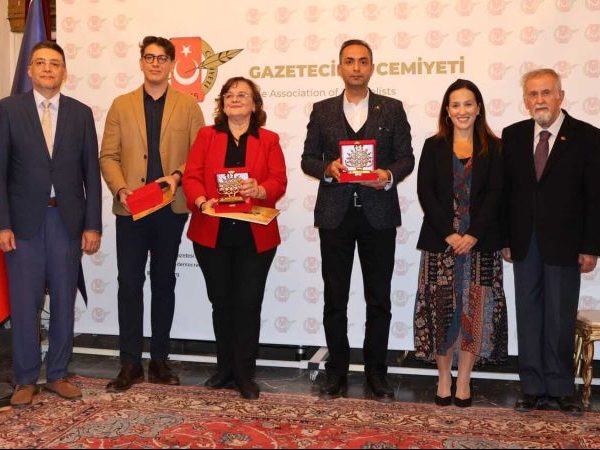
On October 16, the winners of the EU Awards for Investigative Journalism in Türkiye were announced.

Murat Ağırel, Doğu Eroğlu and Çiğdem Toker were selected from many colleagues as this year’s winners for their stories published in 2022 exposing crime and institutional failures to protect citizens’ rights.

The jury consisted of İsmail Bezgin, a reporter and news-broadcasting manager; Mehmet Vecdi Seviğ, a former expert in the Ministry of Finance’s Inspection Board who later transitioned into journalism, with working experience in Yankı magazine, ANKA news agency, Dünya newspaper, Cumhuriyet newspaper and Başkent TV; and Göksel Bozkurt, a reporter, news director and columnist, President of the Parliament Journalists Association and Executive Editor of ANKA news agency.

The first prize went to Murat Ağırel (Yeniçağ Gazetesi) for his story “Türkiye in the Grip of Drugs,” which unveiled the hidden web of crime that stretches from Türkiye to Europe, all while being concealed by influential figures within the country.

Second prize went to Doğu Eroğlu for “BTK-gate with Documents,” a thought-provoking tale that shed light on how constitutionally guaranteed freedom of communication is under siege by the Information Technologies Authority, BTK.

Third prize went to Çiğdem Toker (Sözcü Gazetesi), who uncovered the shocking damage done to the National Garden by dismantling the runway of Ataturk Airport.

Marija Vasilevka, Project Manager from BIRN, greeted all guests and highlighted the importance of BIRN’s partnership with the Association of Journalists from Türkiye.

“Investigative journalism is not an easy job to do, especially in the current situation in the world. But it is an important tool to hold institutions accountable and contribute to the development of democracy. Our project seeks to create a sustainable system for supporting journalists to produce quality and independent news,” Vasilevska said.

She handed the award to the third prize winner. The Vice-president of the Association of Journalists and a representative from the EU Delegation to Türkiye handed the second and first prizes respectively.

The EU Award for Investigative Journalism 2023 is part of the project “Strengthening Quality Journalism in Western Balkans and Türkiye II”, funded by EU. This aims to recognise and promote outstanding achievements in investigative journalism as well as improve the visibility of quality journalism in the Western Balkans and Türkiye.

Calling Balkan journalists: Apply for the Western Balkans Sustainable Energy Award for your stories on sustainable energy

BIRN is calling on Balkan journalists to apply for the Western Balkans Sustainable Energy Journalism Award 2023.

The Balkan Investigative Reporting Network (BIRN), in collaboration with the European Climate Foundation, will reward exceptional journalistic pieces focusing on sustainable energy in the Western Balkans through the award.

The award’s purpose is to honour journalists whose work published in media outlets from September 2022 to September 2023 has actively encouraged excellence and innovation in the field of sustainable energy.

The award celebrates excellence in journalism and fosters a sense of community and collaboration among those committed to informing the public about critical environmental issues.

Individual journalists, or a team of journalists, from the six Western Balkan countries (Albania, Bosnia and Herzegovina, Kosovo, Montenegro, North Macedonia and Serbia) can apply.

Applications should include journalistic pieces published in print, radio, TV or online format. Submissions in other formats, including podcasts, YouTube, TikTok and Instagram investigative series, are also welcome. Cross-border stories in which journalists from different countries collaborate are also eligible for this call. Among the topics expected to be covered are ones related to renewable energy sources, energy efficiency, sustainable urban planning, policy, and regulations related to sustainable energy, and others.

The best three stories selected by the international jury will receive prizes. The total prize fund for this year is €6,000. The first prize winner will receive €3,000, the second will receive €2,000 and the third, €1,000.

To apply, complete the Application Form in English no later than 19/11/2023.

Following the selection process, by the end of 2023, BIRN will organise the award ceremony in one of the Western Balkan countries.

More about the call can be found here.