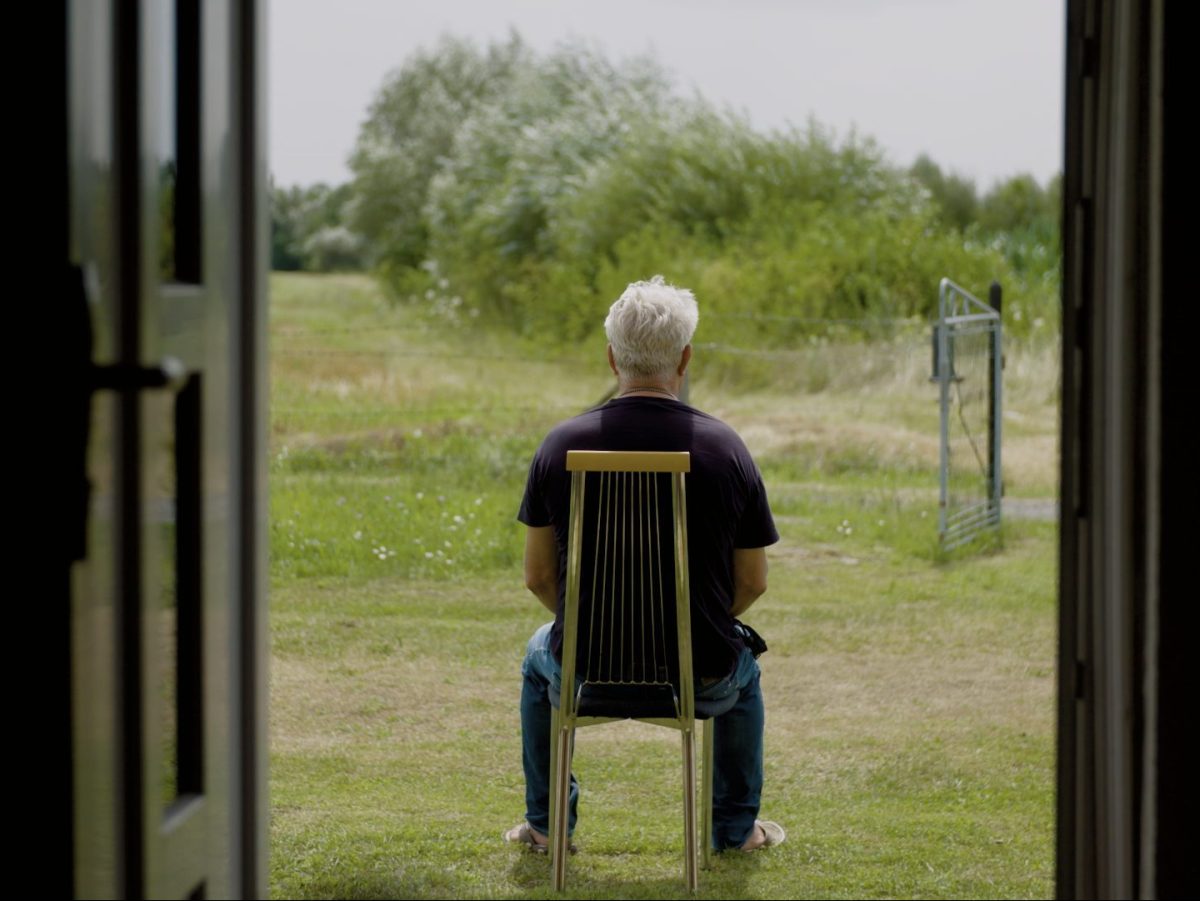
Meet the People Behind BIRN: Ana Petrusheva

This year marks BIRN’s 20th anniversary. It all started when five women from countries recovering from brutal wars defied the odds to establish what would become a major independent media organisation – the Balkan Investigative Reporting Network.

One of them was Ana Petrusheva, BIRN Macedonia’s director. Prior to founding BIRN, Ana worked as a journalist for various outlets. During the conflict in 2001, she worked for Reuters and started writing for the Institute for War and Peace Reporting (IWPR). In 2003, she became country director for IWPR.

BIRN was founded two years later, and Ana was a managing editor of Balkan Insight between 2006 and 2016. She explains what it was like founding the network in 2005 with female colleagues in the traditional patriarchal region of the Western Balkans.

“In those days we were a small group, of mainly women, and we were all very close, had already worked together, we were loving it and we were convinced that we had a winning formula: that we could marry local knowledge and international standards and produce groundbreaking journalism that would be valuable to both local and international audiences. In doing so, we’d fill a substantial gap between what local media was reporting and how international media would often parachute in and out of our countries and produce reporting that would not necessarily paint the whole story or would lack certain context.

“Although the media market in the Balkans is traditionally oversaturated, it was always contaminated – now probably more than ever – with media serving various political or business interests rather than the public interest. In turn, that has made our role even more important,” says Ana.

There were several obstacles that the founders had to confront in working as an independent regional media organisation.

“Funding was one. We were new, we had great ideas, lots of ambition, but we had to start from scratch. Fortunately, the Swiss were among the first to recognise our potential and they supported the making of our 2005 documentary about Kosovo, ‘Does anyone have a plan?’, which involved dozens of interviews with politicians and ordinary people from the Balkans, as well as various top international officials. I believe it was that film, directed by Lode Desmet, along with the launch of Balkan Insight, that paved the way for the organisation it is today”, says Ana.

Besides working as a country director, she is also a member of the BIRN Board.

“The Board, over the years, has had a very important role in different aspects, from the general direction of the organisation’s development, to fundraising and programmes. My role, specifically, is to represent the Network members, given that the other members of the Board are not from BIRN. The board has played an important role in navigating the organisation, particularly at difficult times when the organisation has been under attack from various actors,” she adds.

As the director of BIRN Macedonia, Petrusheva has many tasks, among others: running the editorial, organising training sessions involving journalists throughout the country, and securing the organisation’s funding. Of course, she prefers some parts of her job.

“My passion and the part of my job I enjoy the most is and always has been the editorial part of it. I have been incredibly lucky to work with some of the finest reporters and editors in the country, who are eager to dive deep into complex stories, no matter how much time and work it takes. At the same time, equally important, we share the same ethical and professional standards to ensure the findings in our investigations are bulletproof. I am immensely proud of our stories and the Prizma publication that is recognised not only for its exceptional investigations but also for excellent writing and original storytelling,” Ana explains.

Speaking about BIRN Macedonia, Ana says it has been a pioneer in the region in developing massive, complex interactive databases on different topics.

“From the award-winning database uncovering the cost of the Skopje 2014 revamp, to a database documenting almost 10 years of foreign investments, which was shortlisted for the global Data Journalism Awards in 2017, to other databases detailing the spending in 80 municipalities over 4 years, exploring agricultural subsidies and media ownership in the country, to the latest published this year documenting all the properties and land owned by the biggest religious communities,” says Petrusheva.

Apart from that, she also enjoys the training sessions BIRN Macedonia organises, mainly for young journalists.

“It is so invigorating, the enthusiasm, curiosity, and dedication of young people. It is also a good reminder that despite all the changes and looming dangers for the profession, be it from social media or AI, there are driven young people who recognise journalism as a calling, rather than just a job,” adds Ana.

And, in her opinion, those are the two most important pillars of BIRN’s work – reporting and training.

“Our publications, Balkan Insight – the flagship publication in English – but equally important Prizma in Macedonian, Detektor in Bosnian, BIRN’s publication in SerbiaKallxo and Reporter in Kosovo and Albania, along with TV production in different countries, the stories that reach audiences through these outlets, that is what BIRN is about,” she says.

“At the same time, hundreds of journalists who have gone through long-running regional programmes such as the Fellowship for Journalistic Excellence and the Summer School of Investigative Reporting are now leading writers and editors in various media across the Balkans,” adds Ana.

With all these BIRN activities in mind, journalism as a whole faces a tough future.

“Given the current global challenges and dangers for journalism, I believe we are entering a phase that will bring a whole new set of difficulties and obstacles for our work. The blurred lines between ‘content’ and journalism, the constant political attacks on professional media, the hike of SLAPP suits, the rise of AI and the decline of professional standards, the rise in journalists being killed, all point to rough seas for the profession, especially in regions with autocrats at the helm”, explains Ana.

For Ana, BIRN means freedom and privilege.

“Freedom to do great journalism, to uncover and expose wrongdoing and systemic flaws, to put difficult and complex issues under the spotlight without anyone hanging over your head, without any agendas. Privilege to work with an amazing team that shares the passion and dedication to make a difference, against all odds.”

But would she do anything differently if she could in her professional path over the past 20 years?

“Not necessarily. I am not a ‘what if’ type of person, as I believe that retrospect leads only to regret. If a certain decision seemed the right call at the time it was made, it was probably right. And when it wasn’t, it was a lesson that has further shaped my personal growth,” says Ana.

She has a clear image of BIRN in the next 20 years.

“Hopefully, it will continue to be a beacon of professional journalism, and its position would be further fortified against the tide of scandalous, false, superficial, malicious information stemming from all sorts of ‘content’ creators. At the same time, I hope it will continue to be an oasis for young reporters who receive BIRN training, regardless of whether on the job within BIRN or through its training programmes.”

BIRN Kosovo Launches the Initiative “Remembering the Missing People”

On August 29, 2025, BIRN Kosovo, in cooperation with the North Mitrovica-based NGO ACDC, launched a campaign to document the trauma of families of missing persons as part of the EU-funded project “Uncovering the Truth: Combating Mono-Ethnic Journalism and Advocacy for Missing Persons in Kosovo,” in an event at the Reporting House Museum in Prishtina.

Present at this event were high-level representatives from government, diplomatic missions, civil society, victim groups, families of missing persons, activists, and the media. On behalf of the project partners, Kreshnik Gashi and Dusan Radakovic presented the project’s objectives, discussing the importance of this project in memorializing and documenting war crimes in Kosovo. Additionally, they presented details from the project’s implementation, which will include conducting over 80 interviews, to be used in a series of television documentaries and then preserved and showcased in the Reporting House, keeping alive the voices of pain, strength, and the demanding truth.

The former Justice Minister, Albulena Haxhiu, emphasized the importance of memorialization and documentation of war crimes, acknowledged the work done by the government in implementing the transitional justice strategy, and the concrete governmental mechanisms in place to pursue the truth, such as the Institute for War Crimes in Kosovo. Seeking the truth for the missing people is not only a moral obligation but it is a constitutional duty, Haxhiu emphasized.

On the other hand, Alessandro Biancardi,  Deputy Head of Cooperation Section/EUOK mentioned that the work of this project and the partners is essential to document the past and solidarize with the family members of missing people in Kosovo. He emphasized the crucial role of the media in ensuring that the victim’s voices are amplified and preserved in such initiatives, which, among others, inspire future generations to embrace a future focused on peace.

The Executive Director of BIRN Kosovo, Jeta Xharra, thanked the European Union for its ongoing support, especially in sensitive matters like this, and provided a chronological overview of the process and the importance of combating not only monoethnic journalism but also monoethnic stories. After more than 25 years of war, she mentioned that it is the last time we must face the truth and confront what happened.

Present at the event were 28 participants, out of whom 14 were women. During this event, participants demonstrated a great interest in the project’s implementation and highly evaluated the work done by the project team.

BIRN Summer School – Day 5: Story Pitching, Big Data and Legal Risks

Blake Morrison, Investigative Projects Editor at Reuters News, opened the fifth day of the 15th BIRN Summer School, where he gave attendees advice on how to pitch their stories.

By Vuk Tesija

Morrison was joined by Gordana Andric, Executive Editor, BIRN Serbia, and Sasa Dragojlo, BIRN Serbia Correspondent, to help 30 participants turn their story ideas into solid pitches.

Photo: Azem Kurtic

In the next session, Ana Petruseva, Director, BIRN Macedonia, held a workshop on ‘Developing Complex Databases with Thousands of Documents’, which gave participants new insights into handling large amounts of data.

“When we encounter a huge amount of data, we always find ourselves in a phase where we say ‘this can’t be done!’, but that usually means we have a new challenge that we want to overcome,” Petruseva told participants. “Methodology is key. If you have any inconsistencies, then you are in trouble.”

Photo: BIRN/Adnan Beqiri

She explained this using real world examples of data such as foreign investment, state subsidies and media ownership. She presented data on BIRN’s research into the land owned by religious communities – the Macedonian Orthodox Church and the Islamic Community – in North Macedonia.

Photo: BIRN/Adnan Beqiri

Kreshnik Gashi, Managing Editor at Kallxo.com at BIRN Kosovo explained to participants in the next session how to and reduce legal risks in reporting. During his presentation,  ‘Reporting Safely: Legal Considerations, Case Illustrations, and SLAPP Insights’,  Gashi shared his experiences of protecting himself from SLAPP (Strategic Lawsuit Against Public Participation) lawsuits, state pressure, corporate influence, and other challenges that can put journalists in legal jeopardy.

“Journalists are being arrested, sued, and threatened with lawsuits. Although we live in democratic societies, officials and people of influence and power can still pose a threat and attempt to intimidate us,” explained Gashi.

Photo: BIRN/Adnan Beqiri

He added that the goal of a SLAPP is not to win in court, but to drain the resources, time, and money of journalists and newsrooms.

Gashi also reminded colleagues that they must respect the ethical principles of journalism and comply with privacy rules. “Use your knowledge of the law to protect yourself,” he advised.

Next up, Denis Dzidic, BIRN Bosnia and Herzegovina Director, shared his experiences during a session called ‘Reporting in Times of Crisis – War Crimes Reporting’.

Photo: BIRN/Adnan Beqiri

Participants ended the day with a visit to the BIRN Museum Reporting House and participated in a panel discussion, ‘Investigative Journalism: Two Decades of Change, moderated by Denis Dzidic and attended by BIRN founders Petruseva, Jeta Xharra, BIRN Kosovo Director, and Dragana Solomon.

Photo: BIRN/Adnan Beqiri

This was followed by the Certificate Awarding Ceremony in the Reporting House yard, during which journalists socialised and exchanged experiences in an informal setting.

BIRN Summer School Day 4: Fact Checking, Hidden Data and Knowledge Transfer

The fourth day of the 15th BIRN Summer School started with an excellent lecture by Milica Stojanovic, a journalist and fact-checker at Balkan Insight.

By Vuk Tesija

She revealed the secrets of fact-checking to 30 participants at the school, held in Pristina, Kosovo.

“The fact-checker is not your enemy, but your friend,” said Milica. It is a process, she said, that is crucial for credibility. Mistakes can lead to journalists being liable to legal action, as well as embarrassment.

“In the process, there will be issues and debate. Sometimes you will spend three hours choosing the right word,” Milica explained. She provided several examples so participants could try their hand at fact-checking other people’s texts. This gave them an insight into how responsible and complex the job of a fact-checker is.

The session continued with Alexenia Dimitrova, journalist, OSINT expert, and lecturer in journalism. She delivered a lecture entitled ‘Hidden Places to Investigate Your Country’, demonstrating how open sources of information can provide access to valuable data.

Alexenia shared dozens of useful sources that journalists can rely on when governments in certain countries deny them the information to which they are entitled. “A lot of data is available if you know where to look,” Alexenia emphasised.

Azem Kurtic, a Balkan Insight journalist from the BIRN Hub, discussed a recent investigation which involved him hunting down a location. “By analysing photographs, geolocations, and visual clues, a great deal can be uncovered,” said Kurtic, who shared his combination of computer skills, creativity, and expertise. Through his eyes, participants were able to see the entire process he went through in search of evidence.

Blake Morrison, Lead Trainer and Investigative Projects Editor at Reuters News, continued the session with a gripping story from his career, illustrating how crucial timing is in telling a story.

He emphasised, from his own experience, that there is no such thing as unimportant information or failed stories, since everything a journalist does may one day prove to be of vital importance. The participants, clearly impressed, had the opportunity to hear first-hand insights on how to become better journalists.

BIRN Summer School Day 3: Investigative Stories, AI, Safety and Mental Health

The third day of the BIRN Summer School in Pristina continued with the Advanced Data Journalism course, taught by Jonathan Soma, professor of data journalism at Columbia University’s Journalism School.

By Vuk Tesija

Summing up the previous day, lead trainer Blake Morrison told everyone: “We are the family of journalists. If you do something good, it makes us all look good.”

Soma showed participants how to transcribe their interviews quickly and efficiently with the help of AI, saving significant time. The participants were impressed by the speed and accuracy with which voice was converted into text, without the need for additional effort.

He also revealed numerous other techniques that will make their work easier in the future, demonstrating practical solutions to overcome technical difficulties.

The participants adopted new skills such as searching huge databases and finding answers that previously required days of preparation and reading, now achievable in just a few seconds.

The session continued with Sharbil Nammour, Media Safety Advisor and Founder of Vallaris Solutions.

“I’m interested in your safety. Of course, you have to do the job, but you must also take care of yourself,” Nammour warned the journalists, stressing that in risky situations they need to pay close attention to time and distance – two factors they must proactively control.

Using examples such as protest footage and reports from high-risk areas, Nammour vividly illustrated poor practices in reporting. “Be careful that the journalist does not become the story,” he cautioned, while outlining the best ways to prevent such situations.

The packed lecture schedule continued with Kreshnik Gashi, Managing Editor of Kallxo.com, based in BIRN Kosovo, and Sasa Dragojlo, an investigative journalist at Balkan Insight at BIRN’s hub, who presented their award-winning investigative stories on organised crime groups.

Gashi and Dragojlo discussed the links between crime and politics, as well as the importance of cultivating reliable sources of information.

“Thanks to our story, around 30 corrupt police officers were arrested,” said Gashi, who investigated money laundering schemes originating in Kosovo and ending up as investments in Montenegro. “You have to have your informants, but you have to constantly think about their well-being because they can pay a terrible price,” said Gashi.

Dragojlo presented a series of stories he has been writing for the past four years about migrant smuggling and the Balkan migrant route. “You can’t have armed foreign nationals in border areas without the police knowing, that’s what caught my attention,” Dragojlo said. Advising the participants, he told them: “Be patient, working slowly, and horizontally, will get you vertically.”

In the afternoon, participants visited the Kallxo Studio in Pristina, where they attended a lecture by Jeta Xharra, Director of BIRN Kosovo, entitled ‘From Exposure to Impact: Why Some Investigations Spark Change and Others Don’t’.

The long third day concluded with Emma Thomasson, journalist and media consultant, who highlighted the importance of mental health for journalists.

She spoke about stress, burnout, and other mental health risks, as well as strategies for improving team communication and managing conflict.

BIRN Summer School Day 2: Open-Source Intelligence, Data, AI and Digital Security

During the second day of BIRN’s Summer School of Investigative Reporting, participants learned how to use open source data to gather information, how to use AI in everyday work and how to increase their own digital security.

By BIRN

The second day of BIRN’s Summer School of Investigative Reporting in Pristina, Kosovo, continued with a masterclass in open-source intelligence (OSINT) with Reuter’s visual investigations reporter, Reade Levinson.

Levinson shared tips and tricks on how to use free satellite imagery providers and their different tools in order to find and verify publicly available information online, and how to track ships and planes.

Using examples from the stories produced by Levinson and Reuters, participants immediately put their newly harvested skills to the test. “My steps may not be the same as yours, so please share it with us, as this is the space to also learn from each other,” Levinson told participants.

The day continued with Jonathan Soma, professor in data journalism at Columbia University Journalism School. With Soma, journalists gained elements of analysis using data tool Pandas and coding with the help of AI.

“One of the things that people joke about data journalists is that you spend six months finding data, then a month or two analysing it, which ends up as one paragraph in the article,” Soma said.

“But this does not mean that data journalism is not important or fun to do,” he added.

Sharbil Nammour, media safety adviser and founder of Vallaris Solutions, a consultancy company specialised in working with media in risk assessment and safety planning, shared tips on how to stay safe online and protect your privacy.

“On a societal scale, digital security is press freedom in practice. On a personal scale, digital security isn’t about paranoia, it’s about habits. Own your safety,” Nammour said.

BIRN’s 15th Summer School Begins in Pristina

The Balkan Investigative Reporting Network (BIRN), kicked off the 15th edition of its Summer School of Investigative Reporting on Monday in Kosovo’s capital, Pristina, led by some of the world’s top journalists.

By Vuk Tesija

The week-long summer school brings together around 30 participants from Albania, Bosnia and Herzegovina, Croatia, Kosovo, North Macedonia, Serbia, Ukraine, Georgia, Romania, Bulgaria and Poland. Over the course of the programme, they will learn how to distinguish suspicions from facts and set high standards for investigative reporting.

Jeta Xharra, Director of BIRN Kosovo, welcomed the participants and stressed that BIRN has for the past 15 years been inviting world class lecturers and journalists to share their expertise with participants.

Gentiana Murati, Deputy Director of BIRN HUB, shared her experiences about last year’s summer school and said the programme is one of the best ways available to learn the trade of journalism.

Lead trainer Blake Morrison, investigative projects editor with Reuters in New York, reminded the participants of their shared professional duty. “You represent me, but I also represent all of you. Journalists have a responsibility to each other,” Morrison said, emphasising the importance of ethics in the profession.

During the introductory presentation, Morrison presented a case study of a journalist who reported untruthfully, explaining the consequences for the profession as a whole and those who become the victims of fabricated stories.

Reade Levinson from the Reuters in London continued his masterclass in open-source intelligence (OSINT), teaching participants how to use free sources, from tracking ships and planes to geolocation. She instructed the participants in the secrets of reverse image searches and searches of business databases.

Alexenia Dimitrova, a journalist and OSINT expert, delivered a lecture titled ‘Cross-Border Sources for Your Climate Investigation’, in which she revealed the secrets of investigating climate change in the digital age.

The first day ended with a lecture by Morrison, titled ‘Formulating Story Ideas: How to Structure Your Pitch’, showing participants how to develop a story pitch from a good idea.

The participants, made up of everyone from experienced journalists to beginners, expressed their satisfaction with the first day. Some said they would save a lot of time in future research because they had learned many new tricks.

BIRN Invites Journalists: Apply for Grants for Investigative Stories

Journalists covering EU member countries and EU aspiring countries are invited to apply for grants to produce investigations shedding light on critical social, political and economic issues.

The Balkan Investigative Reporting Network, BIRN, is calling on journalists who are interested in producing in-depth investigations to apply for grants that will cover the cost of producing investigations but also include mentoring support to develop impactful stories that foster accountability and public awareness.

Who is eligible?

Journalists currently working in or publishing stories covering EU member countries and EU aspiring countries – Albania, Bosnia and Herzegovina, Georgia, Moldova, Montenegro, North Macedonia, Serbia, Turkey, Ukraine and Kosovo – can apply.

Please note: this is not a collaborative grant.  Only individual journalists may apply, and each journalist can propose one investigative story.

What are we offering?

Selected journalists will receive grants of €1,140 for the production of their investigative stories (The grant lasts a minimum of three and a maximum of six months). The selected journalists will receive mentoring support from BIRN editors/mentors to help them produce their stories.

This call is ongoing – what does that mean?

Twenty grants in total are available and the ongoing call for applications will be closed once they are all distributed. The second deadline after which applications received so far will be evaluated is October 31st, 2025.

How to apply?

Before applying, click HERE to read the full call for applications. After reviewing the information, follow the link to access the application form. Applicants need to attach two documents in English to the application form: a CV and a signed letter of support from the media outlet where they will publish the story.

About the project

This call for applications is part of the Media Organisations for Stronger Transnational Journalism (MOST) initiative, which aims to enhance the resilience of non-profit media in reporting on European issues and drive innovation in foreign reporting. The initiative supports media organisations in developing new approaches and strengthening capacity, fostering collaboration and sharing best practices across borders.

MOST brings together seven prominent media organisations to establish a community of practice focused on business transformation and editorial cooperation.

The project is implemented by a consortium comprising: 1) Balkan Investigative Reporting Network (BIRN), 2) Centro per la Cooperazione Internazionale (CCI/OBCT); 3) El Orden Mundial – EOM, Spain; 4) European Pravda, Ukraine; 5) Kolegium Europy Wschodniej im Jana Nowaka-Jezioranskiego we Wroclawiu – KeW, Poland (New Eastern Europe); 6) Le Courrier des Balkans – Courriers D’Europe et D’Orient – DcB, France; and 7) Stichting the Tactical Technology Collective – TTC, Netherlands.

For clarifications, contact: [email protected].

BIRN Holds Training on Audience-Engaged Journalism Tool for Corruption Reporting

Three Montenegrin media outlets and three civil society organizations were trained on how to use the CER (Crowdsourcing Evidence, Engaging Citizens, Reporting Facts) tool in corruption-related investigations.

The online training held on August 7 aimed to equip the participants with practical skills and tools to create impactful, community-driven investigations related to corruption.

Karla Junicic, BIRN’s Hub Coordinator for Engaged Citizen Reporting, led the sessions and guided participants through the core concepts of engagement journalism.

Junicic introduced attendees to crowdsourcing techniques, storytelling approaches, and methods to identify and involve communities in journalistic work.

“Make sure to know the reasons behind your crowdsourcing and explain to your citizens what you’re looking for – their precise input and experiences are what fuels your stories,” she emphasised during the session.

Participants learned how to design and execute audience-engagement strategies, including pre-research, crafting callouts, design questionnaires, data analysis of responses, and produce stories based on community input.

Practical examples were shared from Balkan Insight and other regional outlets, covering topics such as the education system’s shortcomings, digital rights and social abuse cases– all demonstrating how marginalised voices can be amplified through engaged journalism.

The second segment of the training focused on the practical use of the Audience-engaged journalism tool for citizens reporting corruption (CER Tool), which BIRN developed to support secure, anonymous submissions of corruption and abuse reports. The tool is designed to bridge the gap between journalists and the public, enabling safer and more efficient communication and evidence-gathering processes.

In the final part of the training, participants drafted engagement-focused story ideas centred around corruption-related topics.

This training formed part of the project Society against Corruption in Montenegro and the Western Balkans region, which addresses the pervasive issue of corruption in the Western Balkans region, particularly focusing on Montenegro and Kosovo.

By enhancing citizens’ engagement, strengthening media and civil society reporting, and promoting accountability, the initiative aims to empower communities to combat corruption more effectively.

Through targeted subgrants, capacity building, investigative journalism and policy advocacy, the project seeks to raise awareness, foster constructive engagement, and drive tangible reforms in governance and anti-corruption practices across the region.

Detektor Doc ‘None Will Speak the Truth’ Premieres in Sarajevo

A documentary about a former detainee from Prijedor whose entire family was killed will premiere at the 31st Sarajevo Film Festival on August 18.

The film None Will Speak the Truth, authored by Detektor journalist Azra Husaric Omerovic, will be screened as part of the “BH Film” Programme on August 18.

In July 1992, Esef Dzenanovic was separated from his family and forcibly taken to one of the detention camps in Prijedor. He survived torture in three detention camps.

But before being exchanged and saved from certain death, he learned that his mother, sister, wife and two underage sons were no longer waiting for him at home.

Husaric Omerovic explains that the film was made following the marking of White Armband Day in Prijedor in 2022, when she first met Esef together with her colleague, Enes Hodzic.

“Holding three white roses, Esef stood outside the large groups of people, families, friends standing in a line for roses and ribbons with names of killed children. When we approached him, accompanied by a friend of his, hoping we would talk to him, he only briefly said that they had killed his mother, sister, wife, and two little sons,” Husaric Omerovic recalls.

She added that, every year, he brings three roses for his killed underage sons Alen and Ajdin, as well as his sister, Majda.

On that day, Esef had no strength to talk. Husaric Omerovic says that, by researching his family, she learned that he lost his entire family on July 23, 1992, when he and his father were imprisoned in detention camps. To this day, he has not found the remains of his family.

More than 30 years after the war, Esef is still searching for any information about his family, hoping that they will be buried with dignity and that their souls will rest in peace. He finds the will to live and relief from nightmares by the water; he goes fishing every day.

The film is directed by Azra Husaric Omerovic, edited by Elvedin Zorlak, and the screenplay and editing are by Semir Mujkic and Dzana Brkanic. The executive producer is BIRN BiH director Denis Dzidic. The director of photography is Alen Alilovic, while Emir Dzanan is the cameraman. The sound was recorded by Samir Hrkovic, and the music was composed by Damir Imamovic. The sound processing is credited to Nedim Imamovic.

Detektor has worked on this film for over two years. The scenes and dialogues were filmed in Esef’s family house yard in Prijedor, his current home in Switzerland, and on Swiss and Bosnian lakes, where he seeks to find peace.

“The sadness with which Esef lives every day and his way of coping motivated us to persevere in this idea and to make a film about a man whose everything was killed in July 1992, along with hope.

“Our desire is for this film to encourage those who have information about the location of their grave to speak up, so that their souls may rest, and Esef may find peace,” Husaric Omerovic said.

The 31st Sarajevo Film Festival will be held from August 15 to 22. None Will Speak the Truth will be screened as part of the “BH Film” Programme.

As part of the Sarajevo Film Festival, the Association of Film Workers of Bosnia and Herzegovina is organising the “Bosnian Film Festival” Programme, presenting films from Bosnia as well as films by local authors living and working abroad.

Tickets for None Will Speak the Truth can be purchased in the pre-sale starting Monday, August 4.