BIRN Albania Journalists Win EU Award for Investigative Journalism 2025

Two journalists from BIRN Albania have been honoured with the 2025 EU Award for Investigative Journalism in Albania, winning second prize for their outstanding contributions to public-interest reporting.

Edmond Hoxhaj was recognised for a series of stories based on Freedom of Information requests that uncovered the secret sponsor behind the Independent Qualification Commission, KPK, a key body in Albania’s judicial vetting process. They were published by Reporter.al.

His investigations shed light on hidden funding links and raised questions about transparency in one of the country’s most critical justice reform institutions.

Vladimir Karaj received the same award for his investigation “Si në burg: Punëtorët afrikanë përballen me privim lirie dhe shfrytëzim në Shqipëri” (“Like Prison’: How African Migrant Workers Suffer Exploitation in Albania”), also published by Reporter.al

The story exposed cases of forced labour and human rights violations against African workers brought to Albania under exploitative conditions, drawing national and international attention to the abuse of migrant labour.

The EU Award for Investigative Journalism celebrates exceptional reporting that serves the public interest, strengthens accountability, and upholds media freedom across the Western Balkans and Türkiye. The award is part of the European Union’s ongoing support for independent journalism and investigative reporting in the region.

BIRN Hosts Event on Surveillance and Digital Rights in Bosnia

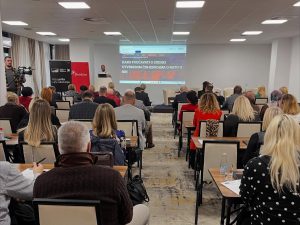
On October 16, the Balkan Investigative Reporting Network organised an event in Sarajevo to foster dialogue on freedom of expression, cybersecurity, and digital rights, and to explore their impact on everyday life. The gathering brought together journalists, media organizations, and representatives of civil society.

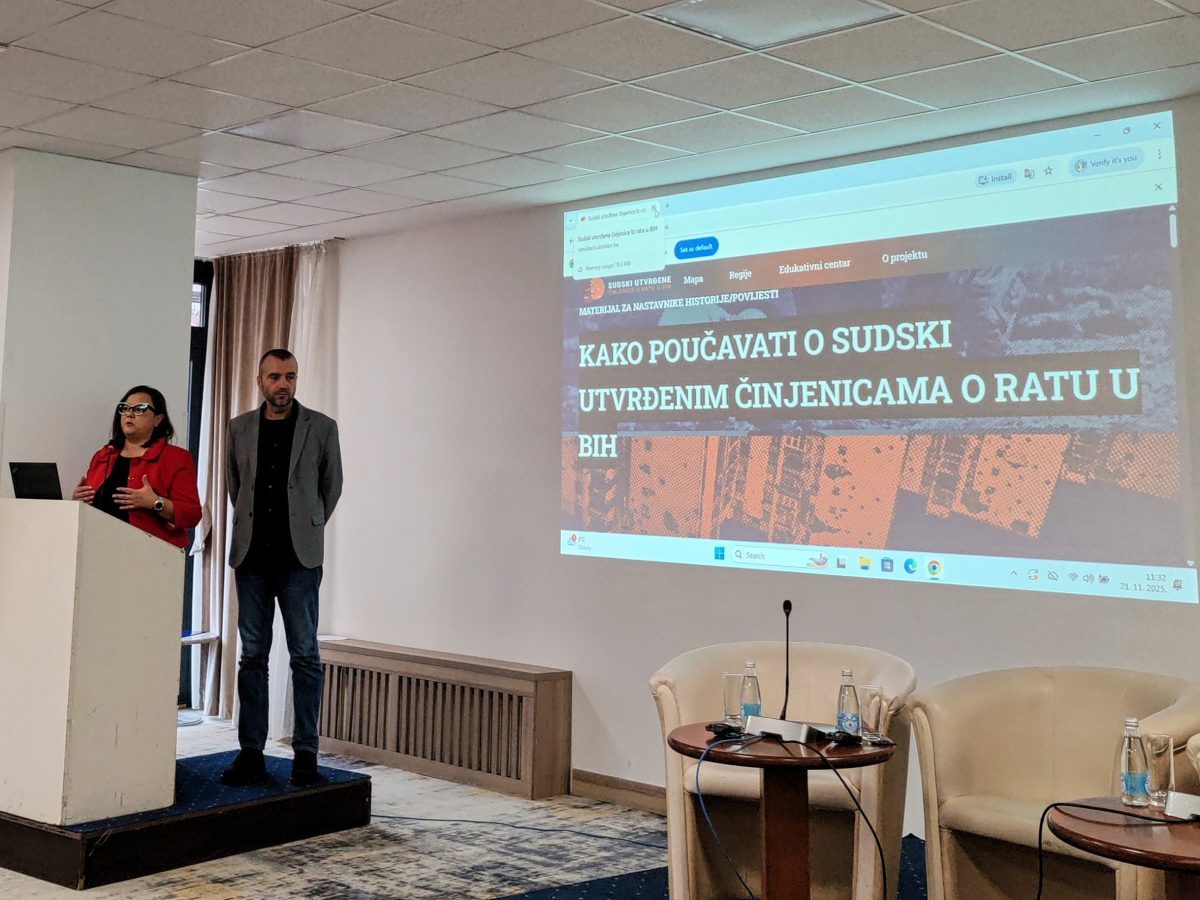
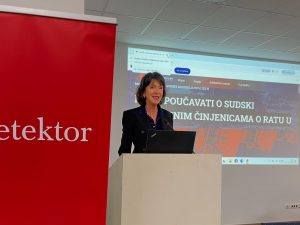
The event opened with a presentation of the report, Surveillance and Censorship in the Western Balkans.” Azem Kurtic, a journalist at BIRN and author of the Bosnia and Herzegovina country report, presented the key findings for Bosnia. The criminalization of defamation, the non-transparent use of surveillance cameras, and SLAPP lawsuits – most often used as tools to encourage journalists’ self-censorship – were among the issues highlighted in the report. The presentation sparked a discussion among participants, who shared their experiences, insights and perspectives on media freedom and digital rights in Bosnia and Herzegovina.

Fedja Kulenovic, from the Faculty of Philosophy, University of Sarajevo, led a session on the importance of self-protection in the digital environment. He discussed the evolution of digital threats, from phishing and spyware to the increasing use of artificial intelligence, covering topics such as identity protection, device security, tools for safe communication, and AI-related risks. He highlighted that connecting AI tools with various applications can lead to the unintentional exposure of sensitive data, emphasizing the importance of access control and regular permission reviews.

The second part of the event focused on digital rights. Selma Melez, a BIRN Bosnia journalist and country monitor for Bosnia and Herzegovina, presented findings from the 2025 digital rights violations monitoring activity. She noted that the most frequent cases involve online hate speech, disinformation, and online fraud, as well as AI-facilitated threats to digital freedoms, including image misuse and extortion, with children often being the primary victims.

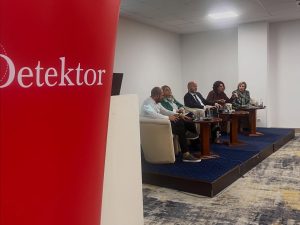
The event concluded with a panel discussion, titled “The Importance of Safeguarding Digital Rights in Contemporary Social Practices,” moderated by Aida Ajanovic. Panelists included Maja Calovic, digital media expert at Mediacentar, hvale vale, a gender and digital rights expert, Nasir Muftic, lawyer and assistant professor at the Faculty of Law, University of Sarajevo, and Lejla Turcilo, professor at the Faculty of Political Sciences, University of Sarajevo.

The discussion offered legal, media, academic and activist perspectives on digital rights, addressing topics such as the legal framework in Bosnia, media and platform accountability, balancing freedom of expression and regulation, forms of online gender-based violence, digital literacy, and ethics.

Participants were actively engaged throughout the panel, stressing the importance of such gatherings for fostering dialogue on issues crucial to protecting digital freedoms.

Thirty participants attended the event, including 18 women.

This event was a joint initiative of the EU-funded project “Reporting Digital Rights and Freedoms” and the Open Society Foundation-funded project “Surveillance and Censorship in the Western Balkans.”

Workshop Overview and Participant Breakdown

Dates and place: 16 October 2025, Sarajevo

Number of participants per country:

BiH 25

Total number of participants: 25

The full findings and activities are available in the EDS Report, which can be accessed here.

BIRN Hosts Panel Session at SEEDIG 10

Panel discussed the growing trend of platform bans in South-Eastern Europe – and their impact on freedom of expression.

BIRN hosted a panel session on October 11 in Athens entitled “Platform Bans on the Rise: Trends and Human Rights Implications in South East Europe”.

The panel opened an important conversation about the growing trend of platform bans in South-Eastern Europe and their impact on freedom of expression, political participation, and privacy rights. Drawing on BIRN’s regional monitoring of digital rights violations, it explored the timing and legal implications of bans, their impact on democratic processes, and strategies for safeguarding civic space.

The panel brought together a diverse group of experts and practitioners: Aida Mahmutović, Project Manager at BIRN Kosovo, Megi Reci, Digital Rights Research Lead at BIRN Hub, Snežana Nikčević, a civic-tech advocate at NGO 35mm, and Besmir Semanaj, a digital rights researcher and technology expert. The panel was moderated by Azra Milić, Digital Rights Programme Coordinator at BIRN Hub.

One of the central messages of the panel was that platform bans, though often presented as protective or regulatory measures, are being weaponized to shrink the civic space and limit fundamental rights. The speakers highlighted how these actions affect journalists, activists, and everyday users, underscoring the urgent need for more transparent, rights-based governance models in the digital space.

Reflecting on regional developments, Megi Reci noted: “While Turkey takes an assertive stance, using legal, technical, and informal means to ban or throttle platforms, hybrid regimes in Albania and Serbia echo some of these censorship and legal trends, despite their formal commitment to EU integration and digital policies focused on regulation over censorship. We agreed the WB6 can’t remain on the fence, and must choose between authoritarian control of the digital space or a transparent, rights-based governance models.”

The panel also emphasized the role of media in raising awareness and facilitating dialogue on digital rights issues. Aida Mahmutović reflected on the evolution of media engagement in these processes, noting: “Over the past decade, we have seen how the role of media and journalism has evolved at the global Internet Governance Forum from mere participation and reporting on outcomes to shaping the discussion and the agenda with our unique perspective. We were happy to see that also brought into the South East European region through the panels and workshops at SEEDIG 10.”

This year’s SEEDIG event, marking ten years of multistakeholder dialogue and collaboration on internet governance and digital policy, coincided with BIRN’s celebration of 20 years of defending democracy, media freedom, and human rights across Southeast Europe.

The panel in Athens was a powerful reminder of the importance of regional cooperation in safeguarding these values and ensuring that the digital space remains open, inclusive, and grounded in human rights.

BIRN Represented at European Media Freedom Summit

BIRN Serbia Director Dragana Obradovic and an editor of Balkan Insight, Hamdi Firat Buyuk, spoke at the Media Freedom Rapid Response Summit in Brussels.

Dragana Obradovic, Director of BIRN Serbia and Hamdi Firat Buyuk, an editor with BIRN’s flagship publication in English, Balkan Insight, attended the Media Freedom Rapid Response, MFRR Summit 2025 in Brussels on October 13.

Obradovic told a panel entitled “Spoofing, Surveillance, Spyware. Journalists against Digital Threats” about BIRN’s own experience of digital threats. “We have seen it all. We have decided to fight back. We decided not to be victims,” Obradovic said.

She underlined that digital autocracy came to Serbia some 10 years ago. “Digital tech, including spyware, were misused in Serbia, including those that were bought by the government or bought by international donations,” Obradovic said.

She said the digital threats had escalated since 2023, “when Serbia entered a political crisis, and even more in the last year, when major public demonstrations started all over the country.

“Most of the targeted people are students, journalists and activists. Journalists are not the only target, but journalists are more resilient because they are more prepared, and citizens and activists are more prone to digital threats,” she added, recalling BIRN’s programme and projects on digital rights.

“[At BIRN], we followed digital rights violations very closely with monitoring tools, as well as public procurement monitoring,” she said.

Another speaker from BIRN, Buyuk, presented the grim media situation in Turkey.

“Attacks on journalists come with an advance tactic that includes multiple tools, including arrests, judicial harassment, access blocks and digital violence” Buyuk told a panel entitled “Unsafe to Report. Why Journalists Keep Looking Over Their Shoulders”.

Buyuk underlined that the online attacks in Turkey against journalists are unprecedented.

“More than a million online content items were blocked in Turkey in 2024. This includes 5,740 that were news content or media houses’ websites. Big tech companies increasingly yield to the demands of the Turkish government, eyeing profit rather than press freedom and freedom of speech,” Buyuk said.

The Media Freedom Rapid Response, MFRR, is a Europe-wide mechanism, which tracks, monitors and reacts to violations of press and media freedom in EU Member States and Candidate Countries.

The MFRR Summit 2025 brings together journalists, policymakers, and civil society to address the urgent challenges facing press freedom in Europe.

This year’s summit feeds into EU Democracy Shield policy discussions, and highlights journalism as vital democratic infrastructure.

BIRN Montenegro Journalist Wins EU Journalism Prize

BIRN Montenegro journalist Ivan Ivanovic won second prize at the EU Award for Investigative Journalism 2025 on Wednesday.

Ivanovic received the award for his story Big Brother: Montenegro’s Interior Ministry purchased Israeli facial recognition software’. BIRN’s investigation revealed that Montenegrin Interior Ministry bought a facial recognition software product called ‘Better Tomorrow’ and deployed it in public spaces in the capital Podgorica and the coastal towns of Bar and Budva.

Following the story’s publication, the Agency for Personal Data Protection banned the use of the software.

“This investigation was the result of several months of work involving the analysis and processing of documents obtained mainly through freedom of information requests, which once again proves how essential this tool is for investigative journalism,” Ivanovic said.

The second prize was shared by daily Pobjeda journalist Jovan Nikitovic for his investigation of abuses during the reconstruction of a museum in the town of Bijelo Polje.

The first prize was awarded to TV channel Vijesti for the documentary ‘Target: Montenegro – A State of Relatives’. The documentary investigates cases of relatives of state and local officials being employed within the public administration.

The third prize went to Podgorica-based anti-corruption NGO, ‘MANS’ for its investigation into the assets of former National Security Agency official Dusko Golubovic.

The competition recognised the best investigative stories published in Montenegro during 2024, with 34 entries submitted.

Call for Support for Journalists and Media Professionals: MIDWatch Fellowship

Between October 2025 and January 2026, BIRN will support 15 enthusiastic journalists in conducting investigations and producing journalistic content focused on fact-checking and disinformation.

Selected journalists will receive financial support of £2,000 for producing media content in various formats, including:

  • TV stories / TV documentaries
  • TV debates
  • Video stories for social media
  • Investigative articles for online media
  • Analytical pieces for online media
  • Radio productions

Application and Publication Criteria

  • All journalists and media professionals are eligible to apply for this support fund.
  • In line with the predefined criteria, the selection jury will ensure that at least five projects are led by women journalists and five by journalists from non-majority communities.
  • Media productions must be published in licensed media outlets in Kosovo or members of the Press Council of Kosovo (KMSHK).

Journalists will be supported to carry out research and reporting which aims to produce concrete results in the following areas:

  • The impact of foreign disinformation on security and inter-ethnic relations
  • The impact of gender-based disinformation and the discouragement of women’s participation in public life
  • The impact of disinformation and foreign influence on religious tolerance
  • The impact of foreign influence on Euro-Atlantic orientation
  • Transparency of media outlets and information channels reaching Kosovo audiences
  • Funding sources of channels spreading disinformation to audiences in Kosovo
  • Capacity of media and national institutions to address disinformation and foreign influence
  • The impact and sources of disinformation affecting public health and public life
  • The role of artificial intelligence and technology in amplifying disinformation
  • Identification of disinformation channels targeting Kosovo audiences

Journalists may also propose other relevant ideas related to the field of disinformation.

Applicants must propose at least one media product, though producing multiple pieces across different formats is highly encouraged.

BIRN will provide mentoring support throughout the entire publication process.

Application Period

The call will remain open from 8 October 2025 to 18 October 2025.

Evaluation

A professional jury, composed of independent experts and BIRN representatives, will evaluate and select the projects to be supported under this scheme.

About the Project

The journalist support scheme is part of the “Media Integrity and Disinformation Watch – MIDWatch” project, supported by the British Embassy in Kosovo, through financial support from the United Kingdom government.

Please send the application form and required documents (see below) to the email [email protected] with the subject line “Application MIDWatch Fellowship for Journalists”.

Application Form in Serbian Language

Application Form in Albanian Language

BIRN Documentary Screened at International Film Festival

BIRN’s documentary “Painting in the Darkness”, which tells the story of an artist imprisoned as a political dissident and whose works were confiscated by Albania’s repressive communist regime, was screened on Thursday at the “NNW” International Film Festival in Gdynia, Poland.

The programme offers plenary sessions, panel discussions and workshops aimed at empowering, educating and contributing to greater engagement in the field of digital rights in the Western Balkans. This marks the third year of the IFM organised as part of the Reporting Digital Rights and Freedoms project.

The documentary is competing in the International Documentary Film Competition category.

With the 2025 theme “Roads to Freedom,” this Polish festival has, for years, been dedicated to cinema exploring history, freedom, and post-communist and post-dictatorial realities, becoming an international hub for this film genre.

The festival has a unique character, filling a thematic gap compared to major festivals by giving voice to “unwritten” experiences and personal stories of freedom, resistance, identity, internment, and memory.

Over the five days of this year’s edition, around 100 documentary and feature films are expected to be screened.

The short documentary “Painting in the Darkness,” directed by Elton Baxhaku, with screenplay by BIRN Albania journalist Blerina Gjoka, focuses on the story of Lulzim Beqiri, a painter imprisoned during the communist era because his art did not conform to the ruling party’s ideology.

Beqiri was arrested in February 1977 for “agitation and propaganda,” and his paintings were used against him in court as evidence of his opposition to the communist regime. Around 40 canvases he painted in 1976 were confiscated by the authorities.

Forty-six years later, Beqiri was able to recover two of his works thanks to Astrit Jegeni, an archive employee who had saved them.

The festival is organized by the organization “Culture Stage” and the city of Gdynia and supported financially by the Ministry of Culture and the Polish Institute of Film.

Applications Open: BIRN Internet Freedom Meet 2025 in Pristina

Internet Freedom Meet 2025 (IFM 2025) will take place in Pristina, Kosovo, from November 24 to 26. It will bring together experts in the field of digital rights and internet freedoms to exchange, learn and discuss ever-expanding digital rights and freedoms issues.

The programme offers plenary sessions, panel discussions and workshops aimed at empowering, educating and contributing to greater engagement in the field of digital rights in the Western Balkans. This marks the third year of the IFM organised as part of the Reporting Digital Rights and Freedoms project.

What’s on the agenda?

Speakers and experts in their field will lead discussions on pressing issues, such as digital legislation (reform, regulation, weaponisation), unpack online scams across the Western Balkans and Turkey & institutional responses, misuse of AI in the context of disinformation and digital violence, political dissent and resistance online, online manipulation during elections and its influence on democratic processes, and surveillance & censorship.

At this year’s edition of IFM, attendees will also have the opportunity to join the launch of the new Digital Rights Violations Annual Report. The report provides an in-depth look at key findings across all monitored regions, highlights emerging trends based on data analysis and offers concrete recommendations to uphold human rights both online and offline.

Please note that the programme will be held in English.

Reasons to apply

The IFM 2025 in Pristina is a unique regional opportunity to engage with experts from different internet governance stakeholder groups, gain insights, and personally contribute to a future digital environment which is freer, safer and open for all.

This space is for you, whether you’re a digital rights activist, tech enthusiast, academic, journalist, internet policy pasionato or engaged netizen. Applications are open for individuals from Albania, Bosnia and Herzegovina, Kosovo, Montenegro, North Macedonia and Serbia. Governing digital space means that each voice counts in discussions that concern us all.

How to apply

Applications are now open but please note that the seats are limited. You can apply by completing this application form by October 19th, 2025, at 23:59 CET. BIRN will cover accommodation and travel expenses for selected participants from the above-mentioned countries. Only selected applicants will be contacted.

Important note: Participants from Bosnia and Herzegovina, in order to enter Kosovo, have to have a new biometric ID card.

We are looking forward to your applications.

If you have IFM 2025-related questions, please contact [email protected].

BIRN Marks World News Day, Highlighting 12 Investigations from 12 Months

September 28 is World News Day, a global campaign dedicated to highlighting the importance of fact-based journalism.

by Aleksandra Vrbica

Alongside hundreds of news organisations, media support associations and individuals from over 100 countries, the Balkan Investigative Reporting Network (BIRN) is taking part in this year’s World News Day, which is aimed at raising awareness about the value of credible news reporting.

As part of the World News Day activities, BIRN is highlighting 12 of Balkan Insight’s most important investigations from the past 12 months. The stories include reports on journalists being targeted by law enforcement in Romania and by the intelligence service in Serbia, the torture of migrants in the Balkans by an armed Afghan gang and the escalation of arms shipments to Israel from Serbia.

Press freedom

Becoming the Story: How Journalists Are Being Targeted by Romanian Law Enforcement

This report reveals how journalists conducting public-interest investigations in Romania were put under surveillance by their targets with the help of law enforcement.

Silent Spying: How Serbian Intelligence Hacks Activists’ Phones – Without Them Knowing

A BIRN investigation supported by Amnesty International showed how Serbia’s domestic security agency has been unlocking activists’ phones using Israeli technology and installing a locally-developed spyware.

Illustration: BIRN/Sanja Pantic

Serbia and Israel

Regardless of War Crimes Claims, Serbia’s Arms Sales to Israel Soar

Between 2023 and 2024, the value of Serbian arms sales to Israel rose from 1.4 million euros to 42.3 million. Belgrade shrugged off widespread accusations of Israeli war crimes in Gaza and calls from United Nations human rights experts for a halt to the delivery of deadly weapons, BIRN and Haaretz reported.

Billboards and Bullets: An Israeli Spin Doctor at the Service of Serbia

Israeli PR guru Srulik Einhorn worked to burnish the image of Serbian President Aleksandar Vucic, BIRN and Haaretz reported – facilitate the flow of Serbian arms to Israel’s war in Gaza. Wanted for questioning in Israel, Einhorn has set up shop in Belgrade.

Srulik Einhorn (L) taking a photo of Serbian President Aleksandar Vucic at the Serbian Progressive Party headquarters, June 21, 2020. Photo: Vesna Lalic/Nova.rs

The Balkan migrant route

As Borders Tighten, Violence Rises on Migrant Route Through the Balkans

According to Frontex, the EU’s border force, the number of ‘illegal migrants’ using the Balkan route to reach the European bloc has fallen. With the EU tightening its borders, violent transnational smuggling groups have strengthened their grip on the routes that bring refugees and migrants to Europe through the Balkans.

BWK: The Armed Afghan Gang Terrorising Migrants, Refugees Crossing Bosnia

Amid heightened border security, an armed Afghan gang operating in Bosnia and Herzegovina has turned to kidnapping asylum seekers and demanding ransom payments from their families. Its tactics include physical abuse and sometimes rape.

Italy to Albania, and Back: A Migrant’s Journey Through Italy’s Asylum Experiment

Italy’s right-wing government called it a magic wand for the migrants arriving on its shores, but a deal with Albania to outsource and accelerate asylum processing has run afoul of Italian courts. One Bangladeshi’s story explains how it also makes migrants’ journeys even more traumatic.

‘Like Prison’: How African Migrant Workers Suffer Exploitation in Albania

Migrant workers from Africa told BIRN about having to surrender their passports on arrival in Albania, working unpaid overtime and facing deportation once they are no longer required. Many are left with debts to the agencies that act as middlemen.

Operation Interceptor: How Bosnia’s Border Chief Created His Own Elite Unit

This report from Sarajevo details the creation of a shadowy, heavily-armed and potentially illegal police unit at the exclusive, 24-hour beck and call of the man who led Bosnia’s border police for nine years and is now a fugitive from arrest.

Illustration: BIRN/Igor Vujcic.

Corruption in the Balkans

School Scam: The Phantom Organisations Hoovering up Serbian Public Money

In 2022 and 2023, Serbia’s Education Ministry allocated almost 200,000 euros to 11 NGOs to organise violence prevention workshops in schools. BIRN has traced all the NGOs to the same small group of people – and found that most of the workshops never happened.

Wartime crimes

‘With Our Bare Hands’: The Roma Forced to Clean up Serbia’s Crimes in Kosovo

During the 1998-99 war in Kosovo, Roma municipal employees were forced to clean up the crimes committed by Serbian forces, carrying and disposing of corpses with their bare hands. Branded collaborators, they were targeted for revenge after the fighting finished.

China in the Balkans

Parallel Government: How Vucic Turned Serbia’s Constitution on its Head

The case of a Chinese-led power plant expansion in Serbia laid bare the extent to which President Aleksandar Vucic has upended the country’s constitution, creating an unofficial layer of government calling the shots in areas where legal experts say it has no jurisdiction whatsoever.

Meet the People Behind BIRN: Dragana Zarkovic Obradovic

Dragana Zarkovic Obradovic is BIRN Serbia’s Director and a Regional Manager of the Fellowship for Journalistic Excellence programme.

With extensive media experience and a strong background in project management, Dragana joined BIRN in February 2006, only a couple of months after its establishment, as project manager. She was promoted to country director in 2007.

Dragana previously worked for prominent international organisations, such as the Stability Pact for SEE, Transparency International and the European Agency for Reconstruction, as well as for electronic media.

Under her leadership, BIRN Serbia has been recognised for its professionalism and ability to influence the public agenda in the fields of media development and good governance.

But she only learned about the organisation a few days before her job interview.

“A colleague asked me if I’d like to meet Dragana Solomon, who was then the [BIRN Serbia] director. I still remember that meeting clearly. The office was in Jovanova Street, in Dorćol, a historic part of Belgrade. It was an informal, chatty meeting, and she was enthusiastic about what they had just started: five brave women. She wasn’t even sure exactly what they needed from me, but she was open to ideas. I remember that I felt this was the place where I could grow,” Dragana says.

In her opinion, it was great to be part of a team building something from scratch.

“Those of us who are here [in BIRN] from the beginning grew professionally alongside the organisation. Back then, we were just three people. Today, BIRN Serbia is a leading, award-winning investigative outlet that sets standards in the profession. We’re just now working on new projects about AI in journalism, kickstarting a community programme, and redesigning our website. It never stands still, and as long as we manage to remain relevant and at the forefront of media development, I assume expectations are met,” explains Dragana.

What she didn’t expect back then was again to see people fighting for democracy and institutions on the streets of Serbia – or the whole world to slip into a post-truth era.

“Someone more cynical might say journalism has failed. But despite that, I was never ashamed to say where I work, in a country that has seen a dramatic decline of professional journalism, which is already a success,” she says.

BIRN has experienced many changes over the last 20 years. One of the most significant is growth.

“From a small group of enthusiasts with shared values, the BIRN network became a professional organisation with more than 300 people across the region. Of course, that changes the working culture. But I do believe our core values are still intact,” she adds.

In addition to being BIRN Serbia director, Dragana is Regional Manager of the Fellowship for Journalistic Excellence programme.

“Managing these positions is possible because I have a great team and devoted partners. I’ve been doing both almost since the beginning and for me it’s the perfect balance. As director of BIRN Serbia, I am deeply rooted in the local scene, and the Fellowship broadens my horizons. I’ve met the brightest journalists from across Central and Eastern Europe,” she explains.

The Fellowship’s alumni network now has about 150 members.

“Together, we’ve produced world-class long-form journalism on a range of topics as wide as the cover-up of toxic leakages in the Czech Republic, to Belarusian hooligans seeking asylum in Poland, pro-family movements in Croatia, or the ethical dilemmas around Greece’s booming IVF industry.

“It keeps my curiosity alive. Some of the things that I learn from them we are also trying to implement in Serbia. If anyone needs tips from the Balkans to the Baltics, I’m your person,” Dragana says.

However, during her work in BIRN Serbia, Dragana, along with the rest of the team, has encountered various obstacles.

“Obstacles are many, unfortunately. First and foremost, financial challenges. There’s no sustainable business model for public interest media globally, and especially in politically captured markets like Serbia.

“Then come threats to physical safety, smear campaigns and digital threats, including spyware attacks on my colleagues. Add to that, non-functional institutions, and most recently, a new form of pressure, SLAPP lawsuits; we’re currently facing five of those,” explains Dragana.

Still, against all the odds, “we’re alive and kicking,” she adds.

“We keep reporting on corruption and systemic problems. We tell stories that people can relate to. We help them see the truth and understand it better. And in that context, being attacked means that we are doing our job well,” Dragana says.

As BIRN means “freedom to do what she believes in”, would she have done anything differently in her professional path, if she could?

“It’s a very hypothetical question. I could have done many things differently, but then the outcomes would be different as well, and I quite like what we’ve made. So instead of looking back, I’d rather focus on what’s coming next. We still have so much to do,” she says.

Speaking of how she sees BIRN in the next 20 years, Dragana says “the entire environment in which we work has changed” in the last 20 years.

“The main social and political concepts have changed globally, also affecting the media and its role in societies. We have also witnessed major technological developments. I  sometimes joke that I became a director because I was the only one who knew how to use Excel, and since then, things have accelerated. The way we communicate, access and consume content, and the demands of the market, have completely changed, while the threats to information integrity are mounting.

Dragana with Denis Dzidic, BIRN Bosnia and Herzegovina’s Director, and Ana Petrusheva, BIRN Macedonia’s Director

“Exactly because of that, I believe that real, hardcore journalism will be even more relevant in the years to come. So, I see BIRN adapting to new realities and staying faithful to its mission – to bring important stories to people,” she adds.

Those important stories are brought to the people through trusted independent journalism. September 28 is World News Day, a global campaign dedicated to highlighting the importance of fact-based journalism. Alongside hundreds of news organisations, media support associations, and individuals from over 100 countries, BIRN is participating in this year’s World News Day, which aims to raise awareness about the value of credible news reporting.

“Trusted journalism helps people make sense of the world, which is precisely why it is often seen as a threat by those in power who work hard to undermine it,” Dragana says.

“It prevents citizens from being left in the dark or manipulated by propaganda and lies, especially in times of crisis. For instance, since the recent protests in Serbia began, independent media have experienced a notable surge in audience. In societies where professional journalism is in decline and threats to reporters are increasing, producing fact-based, independent, trusted reporting becomes not only a public service but also an act of resistance,” she explains.

Outside of work, Dragana is a mother, daughter, sister, and friend. “People are what drive me, in work and in life. So, in my free time, you’ll probably find me surrounded by my gang,” she concludes.