Winners of the Fellowship for Journalistic Excellence Announced in Vienna

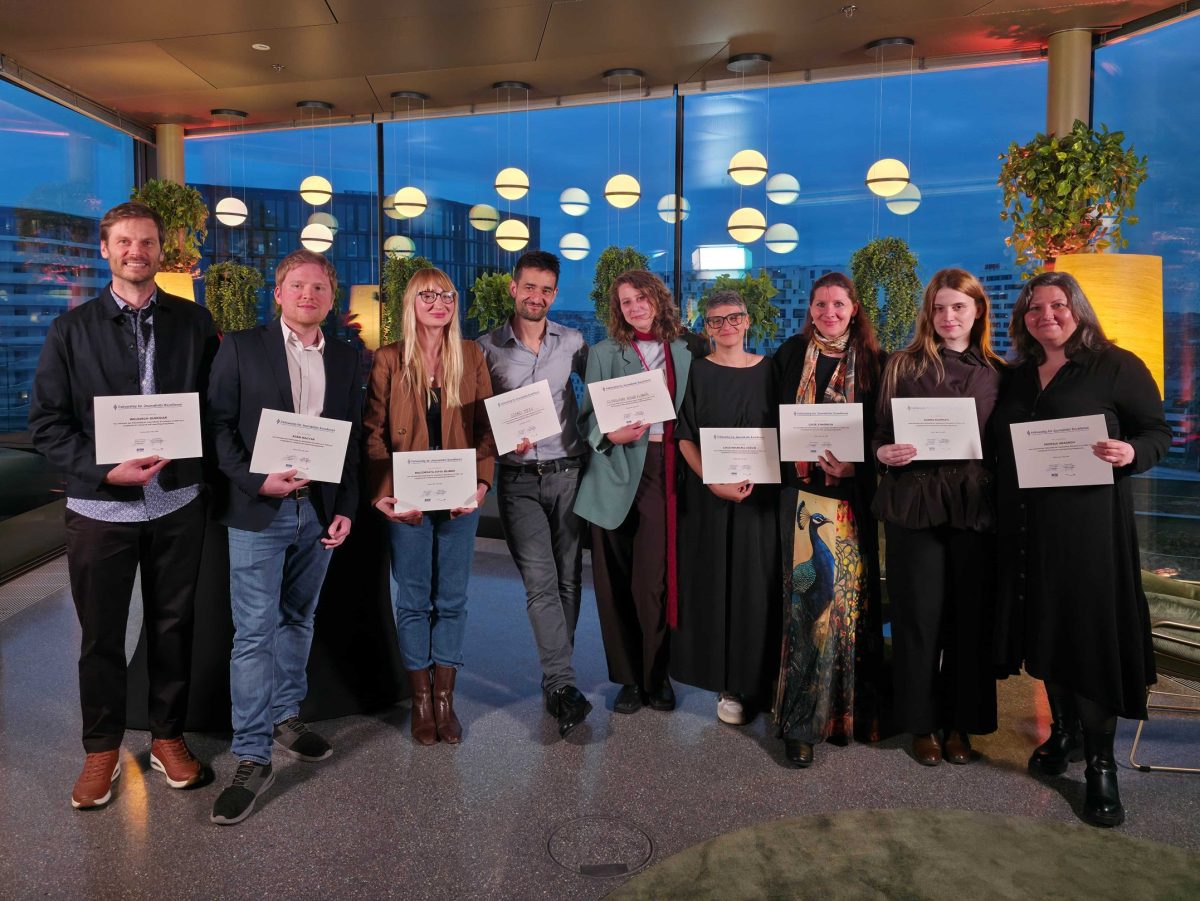
The winners of the Fellowship for Journalistic Excellence were announced at a ceremony in Vienna on 14 May, honouring the fellows who completed the programme.

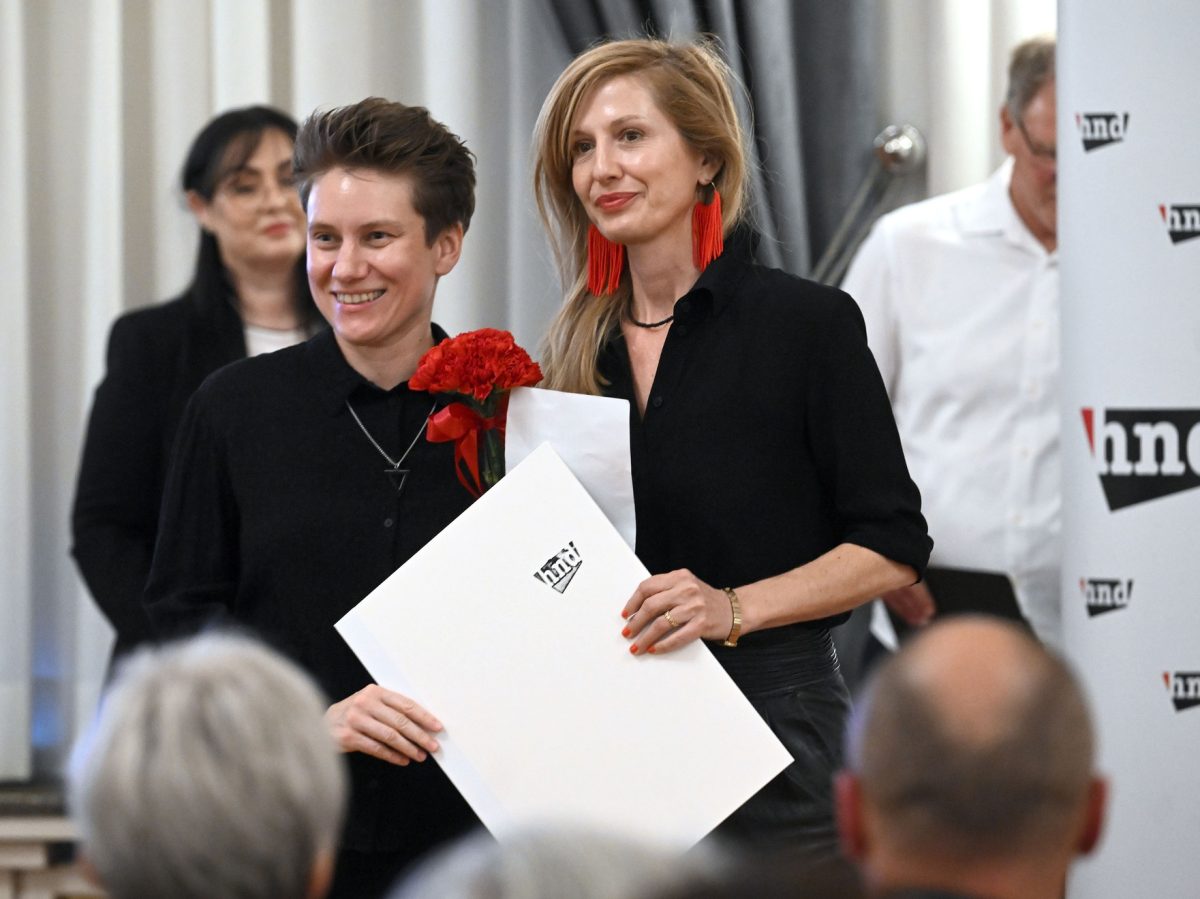
At the annual event held in Vienna on 14 May, three stories received the Fellowship for Journalistic Excellence award for their reporting on organised crime and its social impact; displacement and identity; and on structural inequalities linked to access to natural resources.

This year’s first prize was awarded to Margo Rejmer for her story examining how cocaine use became normalised in Albania and how traffickers came to be mythologised in a poor and corrupt society.

Presenting the award, Florian Hassel, Central and Eastern Europe correspondent for the German daily Süddeutsche Zeitung, said: “Margo Rejmer’s article Pizza Pasta Kokaina, about how cocaine changed Albania, uncovers a subject widely unknown to a wider European audience. It is a perfect example of investigative and explanatory reporting, undertaken with considerable personal risk, by somebody who knows the country well.” The story will be published on the Fellowship in the coming weeks.
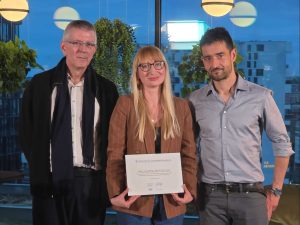
Photo: eSeL.at / Joanna Pianka

The second prize went to Georgi Totev for his story, “Island of Castaways: Traumatic Histories Wash Ashore on Gokceada”, which explores an Aegean island through the experiences of people marked by exile, displacement, trauma and longing. Adelheid Wölfl, a correspondent for the Austrian daily Der Standard, presented the award, saying;

“Georgi Totev has written a story that weaves together the lives of migrants from different historical periods in expressive and colorful language. An island is portrayed as a place of destiny for minorities and displaced persons. The text indirectly becomes a plea for diversity and human rights and fosters an understanding of traumatic events whose effects are still felt today. Georgi Totev takes us to the Aegean Sea, he takes us to the 20th century, and with loving detail and linguistic skill, he traces the thoughts, feelings, and desires of people who were caught in the maelstrom of political decisions that shattered their identities.”

Third prize was awarded to Adina Florea for her story on water shortages in drought-stricken north-east Romania, where unequal access to running water has deepened social divisions between rich and poor, young and old, and urban and rural communities.

Presenting the award, Elena Panagiotidis, editor at the Swiss daily Neue Zürcher Zeitung, said:

“Adina has produced a piece worth reading, combining strong field reporting, an excellent use of data and clear systemic analysis. The hidden water crisis of Romania definitely is of public interest beyond Romania.”

Photo: eSeL.at / Joanna Pianka

In addition to Adelheid Wölfl, Elena Panagiotidis, and Florian Hassel, this year’s jury panel included Gyula Csák, editor at Bellingcat; Milorad Ivanović, representing the FJE alumni network; Remzi Lani, Director of the Albanian Media Institute; and Kristof Bender, deputy chairman of the European Stability Initiative.

The awards ceremony brought together journalists, editors and media professionals from across Europe to celebrate reporting that sheds light on underreported issues and gives voice to communities often overlooked in mainstream coverage.

With this year’s programme concluding, nine fellows join the FJE alumni network, which now brings together more than 150 journalists from 14 Central and Eastern European countries committed to upholding the highest standards of professional journalism.

Photo: eSeL.at / Joanna Pianka

Launched in 2007, the Fellowship for Journalistic Excellence is now in its nineteenth year. The programme supports professional development, cross-border collaboration, and in-depth reporting on key issues across Central, Eastern and South-Eastern Europe. Each year, selected fellows receive financial and editorial support to produce long-form stories on complex regional and European topics.

The Fellowship is implemented by the Balkan Investigative Reporting Network and supported by the ERSTE Foundation.

Job Vacancy: Serbia Correspondent (Full Time)

The Balkan Investigative Regional Reporting Network (BIRN Hub), is seeking to recruit:
● 1 (one) Correspondent from Serbia (5+ years of relevant experience)

BIRN Hub, based in Sarajevo, Bosnia and Herzegovina, is looking for a correspondent from Serbia for BIRN’s English-language website Balkan Insight.

We are offering the chance to work in a highly interactive and dynamic environment at one of the biggest media networks in the region.

Position Details

Contract Type: Full-time

Working Language: English

Experience Level: More than 5 years of relevant experience

Start Date: As soon as possible

Location: Office-based or remote (Serbia-based candidates only)

Application Deadline: 12 June 2026

Main Duties and Responsibilities
  • Reporting on daily events and producing analysis, interviews, features and photo or video stories on the main events in the country, including politics, security, the economy, human rights, the environment, rule of law, transitional justice, digital rights, gender issues
  • Producing country-based and cross-border investigative articles
  • Developing new ideas and topics for Balkan Insight
  • Contributing to regional thematic stories
  • Mentoring journalists and contributing to collaborations with other news organisations as part of BIRN projects
Other Duties and Responsibilities
  • Maintaining appropriate contacts with BIRN country offices and/or personnel, to ensure the proper execution of the above-mentioned duties.
  • Working closely with other departments such to ensure alignment and integration of strategies with overall organisational goals
  • Carrying out any other duties that may reasonably or exceptionally be required to ensure the smooth operation of Balkan Insight’s work, such as substituting for absent colleagues, etc
  • Performing other duties as assigned
Key Requirements
  • Minimum 5+ years of experience as a journalist, correspondent, online reporter or TV/radio reporter
  • Excellent command of the English language (writing, reading, understanding and speaking)
  • Strong writing, reporting and storytelling skills with excellent attention to detail and accuracy
  • Knowledge and understanding of the Balkan region and regional political/social developments and readiness to work in the context of international media standards
  • Familiarity with online reporting, interest in web and mobile journalism; knowledge of promotion methods via social networks; online journalism skills, including working with OSINT and visuals-making platforms
  • Excellent communication and interpersonal skills, with the ability to work independently and meet tight deadlines
  • Experience working with content management systems (CMS), including uploading and sourcing images and video for one’s own and others’ stories
  • Ability to collaborate effectively with cross-border teams in multicultural environments
Application Procedure

Interested candidates should submit the following through the application form available at the link below:

  • CV detailing relevant experience
  • Covering letter (maximum 1 page)
  • Three best stories
  • Contact details for two professional references
Application form

Application deadline: 12 June 2026

Only shortlisted candidates will be contacted.

BIRN values diversity and inclusion and is an equal opportunity employer. We welcome applications from candidates of all backgrounds, including minority and underrepresented groups and persons with disabilities.

About BIRN

BIRN Hub is a nongovernmental organisation and part of the regional BIRN Network, working to promote independent journalism, freedom of expression, human rights and democratic values in Southern, Eastern and Central Europe.

BIRN has country organisations in Albania, Bosnia and Herzegovina, Kosovo, North Macedonia, Montenegro, Romania and Serbia, while the Network is also present editorially in Greece, Bulgaria, Croatia, Montenegro, the Czech Republic, Poland, Slovakia and Hungary.

More information at birn.eu.com.

BIRN Awards Grants to Media Outlets Through Media Innovation Europe Project

Through the second edition of the Media Innovation Europe (MIE) project, BIRN has supported 15 media outlets in producing audience-engaged journalism stories across Europe, tackling underreported issues and strengthening cross-border collaboration.

BIRN awarded grants to 15 media outlets from the Western Balkans and Visegrad region as part of its Audience-Engaged Journalism Grants, supporting the production of innovative, audience-engaged journalism across the region.

Over the course of the project, grantees produced stories using BIRN’s audience-engaged tool, which enables journalists to gather anonymous input from citizens and incorporate audience perspectives into reporting. The supported projects addressed a range of topics, from gender-based violence and social protection to healthcare, migration and environmental degradation.

Across two grant cycles, BIRN supported both individual, country-based reporting and cross-border collaborations, encouraging partnerships between media outlets covering shared regional issues.

Each selected media outlet received financial support to produce audience-engaged stories, with grants of up to €4,000 for individual projects and up to €8,000 for cross-border collaborations.

Beyond financial support, BIRN provided continuous mentoring and editorial guidance, helping grantees to develop their stories and strengthen audience engagement practices. Some of the selected stories were adapted and republished on Balkan Insight, expanding their reach to wider regional and international audiences.

Throughout the Audience-Engaged Journalism Grants, participating media outlets engaged hundreds of citizens through surveys, testimonies and direct contributions, enabling more inclusive and evidence-based reporting. The approach proved particularly effective in covering sensitive and underreported topics, while ensuring the anonymity and safety of contributors.

First Cycle of Grants

Individual media outlet grants:

Cross-border collaborations:

Second Cycle of Grants

Individual media outlet grants:

Cross-border collaboration:

Strengthening Innovation and Collaboration

Media Innovation Europe is an initiative designed to support independent media across the continent through funding, mentoring, and capacity-building, with a strong emphasis on innovation, sustainability, and audience-centred journalism. Across its two editions, the programme helps media organisations adapt to a rapidly changing digital environment while encouraging collaboration and experimentation in storytelling. MIE is managed by a consortium led by the International Press Institute (IPI) with The Fix Foundation, Thomson Media and BIRN. Since launching in 2022, MIE has supported over 100 European newsrooms and media practitioners.

As the second edition of the Media Innovation Europe project comes to a close, the supported stories demonstrate the value of audience engagement and cross-border collaboration in producing impactful journalism.

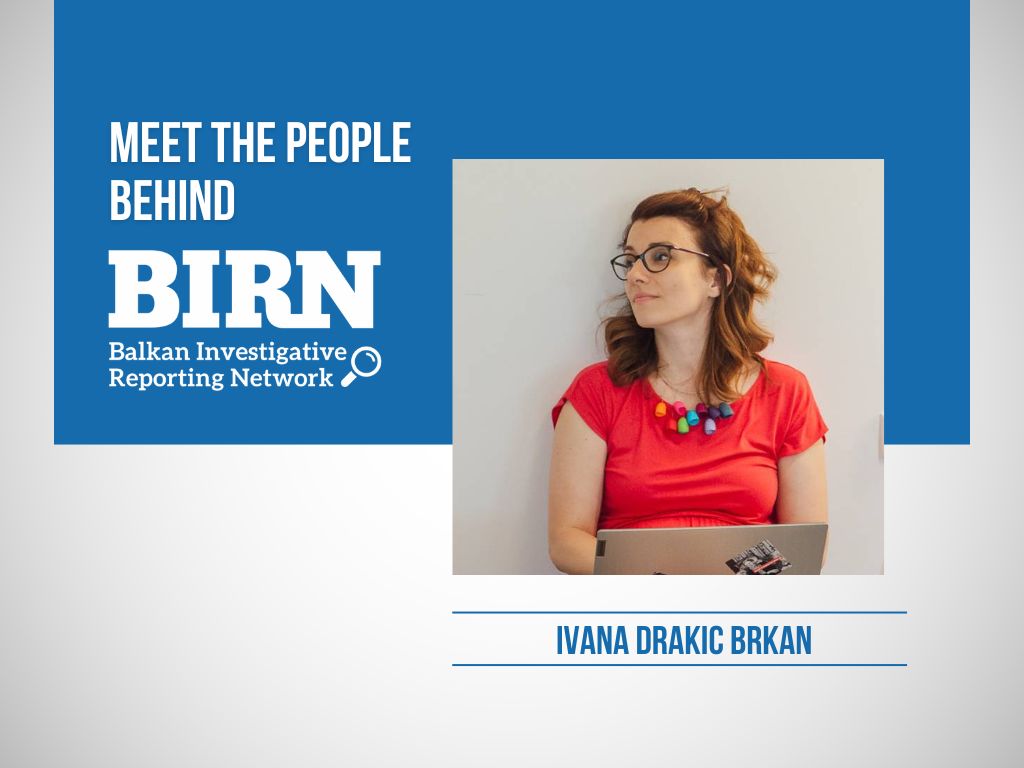
Meet the People Behind BIRN: Ivana Drakic Brkan

BIRN Hub’s Senior Project Manager has been working with BIRN for five years and has witnessed the changes in our organisation during this period.

Before Ivana started work, she graduated from the University of Montenegro in Podgorica and became a political scientist. She also spent one year studying in the US on a USAID/World Learning exchange programme. As she says, it’s hard to recall from this distance how she imagined her career back then.

“But, as a true millennial, I believe I spent more time thinking about summer music festivals I could attend than about my future career.

“Joking aside, I was always passionate about injustice and wrongdoings happening in my home country, Montenegro, and always eager to join any initiatives confronting such things or trying to bring positive change to society, which is why I could easily imagine myself having a career that is interconnected with politics, society and change,” Ivana explains.

She worked for more than 10 years in the NGO sector in Bosnia and Herzegovina and Montenegro before joining BIRN.

“Before joining BIRN, I worked in several NGOs in both countries on similar positions, but on different topics, not media-related. However, I knew about BIRN as one of the most impactful media organisations when it comes to investigative journalism and I often admired the bravery of those journalists who tackle high-risk topics like corruption, business wrongdoing in the region or assets of people in power,” she recalls.

She was excited to contribute to BIRN’s mission in the region, which, over the years, has expanded from investigative journalism to include a significant role in capacity development for other media outlets.

“The most challenging part was understanding BIRN itself, how it functions, bearing in mind the regional office BIRN Hub and the local offices in the region,” Ivana says.

Many things have changed since she started working in BIRN Hub, she explains.

“But I would say most of the changes were positive. One of the most important changes for my work is better communication and understanding between editorial and programme people in the organization,” Ivana says.

Now senior project manager, usually she manages projects that support media development in the region, through tailored training, mentoring, and grants.

“Through the projects I currently manage, we offer support to individual journalists for investigative stories and to media outlets,” she says.

“I was lucky enough to start working at BIRN five years ago, when we developed the Engaged Citizens Reporting tool (ECR tool), which allowed BIRN and other media outlets in the region to become familiar with audience-engaged reporting for the first time.

“This approach brings mutual benefits to both newsrooms and citizens who are involved in or affected by the impact of the stories. After five years, we have almost 90 media outlets across the Western Balkans and the Visegrad region that have access to the tool and involve citizens regularly in their reporting,” Ivana notes.

As for the favourite part of her job, there are several things.

“I find it really enjoyable to have colleagues from all over the region, and so if I need to organise something in Kosovo, I immediately have someone who can help with contacts and local information. I also especially appreciate the possibility to meet, support and work with local media outlets in the region that are struggling to work independently and endure due to the current financial restraints in the sector.

“Finally, I like it when I have the opportunity to organise an event offline; although the preparation can be stressful, it’s also rewarding to see people that you work with or support sharing ideas and connecting in real life, not only on Slack/Zoom/Google Meet,” Ivana explains.

Outside BIRN, Ivana loves music and dancing.

“Before I became a mother of two, theatre was my second home. I finished elementary ballet school as a kid and continued dancing actively for many years in the contemporary dance company in Montenegro called ‘Ballo’.

“Dance is still one of my biggest passions, but I pursue it a bit differently; I play music and dance with kids around the house. I am also very keen to get back in shape when it comes to reading books, and attending summer music festivals whenever it’s possible,” Ivana concludes.

BIRN Contributor Barbara Matejcic awarded Croatia’s ‘Jasna Babic’ Investigative Award

Prestigious award for best journalistic works of 2025 goes to Matejcic for her forensic investigation of photographs of execution taken in Bosnia in May 1992.

The Croatian Journalists’ Association on May 3 awarded the “Jasna Babic” Award for investigative journalism to freelancer and BIRN contributor Barbara Matejcic for articles published in the weekly Novosti in Croatia and in BIRN Serbia.

Her awarded work examined the circumstances under which photographs from the war in the former Yugoslavia were taken in Brcko in Bosnia in May 1992, documenting acts of execution at close range.

Matejcic’s investigation raises critical questions regarding the circumstances that enabled the creation of these photographs, the roles of their authors, and the factors that made such documentation possible.

“It takes an exceptionally precise eye and a strong journalistic instinct to recognise a deeper, even more horrific story in the photographs that so many people have seen before her,” the jury noted.

“This was achieved by Barbara Matejcic, who first suspected the circumstances of their creation and then investigated how the only professional photographs from the war in the former Yugoslavia that show the act of execution up close were taken in Brcko in May 1992,” they added.

“She also consulted court and media archives, including transcripts from the trial of war criminal Goran Jelisic in The Hague, in which the photographs were used as evidence. As an independent reporter, she conducted work of a scope and depth that would typically require an entire journalistic team at major media outlets.

“In doing so, she addressed the shortcomings of international agencies that published and awarded the photographs without sufficient verification of the circumstances surrounding their creation,” the jury continued.

“Since I am not part of a newsroom, but a freelancer for a long time – and through joint work in the media, you get a reflection of your work – the award comes to me as a substitute for that, as if I get feedback from my colleagues for a while, and I miss that,” Matejcic said.

“In addition, I see the HND Award for Investigative Journalism as a reminder of the importance of defending the right to long-term, complex journalistic work. Because investigative journalism, at its core, is a slow, complex, and uncertain process, it is becoming increasingly difficult to handle,” she said.

“Today, journalism is overworked and underpaid. Journalists in newsrooms don’t have time, I didn’t have it either, and I invested a lot of so-called free and unpaid time on this topic, and investigative journalism requires time, and it is not a luxury, but a necessity, just as investigative journalism is not a luxury, but the foundation of any society that wants to be called democratic,” she continued.

Jasna Babic was an award-winning Croatian journalist who, along with colleagues, established the media outlet Globus in 1990, where she worked as a war reporter.

She devoted much of her career to uncovering scandals, exposing criminals, and reporting on the mafia, murders, war crimes, and political maneuvering within leading political parties.

New Exhibition in Sarajevo Examines Media’s Role in Yugoslavia’s Violent Collapse

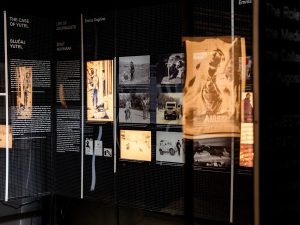
‘Reporting War’, which opened on Wednesday, spotlights how some media in former Yugoslavia actively paved the way for conflict by fuelling fear and deepening divisions in society.

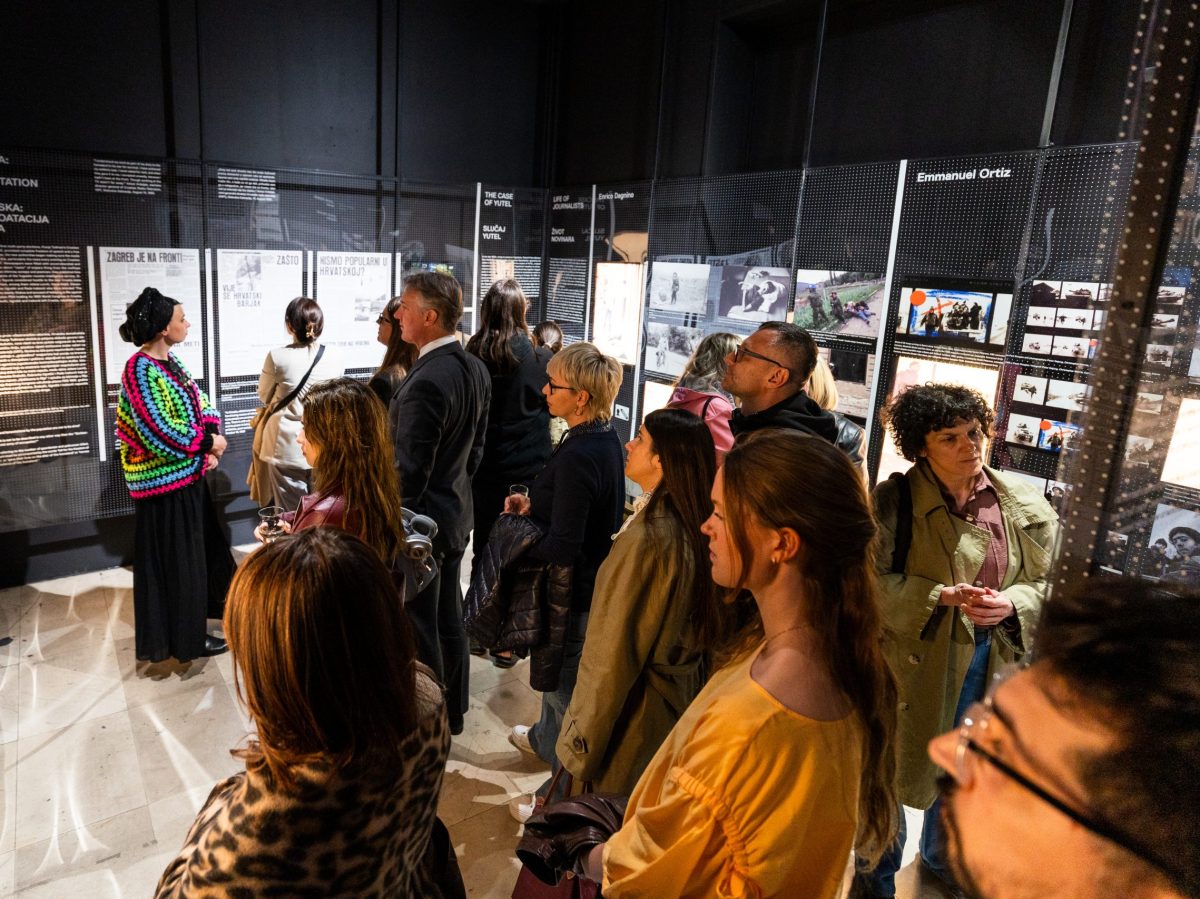
A BIRN exhibition examining the role of media in the violent breakup of Yugoslavia opened on Wednesday at the History Museum of Bosnia and Herzegovina in Sarajevo, drawing a diverse audience of members of the public, civil society organisations, diplomats, academics, and journalists.

Reporting War: The Role of the Media in the Collapse of Yugoslavia explores how segments of the media in the former Yugoslavia moved beyond reporting events to actively shaping the conditions for conflict.

Through curated materials, the exhibition highlights how narratives rooted in historical grievances were amplified to fuel fear, deepen divisions and normalise violence.

Rather than portraying journalists as neutral observers, the exhibition presents a more complex and at times troubling picture, one in which media outlets contributed to the polarisation of society and the erosion of multiethnic coexistence. It frames propaganda not as a byproduct of war, but as a precursor that helped make violence appear both justified and inevitable.

Alongside this, the exhibition offers a contrasting perspective through the work of foreign correspondents who reported from the region during the 1990s. Using contact sheets and field notes, it captures fragments of their daily lives and professional routines, reflecting a generation of reporters some of whom described the Yugoslav wars as “our Vietnam”.

Set against today’s global media environment, marked by algorithm-driven information flows, declining trust in traditional outlets, and increasing hostility toward perceived “outsiders”, the exhibition raises questions about the power of media narratives and their capacity to shape political realities.

The exhibition is open to the public every day from 9 a.m. to 7 p.m. at the History Museum in Sarajevo, Bosnia and Herzegovina.

*The exhibition is implemented as part of the project Reporting Culture: Connecting Communities for Change, supported by the Regional Office of the Italian Agency for Development Cooperation in Tirana. It is carried out by BIRN Hub under the “Culture and Creativity for the Western Balkans” (CC4WBs) grant scheme, a European Union-funded initiative aimed at fostering dialogue and strengthening the cultural and creative sectors across the region.

Workshop on Transitional Justice and Archiving Equips Regional Youth to Document Atrocities

Workshop in Sarajevo focused on challenges in reliably collecting, verifying and preserving evidence in increasingly digital and high-risk environments.

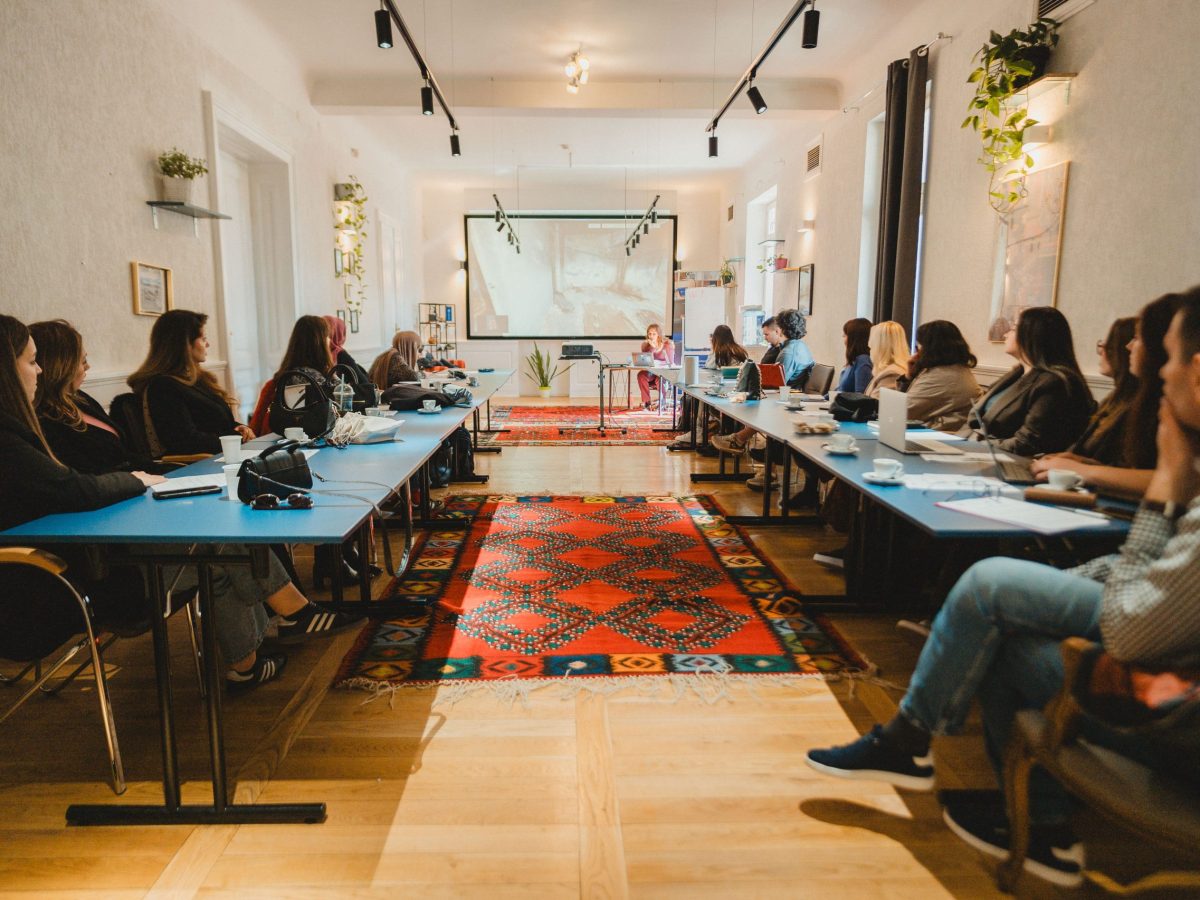
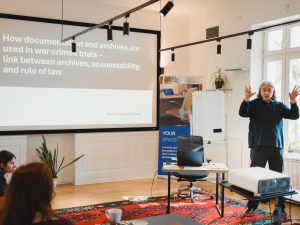
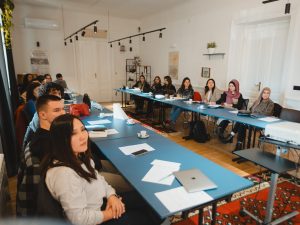
A three-day regional workshop on documenting and archiving human rights violations and international crimes concluded in Sarajevo this week, bringing together around 20 participants from across the Western Balkans to strengthen skills in open-source investigation and transitional justice practices.

Organised by BIRN Hub in collaboration with Mnemonic, the workshop combined legal, archival and digital investigation methodologies to address one of the most pressing challenges in contemporary accountability efforts – how to reliably collect, verify, and preserve evidence in increasingly digital and high-risk environments.

The first day was dedicated to transitional justice mechanisms, with an emphasis on the role of archiving and documentation. BIRN Senior Project Manager Nejra Mulaomerovic introduced participants to the core pillars of transitional justice, alongside an exploration of the critical role archives play in advancing justice and accountability.

The critical role of archives in supporting justice processes was highlighted. Researcher and consultant Lily Radwan explored how documentation contributes to truth-telling, memorialisation and survivor recognition with a Syria case study; criminal law expert Professor Goran Simic examined the use of archival material as evidence in war-crimes trials, underscoring its importance for strengthening the rule of law.

Practical exercises aimed to translate complex transitional justice concepts into accessible public narratives, developing scripts and communication approaches tailored for wider audiences.

As a result of the workshop, BIRN produced a series of short video reels explaining the main pillars of transitional justice, aimed at making these concepts more accessible to a wider public audience.

The second day shifted to the technical and methodological foundations of open-source investigations, OSINT, led by Mnemonic director Hadi al Khatib. Through a structured workflow grounded in international standards, such as the Berkeley Protocol and the Murad Code, participants were introduced to principles of reliability, provenance and reproducibility in digital investigations.

Sessions guided participants through source mapping in high-risk environments, digital archiving techniques and the development of metadata schemas to ensure the integrity and usability of collected materials.

Emphasis was placed on documenting not only content but also context and decision-making processes – key components for ensuring evidentiary value. Participants applied these methods in practical verification exercises, analysing digital content through source assessment, corroboration and geo-temporal indicators.

The workshop concluded with sessions on ethical and legal considerations, focusing on “do no harm” principles, data protection and the responsible handling of sensitive material. A forward-looking discussion on the use of Artificial Intelligence in open-source investigations addressed both its potential and its risks, particularly around bias and misinformation.

The workshop aimed not only to build technical capacity but also to foster a regional network of practitioners equipped to document violations in a way that supports accountability, safeguards affected communities and preserves historical record.

Workshop Overview and Participant Breakdown

Dates and place: 11-13 March 2026, Sarajevo

Number of participants per country:

Kosovo 5

Montenegro 2

Serbia 5

BiH 12

Germany 1

Total number of participants: 25

The full findings and activities are available in the EDS Report, which can be accessed here.

In Memoriam – Mila Moralic

Croatian journalist Mila Moralic has passed away at the age of 45. She will be remembered as an outstanding colleague whose dedication to strengthening her profession will be deeply missed.

Among her many achievements, Mila was also a fellow of BIRN’s Fellowship for Journalistic Excellence for 2025–2026, a prestigious programme awarded to professional journalists from 14 countries across Central and Eastern Europe.

Mila was born on July 24, 1981, in Split. She held a degree in political science with a master’s degree in Comparative Politics, and for more than 20 years she covered both domestic and international politics. She was particularly recognized for her work as the editor of the weekly programme Točka na tjedan (TNT) on N1 television.

In 2025, she received the Marija Juric Zagorka award from the Croatian Journalists’ Association for television journalism. The award was granted for her 2024 interview with European Chief Prosecutor Laura Kovesi, a key figure in the fight against political corruption. In that interview, Kovesi revealed how elements within the Croatian judiciary and political establishment had tried to curtail her office’s remit in investigations involving powerful figures within the executive.

Mila’s investigation for the Fellowship for Journalistic Excellence focused precisely on this issue. Her editor on the programme, Neil Arun, said: “Mila had been with the Fellowship for just under a year. We had enormous hopes for the investigation that she was about to complete. She was astute, meticulous and fearless in her work. A true professional, her death is a tragic loss to her loved ones, and to our industry.”

Mila was also a recipient of the prestigious Fulbright scholarship through the Hubert H. Humphrey Fellowship Programme at the Walter Cronkite School of Journalism in the United States.

She also led the Zagorka Connects project, organised by the Croatian Journalists’ Union. The initiative established a mentoring network between experienced women journalists and younger colleagues at the beginning of their careers, with the goal of empowering women in journalism.

Her colleagues from the Croatian Journalists’ Association paid tribute to her. “Without exaggeration, Mila’s passing is a blow to a democratic society in which the media serves as a foundation, and where committed and honest individuals can make a difference. Mila – a mother, journalist, and colleague – you will be deeply missed. We will continue to pursue the goals and mission to which you were so devoted,” they wrote.

On behalf of journalists from across the region, as well as her fellow colleagues and alumni of the Fellowship for Journalistic Excellence, we extend our deepest condolences to Mila’s family, her husband Ismar, their children, and to her colleagues.

BIRN Alumnus Journalist Wins Environmental Award in North Macedonia

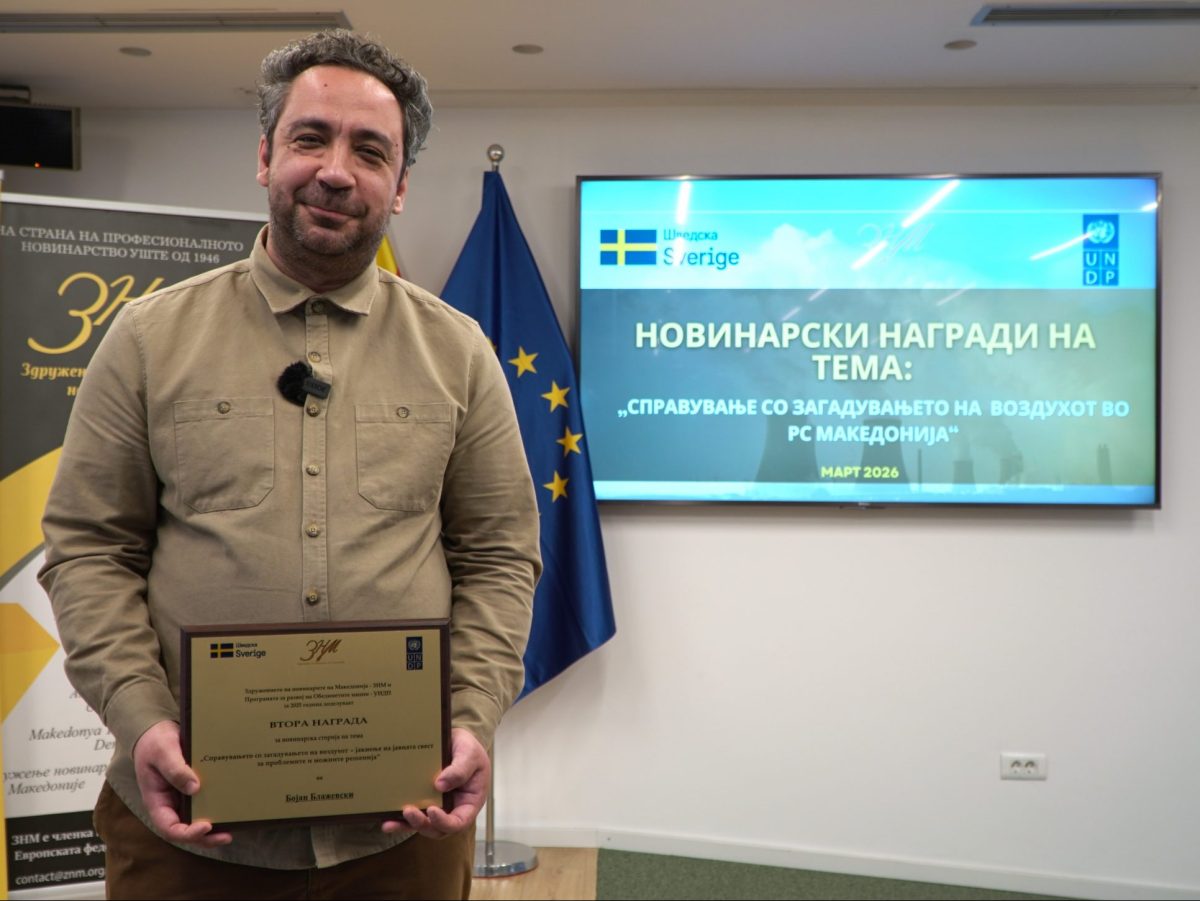
Journalist Bojan Blazevski’s investigation into the phosphogypsum landfill in North Macedonia won second place in the 2025 competition for the best journalistic story on tackling the consequences of air pollution in the country awarded by the Macedonian Journalists’ Association and UNDP.

Authorities Guilty of Complacency Over North Macedonia’s Phosphogypsum Dump”, published on Balkan Insight in August 2025, revealed how millions of tonnes of waste, including radioactive elements, have for decades remained in an unprotected landfill in the village of Zgropolci, near Veles, without institutional oversight, despite the risk to public health and the environment.

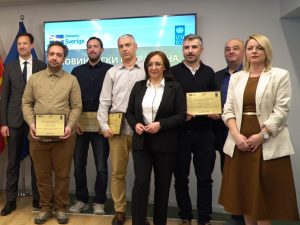
At the awards ceremony on March 2, Blazevski, an alumnus of BIRN’s Fellowship for Journalistic Excellence Programme, called on institutions to introduce systematic monitoring of this environmental hotspot, which, he reminded the audience, “is not the only one in our country causing environmental problems.”

First prize went to journalist Mihail Miloshevski from the newsroom “360 Degrees” for the story “Five More Cities Discovered What Is Polluting Their Air – What Will the Mayors Do”, which identified specific sources of pollution in Kumanovo, Kavadarci, Gostivar, Strumica and Struga.

Third prize went to Vladimir Kalinski of Radio Free Europe for the story “Every Breath Hurts: Testimony of a Cancer Patient on Life in Polluted Skopje”, which conveys the personal struggle of a Skopje resident battling the disease.

A special recognition was awarded to journalist Orce Kostov from “Fokus” for the story “No Measure Is Delivering Results: Skopje Breathes the Most Toxic Air in Europe Despite an Invention to Disperse Fog and Pollutants.”

The awards were presented by the Association of Journalists of Macedonia in cooperation with the United Nations Development Programme, UNDP, and the Embassy of Sweden. The prizes have been awarded for several years to encourage the production of higher-quality investigative journalism on this issue and to put pressure on institutions to address air pollution, which claims several thousand lives in the country each year.

Meet the People Behind BIRN: Maida Selmanovic

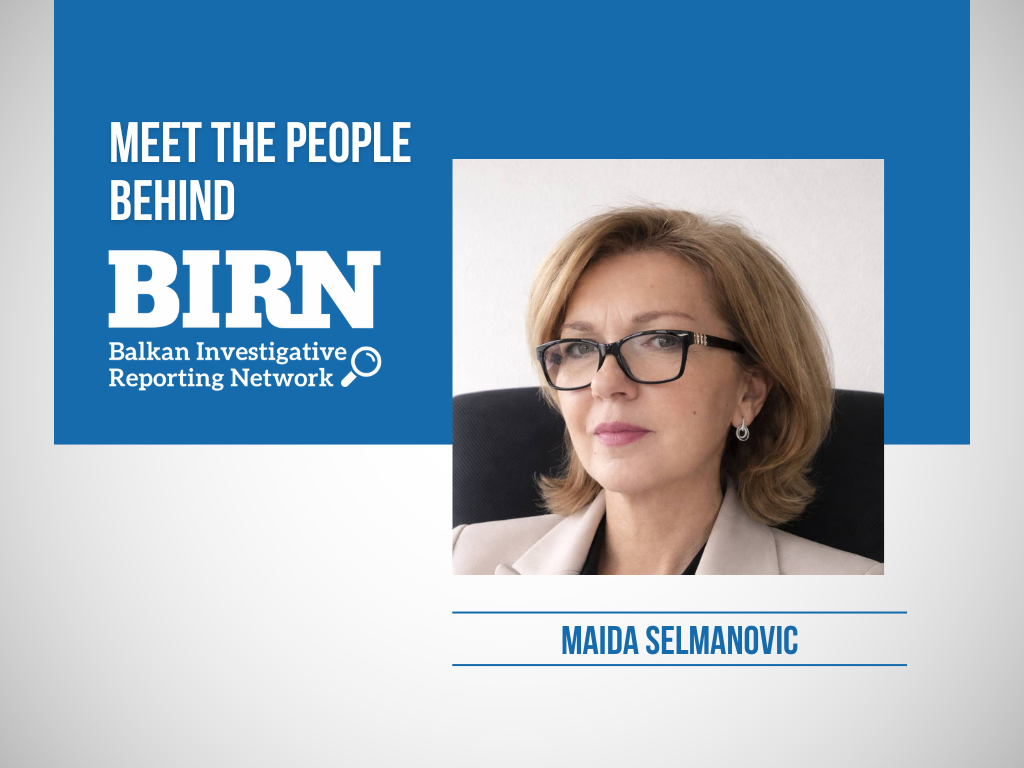
Maida Selmanovic is the Financial Director in BIRN Hub’s office in Sarajevo. She studied at the University of Economic Tourism and has been working with BIRN since 2008.

When Maida first learned about BIRN, she was immediately drawn to its mission: building serious, independent investigative journalism in a region that needed it.

“Even in its early stages, the organisation already had a strong sense of purpose and ambition. It was clear that this was not just another NGO but a place with a long-term vision. It felt like the beginning of something that wanted to last and make an impact,” Maida recalls.

Before joining BIRN, she worked in the private sector for over 15 years, combining finance, procurement and brand management. That experience helped her to develop skills in strategic planning, project management and efficient resource management, which she later applied at BIRN.

“I started as a Financial Officer, expecting to manage finances in a relatively small organisation. Very quickly, I realised I had joined something much more dynamic.

“As the organisation grew, so did my responsibilities. In 2014, I became Financial Director. Over the years, I was not only managing numbers but I was also building financial systems that could support continuous growth,” she explains.

Looking back,  her expectations in 2008 when it comes to BIRN were not only met but evolved alongside the organization; the change in it since her joining has been profound.

“In 2008, we had five donors and projects. By 2010, that number more than doubled. By 2014, we managed 18 projects, and later, more than 35 projects annually. Growth was not only numerical, it was institutional,” Maida recalls.

While she believed in BIRN’s potential, she could not have imagined the scale of regional recognition and influence it would achieve.

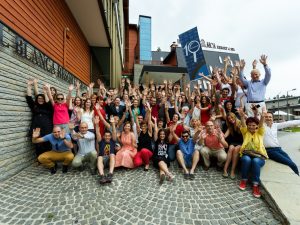
10 years of BIRN, Kopaonik

“That growth was not accidental,” she says. “BIRN is built on vision, passion, discipline, dedication and long-term thinking. Every aspect contributing to its success has been carefully considered: from journalist training, preparing manuals and books such as ‘Digging Deeper’, a book for journalists on investigative reporting published by BIRN in cooperation with Sheila S Coronel, an expert in investigative journalism and professor at Columbia University.

“It is a practical guide with techniques, advice, story examples and tools that help journalists to develop in-depth investigative skills – which is why many in the region refer to it as a ‘primer’ for journalists,” Maida adds.

Special attention has been given to financial transparency and accountability, building strong teams, professionalizing processes, careful risk management and fostering regional cooperation.

Every detail matters to ensure the organisation reaches its full potential, builds donor trust and has a lasting impact on the region. However, there were some big changes over all this time.

“The biggest changes that I have noticed are the scale and complexity of projects, the number of employees and regional cooperation, as well as the professionalization of systems and procedures and stronger internal controls and financial governance. We’ve evolved from a small operational structure into a mature organisation managing multi-donor, multi-country portfolios with high accountability standards,” she explains.

This growth has required an exceptional level of dedication and effort from the team. “During key development phases, we worked for months under intense workloads and extended hours to build systems, meet donor requirements, and ensure the organisation’s stability and credibility. The progress BIRN has made – from five projects up to 35 – is the result of that sustained commitment and hard work,” Maida notes.

And considering all the tasks she is responsible for, when it comes to her everyday business routine, there is rarely a “typical” day.

“My work includes review of all payments made through electronic banking, compliance with legal regulations, reviewing accounting entries, monitoring budgets, overseeing compliance, preparing all financial data for donor reports, and ensuring the accuracy of our internal financial database. Every transaction matters. Financial discipline is not just technical; it is the foundation of donor trust and long-term sustainability,” she adds.

Explaining what she likes most about her work, she says she loves numbers because “they never lie.

“They cannot be altered to fit wishful thinking and they cannot become what they are not. They reflect reality – unchanging, impartial, and clear. If we listen to them, we understand the true story of our work, our challenges, and our achievements,” Maida says.

Maida with Slobodan Georgiev, former editor of BIRN Serbia

What she appreciates most is knowing that strong and accurate financial management creates space for the leadership to focus on key priorities, such as fundraising and strategic development, while journalists can concentrate on producing impactful investigations.

“I have always believed that when finances are stable and transparent, the organisation can operate with confidence and independence. But, if I could change something, I would simplify administrative burdens and reporting complexity, allowing even more focus on strategic growth and long-term development,” she says.

The role of Financial Director, especially managing a large number of projects, is demanding, stressful, and carries significant responsibility. It requires multiple layers of document control and compliance, meeting the requirements of staff, project managers, and audits conducted by authorized firms.

“The work is complex, with many tasks happening simultaneously, and it demands constant attention to detail and coordination. Without a strong and dedicated finance team supporting me – financial officer and administrative officer – managing this complexity and ensuring accuracy and transparency would not be possible,” Maida explains.

In her opinion, one of BIRN’s greatest strengths has always been its leadership and talented people with vision.

“The vision of Gordana Igric, the founder of BIRN Hub, was decisive. Her clarity of purpose, strategic thinking, and extraordinary dedication set the direction for the entire organisation. She worked tirelessly, often beyond limits and her standards shaped our institutional culture.

“Two lessons she shared with me in 2008 have stayed with me ever since: “Never do anything that is not in accordance with the law, and always manage donor funds responsibly and transparently.”  I follow these principles every day in my work,” Maida stresses.

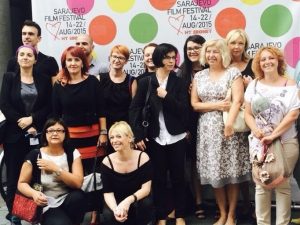
BIRN at the Sarajevo Film Festival, 2015

From her perspective, the success of any organisation depends significantly on the strength and vision of its leadership. In BIRN’s case, that leadership created a foundation of ambition, resilience and integrity that still defines BIRN today. Other key strengths are highly committed and long-term donor trust.

After a day filled with numbers, reports, and strategic decisions, Maida values moments of calm and balance; she spends her spare time doing what benefits her physical and mental health.

“Spending time with my family helps me to recharge and maintain perspective. I also practice yoga and Qi Gong, which help me stay grounded and focused. These practices bring both physical and mental balance, especially after intensive working days,” Maida says.

She also loves to spend time outdoors. “Whenever I can, I spend weekends hiking in nature. Being outdoors, walking in the mountains, and disconnecting from daily responsibilities gives me new energy and clarity,” she concludes.