BIRN Macedonia Starts Investigative Journalism Training Program

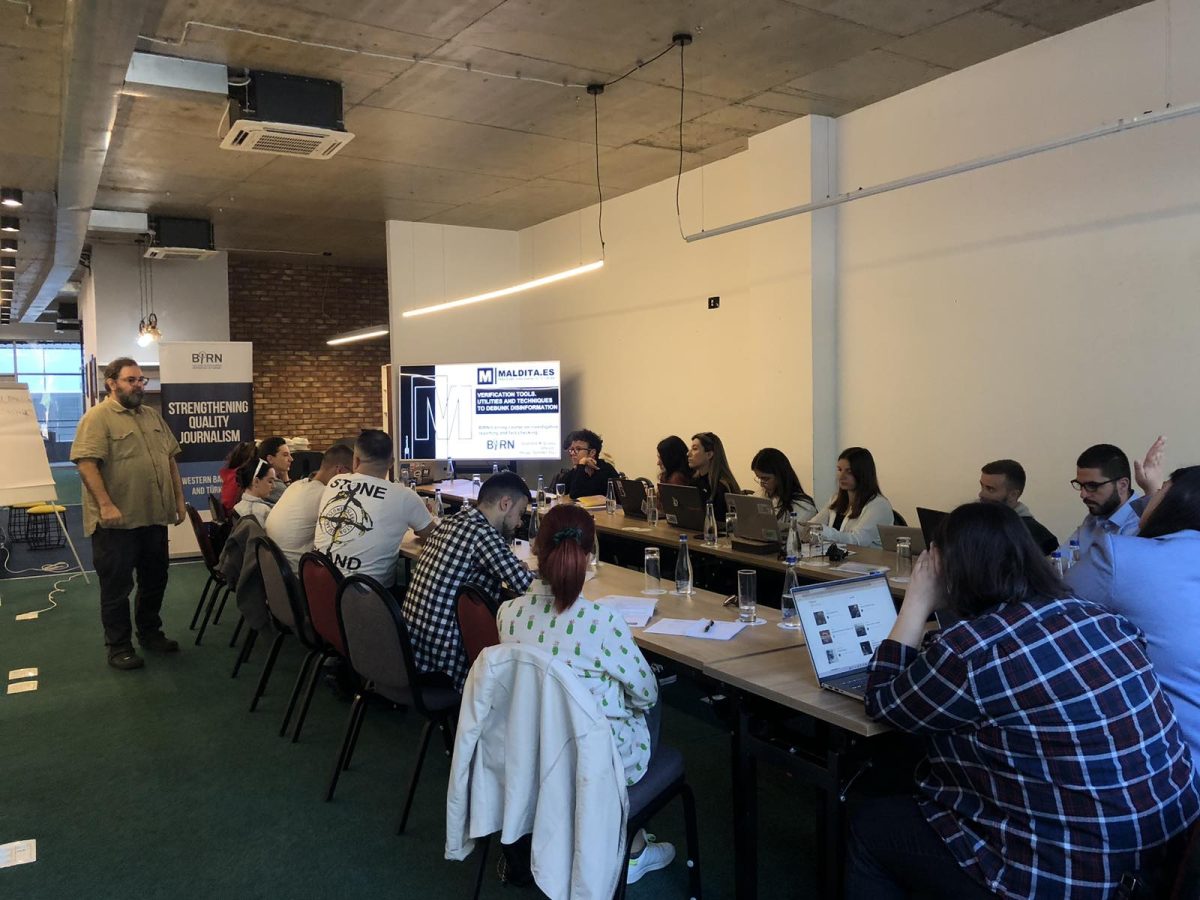
BIRN Macedonia started a series of trainings for 12 young journalists. The training started with a three-day course held between September 29 and October 1 in the North Macedonia’s mountain resort of Mavrovo.

The course was the first in a series of five different training modules that will take place over the next year. The next courses will be held in November, February and April and end with a summer school that will take place in mid-2024 where the journalists attending can acquire skills and techniques that will prepare them for work in journalism. The programme also includes mentoring support.

The first training in Mavrovo consisted of a mix of theoretical lectures and practical exercises. The idea behind the approach was to introduce the participants to important journalistic concepts, while allowing them to apply that knowledge in a practical way.

The topics covered were: public interest vs the interest of public, ethics in journalism, media genres, sources of information, news writing and interview techniques, as well as the language tips for journalistic writing and reporting. All trainings were held by BIRN Macedonia’s editors and journalists.

The weekend wrapped up with an exercise that synthesized knowledge from the training sessions: the participants were asked to produce a short news article based on an announcement from a public institution. Through this, they put into the practice the skills they had gained over the first training module.


EU Awards for Best Investigative Journalism in Serbia Announced

On September 28, in the EU info centre in Belgrade, the winners of the EU Awards for Investigative Awards for Investigative Journalism in Serbia were announced.

KRIK, CINS and a BIRN team of Jelena Zorić and Vuk Cvijić were selected from many colleagues as this year’s winners for their stories published in 2022.

The jury consisted of Tamara Skrozza a journalist who has worked for radio, press and TV productions and engaged with a number of different media outlets; Snjezana Milivojevic, a professor of public opinion and media studies who chaired doctoral and master’s programs at Bayan College in Oman and the University of Belgrade; and Sasa Lekovic, President of the Investigative Journalism Centre, based in Croatia, a reporter and editor and a licensed investigative reporting trainer and lecturer.

The first prize went to the KRIK team (Stevan Dojčinović, Bojana Jovanović, Milica Vojinović and Ana Adžić) for their stories on the Darko Šarić clan.

The second prize was shared between CINS and BIRN. The CINS team (Stefan Marković, Teodora Ćurčić, Jovana Tomić, Ivana Milosavljević and Vladimir Kostić) was awarded for their stories on political party financing.

Jelena Zorić from BIRN was awarded for her stories about medical malpractice in the sensitive area of psychiatric health.

The third prize went to Vuk Cvijić of NIN for his investigations into the connections between criminal circles and state officials, and CINS/BIRN (Dina Đorđević, Marija Ristić, Jovana Tomić and Saša Dragojlo) for “Paths of Serbian weapons”. Part of this series is the investigation “Serbian Rockets Sent to Myanmar Even After 2021 Coup”, a cross-border collaboration between BIRN, CINS, Myanmar Witness and Lighthouse Reports, originally commissioned at the BIRN Summer School of Investigative Reporting in Dubrovnik in 2021.

Manuel Munteanu, Head of Press and Info and Deputy Head of Political Section of the EU Delegation in Serbia, gave a speech highlighting the importance of independent media and extending congratulations to the winners.

Davor Marko from Thomson Media introduced the project and the importance of the EU awa for supporting investigative journalism in the Western Balkans and Türkiye. Snjezana Milivojevic, representing the jury, provided a detailed explanation of the award selection process and announced the recipients of each awarded position.

More information can be found here.

The EU Award for Investigative Journalism 2023 is part of the project “Strengthening Quality Journalism in Western Balkans and Türkiye II”. This aims to recognise and promote outstanding achievements in investigative journalism as well as improve the visibility of quality journalism in the Western Balkans and Türkiye.

The project is funded by the European Union and it is implemented by a consortium composed of Balkan Investigative Reporting Network – BIRN Hub, Central European University (CEU) – Hungary, the Association of Journalists (AJ) – Türkiye, Thomson Media (TM) – Germany, University Goce Delcev Stip (UGD) – North Macedonia, The Independent Union of Journalists and Media Workers (SSNM) – North Macedonia, Media Association of South-East Europe (MASE) – Montenegro, and Balkan Investigative Reporting Network Kosovo (BIRN Kosovo).

BIRN Journalist Frosina Dimeska Wins EU Investigative Award

Frosina Dimeska, a journalist at Prizma/BIRN, has won second prize from the European Union for her outstanding investigative journalism in North Macedonia. The awards ceremony took place on September 28 in Skopje.

Dimeska’s work exposed a significant scandal involving a controversial Ukrainian figure, Oleksandr Onishchenko, who managed to obtain a North Macedonian passport despite being under sanctions from both the United States and Ukraine, where authorities sought his extradition.

The judges recognised the impact of Dimeska’s investigation, leading to the government revoking Onishchenko’s North Macedonian citizenship. However, no individuals have been held accountable for the scandal as of now.

In expressing her gratitude, Dimeska stated: “This award serves as motivation for me and is a testament to Prisma editorial team’s commitment to continued in-depth investigative journalism.”

First prize went to the documentary Bad Blood, produced by the Investigative Reporting Laboratory IRL.

Additionally, “KOD”, a series of video stories aired on TV Telma, secured third place.

The awards, presented by EU Ambassador David Geer in Skopje, celebrate exceptional journalistic work produced over the past year.

BIRN Albania Holds Trainings on Environmental Advocacy

The Balkan Investigative Reporting Network in Albania on September 27 and 29 held two trainings for civil society organisations and activists in Shkodra and Kukes.

The training sessions on environmental advocacy were held as part of the project: “Building Resilience through Environmental Journalism”, which is co-financed by the Democracy Commission Small Grants Program of the US embassy in Tirana and is implemented by BIRN in cooperation with local journalists.

The trainings in Shkodra and Kukes attracted 41 civil society representatives and activists from the northern regions of Albania.

The project aims to strengthen cooperation between NGOs, activists and local journalists in Albania to research, monitor and publish articles on environmental violations, with the aim of increasing awareness, public pressure and advocacy for the most efficient use of natural resources and sustainable development in the country

The training in the town of Kukes, bordering Kosovo, was led by environmental experts Bukurosh Onuzi, Besart Halilaj and Anxhela Vincani. It attracted 22 participants. The training in Shkodra was held by journalist Emi Kalaja and Alminda Mema, executive director of the Ahrus Centre in Shkodra and had 19 participants.

During the training sessions, the experts discussed environmental issues and cooperation between journalists and civil society to tackle them, the work of local environmental organisations to raise awareness and advocate for their causes, as well as intra-institutional cooperation on the local level on environmental issues.


BIRN Journalists Win EU Investigative Journalism Awards in Serbia

Jelena Zoric and Sasa Dragojlo won prestigious EU investigative reporting awards for their stories on clinical trials and arms exports respectively.

BIRN Serbia’s Jelena Zoric was awarded second prize and BIRN Hub’s Sasa Dragojlo was awarded third prize at the EU Investigative Journalism Awards 2023 in Serbia.

The jury awarded Zoric for series of stories about a psychiatrist who has been recording false diagnoses into his patients’ medical records for the sake of a clinical trial he has participated in, and about the role Serbian state institutions played in this trial.

Dragojlo won third prize as a part of a team of BIRN and the Centre for investigative journalism of Serbia CINS, compromised of Marija Ristic, Dina Djordjevic and Jovana Tomic, who reported on Serbia’s arms exports to Myanmar following the army coup in the country.

First prize went to the team of journalists from Serbia’s Crime and Corruption Reporting Network, KRIK, for a series of articles on Serbian drug boss Darko Šarić.

This year, the jury in Serbia awarded two second and two third prizes. Along with Zoric, the second prize was also presented to the CINS team – Teodora Curcic, Jovana Tomic and Stefan Markovic – for their series of reports on political parties’ financing.

Along with BIRN and CINS, the third prize was awarded to Vuk Cvijic, journalist for the weekly NIN.

With a series of articles on the abuse of medical ethics, Jelena Zorić told the shocking story about the fate of people given false psychiatric diagnoses and the unwillingness of the system to investigate and sanction the actions of psychiatrist Aleksandar Miljatović at the health centre in Belgrade, who – for the sake of personal gain – manipulated a large number of people from particularly sensitive group of patients for months.

Drawing on testimonies and analysis of extensive documentation, Zoric’s first investigation, on how Miljatović gave false diagnoses to patients, revealed how he abused psychiatric patients, while the second article, “Health centre Palilula: Doubtful clinical trial of a drug approved by everyone”, dealt with the institutional responsibility of all who knew and approved, despite legal prohibitions, the clinical trial of the drug primavanserin to be conducted in one of Belgrade’s public health centres.

Saša Dragojlo, along with colleagues Dina Djordjevic, Marija Ristic and Jovana Tomic, received the award for an investigation into Serbia’s exports of millions of euros worth of rockets to Myanmar in 2021, days after a military coup that has since triggered a civil war – ignoring requirements that the government revoke any arms export permit should conditions in the destination country change and there be a risk that the arms might be used to violate human rights.

This year’s jury members in Serba were Snjezana Milivojevic, professor at the Faculty of Political Sciences at Belgrade University, Tamara Skrozza, journalist and a member of Serbia’s Press Council and Sasa Lekovic, president of the Centre for Investigative Journalist of Croatia.

The organiser of the award is Thomson Media, an organisation with decades of experience in media development and the promotion of media freedom on a global level.

The EU Award for Investigative Journalism 2023 is part of the project Strengthening Quality Journalism in Western Balkans and Türkiye II. It aims to recognise and promote outstanding achievements in investigative journalism as well as improve the visibility of quality journalism in the Western Balkans and Türkiye.

The project is funded by the European Union, and is being implemented by a consortium composed of Balkan Investigative Reporting Network – BIRN Hub, Central European University (CEU) – Hungary, Association of Journalists (AJ) – Türkiye, Thomson Media (TM) – Germany, University Goce Delcev Stip (UGD) – North Macedonia, The Independent Union of Journalists and Media Workers (SSNM) – North Macedonia, Media Association of South-East Europe (MASE) – Montenegro and Balkan Investigative Reporting Network Kosovo (BIRN Kosovo).


EU Awards for Best Investigative Journalism in Kosovo Announced

On September 20 in Prishtina’s Kino Armata, the winners of the EU Awards for Investigative Awards for Investigative Journalism were announced.

Journalists Kreshnik Gashi, Dafina Halili and Saranda Ramaj were selected from many colleagues as this year’s winners for their stories published in 2022 about corruption, mismanagement, and discrimination.

The jury consisted of Lutfi Dervishi, investigative journalist who founded ACQJ’s Journalism Investigative Lab and worked as editor of 31 Minutes and as a journalist trainer; Arbana Xharra, awarded investigative journalist and expert on religious radicalization; and Agon Maliqi, political analyst and media writer, co-founder of Sbunker, an analytical platform in Prishtina.

The first prize went to Kreshnik Gashi, from Kallxo.com, for his series, Blerja e Kryeprokurorit I dhe II (Purchase of the Chief Prosecutor). This two-year investigation blew the lid off a high-profile corruption scandal involving a businessman and a prosecutor in  Kosovo.

Second prize went to Dafina Halili, a journalist from KOSOVO 2.0, for her story, Ghost Schools, Ghetto Schools and Segregated Shifts, which exposed discrimination against Roma and Ashkali children in the Serbian education system in Kosovo.

Saranda Ramaj, from Koha.net, earned third prize for her series, Abuzimet me Fondin per Trajtim Jashte Institucioneve Publike (Abuses of the Outpatient Treatment Fund). These articles delved into corruption and mismanagement within Kosovo’s healthcare sector.

The awards were handed by the EU Ambassador in Kosovo, Tomas Szunyog who greeted the participants. Davor Marko from Thomson Media, in his capacity as project’s partners’ representative, introduced the project and the importance of the award for journalism. Agon Maliqi, representing the jury, provided a detailed explanation of the award selection process and announced the recipients of each awarded position.

More information can be found here.

The EU Award for Investigative Journalism 2023 is part of the project “Strengthening Quality Journalism in Western Balkans and Türkiye II”. This aims to recognise and promote outstanding achievements in investigative journalism as well as improve the visibility of quality journalism in the Western Balkans and Türkiye.

The project is funded by the European Union, and it is implemented by a consortium composed of Balkan Investigative Reporting Network – BIRN Hub, Central European University (CEU) – Hungary, the Association of Journalists (AJ) – Türkiye, Thomson Media (TM) – Germany, University Goce Delcev Stip (UGD) – North Macedonia, The Independent Union of Journalists and Media Workers (SSNM) – North Macedonia, Media Association of South-East Europe (MASE) – Montenegro, and Balkan Investigative Reporting Network Kosovo (BIRN Kosovo).


EU Awards for best Investigative Journalism in North Macedonia Announced

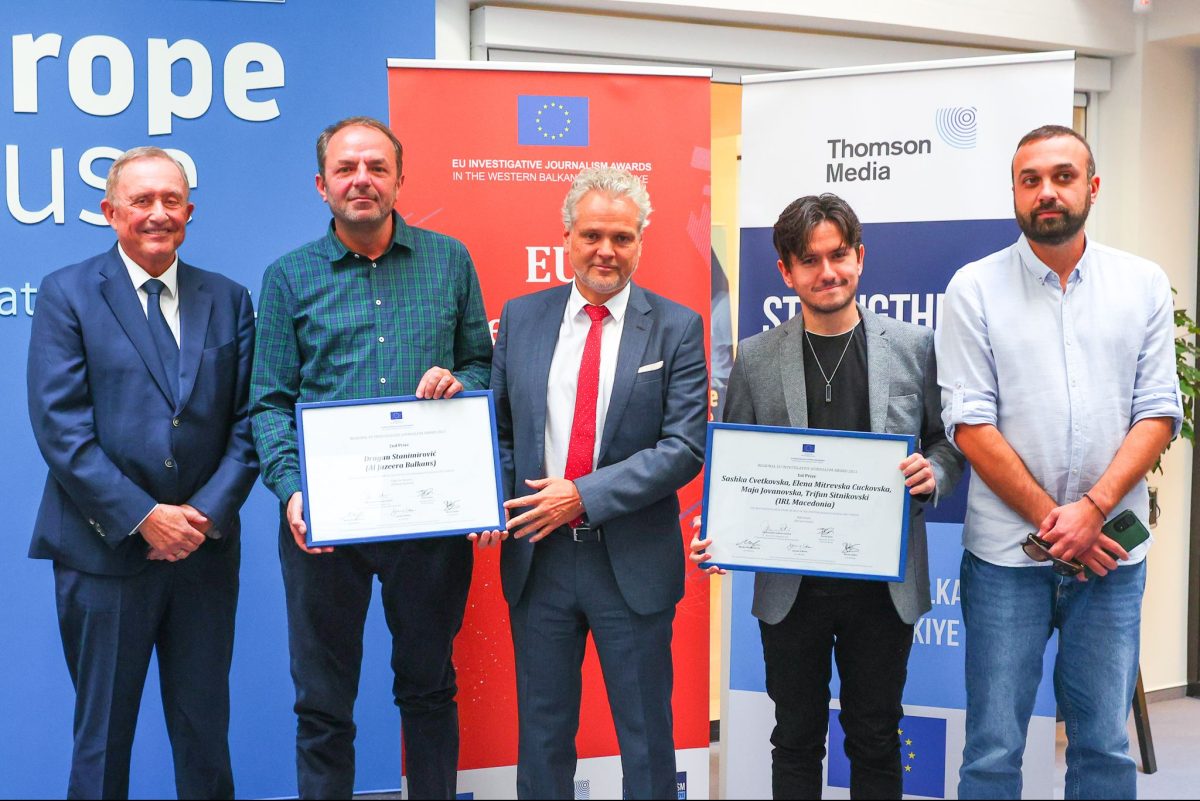
On September 28 in Europe House in Skopje, the winners of the EU Awards for Investigative Journalism in North Macedonia were announced.

Journalists from IRL Macedonia (Saska Cvetkovska, Elena Mitrevska Cuckovska, Maja Jovanovska, Trifun Sitnikovski), Frosina Dimeska, Miomir Serafinovic, Snezana Lupevska were selected from many colleagues as this year`s winners for their stories published in 2022.

The jury consisted of Konstantin Testorides, a journalist with more than 40 years of experience based in Skopje, with background as a correspondent for Tanjug News Agency and Associated Press and with a working experience in various news outlets as journalist and editor in TV stations and news agencies; Filip Rudić, a journalist based in Belgrade, currently working for the regional TV channel N1 in Serbia who also won the Anthony Lewis Prize for Exceptional Rule of Law Journalism and was a finalist for the Global Shining Light Award with the Centre for Investigative Journalism of Serbia; and Boris Georgievski, a Macedonian-German journalist currently serving as the Head of the Macedonian Program with the German international broadcaster Deutsche Welle (DW). He worked as a reporter, editor and correspondent for various news outlets  and was the winner of the Investigative journalism award in 2008 and the EU Award for investigative journalism 2016.

The first prize went to Saska Cvetkovska, Elena Mitrevska Cuckovska, Maja Jovanovska and Trifun Sitnikovski from IRL Macedonia for their story Bad blood / Нечиста крв which shed light on the treatment of patients in a private hospital in North Macedonia during the COVID-19 epidemic.

Second prize went to Frosina Dimeska from Prizma for the story A fugitive Ukrainian politician under US sanctions received Macedonian citizenship / Избеган украински политичар под санкции на САД, добил македонско државјанство. Following publication of the story, North Macedonia revoked the citizenship of the Ukrainian politician.

Third prize was given to Miomir Serafinovikj and Snezana Lupevska Sozen who did a series of stories: The state did not collect money from a convicted crime, (Un)successful confiscation of Transmet / КОД: Државата не наплати пари од пресудено кривично дело-(Не)успешната конфискација на Трансмет as part of the investigative show KOD broadcasted on TV Telma.

The awards were given by Ambassador David Geer, Head of the Delegation of the European Union who highlighted the importance of investigative journalism. A representative from the jury, Konstantin Testorides, provided a detailed explanation of the award selection process and announced the recipients of each awarded position.

More information can be found here.

The EU Award for Investigative Journalism 2023 is part of the project “Strengthening Quality Journalism in Western Balkans and Türkiye II”. This aims to recognise and promote outstanding achievements in investigative journalism as well as improve the visibility of quality journalism in the Western Balkans and Türkiye.

The project is funded by the European Union, and it is implemented by a consortium composed of Balkan Investigative Reporting Network – BIRN Hub, Central European University (CEU) – Hungary, the Association of Journalists (AJ) – Türkiye, Thomson Media (TM) – Germany, University Goce Delcev Stip (UGD) – North Macedonia, The Independent Union of Journalists and Media Workers (SSNM) – North Macedonia, Media Association of South-East Europe (MASE) – Montenegro, and Balkan Investigative Reporting Network Kosovo (BIRN Kosovo).


EU Awards for Best Investigative Journalism in Albania Announced

On September 21 in Europe House in Tirana, the winners of the EU Awards for Investigative Awards for Investigative Journalism in Albania were announced.

Aurora Velaj, Osman Stafa, Anila Hoxha and Artan Rama were selected from many colleagues as this year’s winners for their stories published in 2022 exposing wrongdoings related to discrimination, healthcare and spendings of public funds.

The jury consisted of Jeton Mehmeti, media professional, consultant, researcher, Chairman of the Independent Media Commission and lecturer at the University of Prishtina; Ornela Liperi, editor-in-chief of Monitor magazine, and Valbona Sulçe, journalist and media researcher with a background in diversity, gender equality, media literacy, and ethical journalism, championing the cause of Albanian women in audiovisual.

The first prize went to Velaj for her documentary Po na shujn!. This story reveals the silent ethnic cleansing of Albanians in Serbia’s Presheva Valley through postal address removal, shedding light on discrimination against the country’s ethnic Albanian population.

The second prize went to Stafa for his story Mungesa e ilaçeve në QSUNT rrezikon jetën e fëmijëve, që vuajnë nga tumori, which spotlighted the challenges of supplying essential drugs to children with cancer in Albania, driving change in healthcare.

The third prize was given to the stories produced by Anila Hoxha’s “Sekret shtetëror”, which explores the human and financial costs of helicopter contracts in Albania, and Artan Rama’s “Kush e kontrollon Butrintin/Who manages Butrint?”, which exposes management and transparency issues at Albania’s significant heritage site, urging preservation and accountability.

The awards were given by the Deputy Head of the European Delegation in Albania, Jean-Baptiste Le Bras, who emphasized the pivotal role of investigative journalism in democracy, governance, and accountability.

Blerjana Bino from Thomson Media introduced the project and the importance of the EU award for supporting investigative journalism in the Western Balkans and Türkiye. Ornela Liperi, representing the jury, provided a detailed explanation of the award selection process and announced the recipients of each awarded position.

More information can be found here.

The EU Award for Investigative Journalism 2023 is part of the project “Strengthening Quality Journalism in Western Balkans and Türkiye II”. This aims to recognise and promote outstanding achievements in investigative journalism as well as improve the visibility of quality journalism in the Western Balkans and Türkiye.

The project is funded by the European Union and it is implemented by a consortium composed of Balkan Investigative Reporting Network – BIRN Hub, Central European University (CEU) – Hungary, the Association of Journalists (AJ) – Türkiye, Thomson Media (TM) – Germany, University Goce Delcev Stip (UGD) – North Macedonia, The Independent Union of Journalists and Media Workers (SSNM) – North Macedonia, Media Association of South-East Europe (MASE) – Montenegro, and Balkan Investigative Reporting Network Kosovo (BIRN Kosovo).


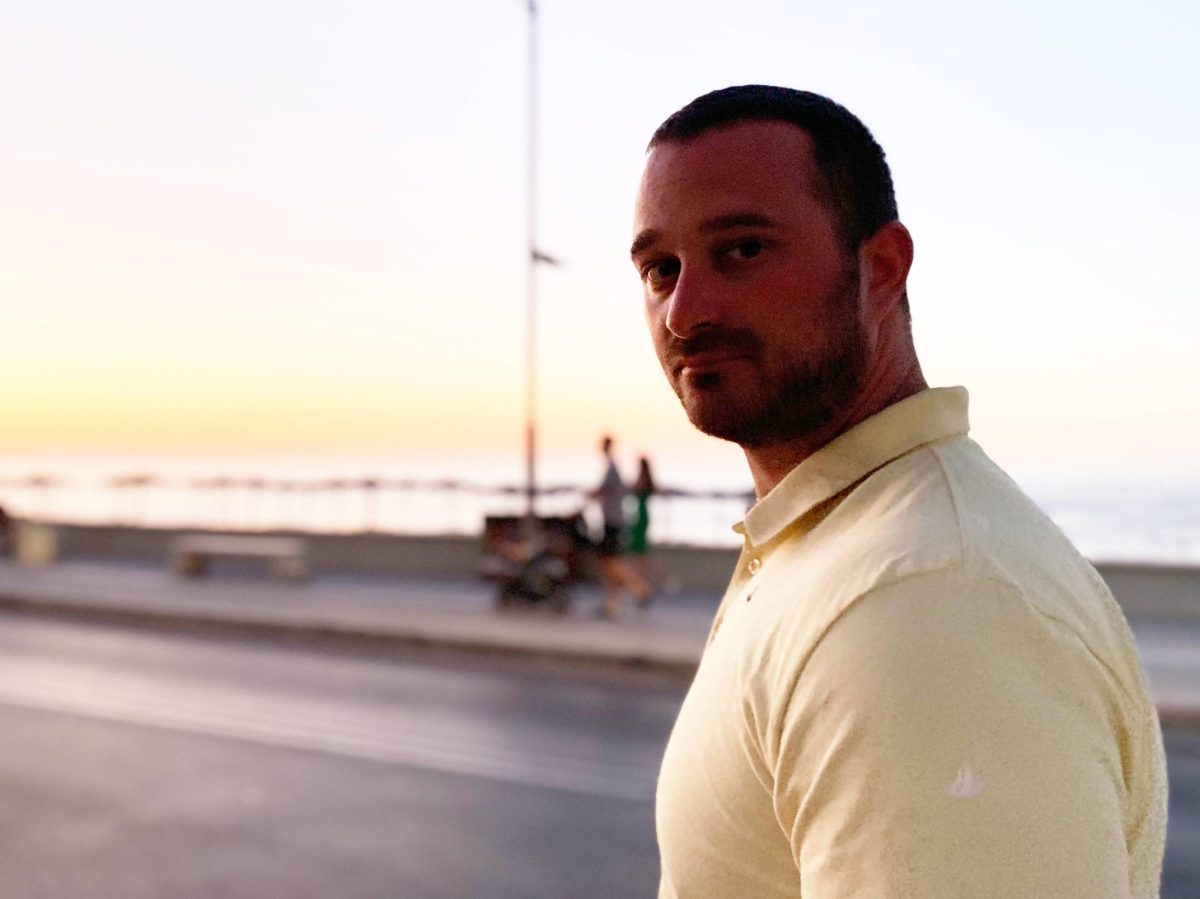
Meet the People Behind BIRN: Sasa Dragojlo

Each month, BIRN introduces you to a different member of its team. For September, meet Sasa Dragojlo, Balkan Insight’s Serbian correspondent.

Sasa Dragojlo, 33, wanted to write poetry with rhythm and hip-hop music but at the same was curious about people and the world. Eventually, he decided to become a journalist because it combines all of these.

Before journalism, he did many jobs from working in call centres to warehouses; however, in April 2015 he grasped the opportunity to work for BIRN. Since then, he has never quit this “nutjob profession”, as he calls it.

His favourite topics to work on are about corruption, crime, human trafficking, etc. Together with BIRN’s Kosovo correspondent, Xhorxhina Bami, he worked on an investigative story on the weaponry seized from Serb gunmen in northern Kosovo.

Recently, he won third prize as part of a team of BIRN and the Centre for investigative journalism of Serbia CINS for an investigation into Serbian arms exports to Myanmar following the army coup in that country. He also won third prize in the EU investigative awards for a story on a translator for the Serbian police who led a people-smuggling gang.

Let’s meet him!

  1. Why did you become a journalist and work for an investigative non-profit like BIRN? What do you like most in your job, and what is the most challenging thing?

I always wanted something linked to writing – from literature to poetry with rhythm, etc., like hip hop music. However, I have also been curious about the world in general and why we, as individuals, act like we act and that led me to the politics of our communities and the ideologies that shape them. But I also like to be active, learn about real people and ‘fight the power’. And when you combine all that, you get journalism – an eclectic field that combines all of that. However, when I got my degree at the Faculty of Political Science the future in journalism was not so clear. I wrote columns, essays and free-form prose in multiple online media, but could not live off it, so I worked multiple ‘real jobs’ – from call centres to warehouses. I thought I would never find a media that wanted me, have enough money, or where I wanted to work (I would not want to work in 90 per cent of the media; a construction job looked more attractive). But in April 2015 I got a chance to work for BIRN and since then I never quit this nutjob profession.

  1. What kind of stories do you prefer to work on?

I like to work on stories where, along with big corruption or crime, you have a story of ordinary small people. During my career I noticed that many colleagues would avoid stories about labour exploitation, human trafficking, or the housing crisis, but chase procurement frauds or dirty things concerning big names in politics, etc. But I find it wrong, and it’s one of the reasons people do not trust old-school media. Since I started working, I always emphasized those topics and they are the ones I’m proudest of. I would not name one, because there are really a lot of them.

  1. Together with Xhorxhina Bami, you worked on an investigative story on the weaponry seized from Serb gunmen in northern Kosovo last month. Would you like to tell us more about this?

This story is a classic reaction to an event that shook the whole region and even further. We wanted to see what we can do as a proper and professional newsroom. Since both sides – Belgrade and Pristina – are not trustworthy actors and are looking for their propagandist angle, we decided to take a look at the material evidence – the weapons arsenal seized by Kosovo Police. After days of close looks at the weapons, we found our angle – a pile of weapons whose marks suggested they were made in Serbian institutions or arms factories in recent years, which made them easier to trace. Our story was the first independent evidence in this case and many regional media were interested in reporting about it. I gave numerous interviews in Serbia and a few in the region and I hope the impact will not end at that.

  1. Recently, you won third prize as part of a team of BIRN and the Centre for investigative journalism of Serbia CINS for an investigation on Serbia’s arms exports to Myanmar. Also, you won third prize in the EU awards for a story on a Serbian police translator who led a people-smuggling gang. Tell us more about these investigations.

The investigation about Serbia’s arms export to Myanmar following the army coup in that country was a great example of collaboration between different media organisations. When we found out we were working on the same story, we decided to cooperate and not to go into competition. That is the main reason I really like that story, beside it shows how business and especially the arms industry are always looking to bypass legal and ethical norms. Tackling that is one of the key goals of professional journalism.

The story “With Police Connections, Serbian-Syrian Translator Turned People-Smuggler” is one of my favourite stories. I spent months working on it, meeting sources in the crime underworld, informants of security services and police, and lost a lot of nerves to prove my claims. But the results have been rewarding. This story shows how our world works – hypocrisy and fake humanitarians, criminals and police as two sides of the same coin, violence and human rights violations as a norm – the refugee crisis as a global phenomenon we cannot escape from. As much as we ignore it, it will not stop. Things seem to get much worse, considering the ongoing ecological and social crisis, along with bloody wars all over the globe.

  1. Can you advise fellow journalists from the region on how to investigate arms trafficking? 

First, I would tell any journalist to develop sources. Go out there and speak to the devil itself. Not for exhibitionism, but to understand and collect information you will use in the public interest. You need to touch the heart of darkness in order to write about it. In our world, where the few rule the many, good contacts are essential. Important information, unfortunately, is rarely obtained through FOI requests. OSINT methods are necessary and really essential to investigate arms trafficking, but without good sources, in most cases, you are just touching the surface.


BIRN Seeks AI Researchers from Croatia and Hungary

BIRN is seeking applications for multiple positions of Country Researcher for the Global Index on Responsible Artificial Intelligence (GIRAI) project to support the development of a comprehensive set of benchmarks for measuring countries’ commitment towards responsible AI worldwide.

Who can apply?

Candidates from Croatia and Hungary are welcome to apply for this position.

Role overview

As a Country Researcher, you will be involved in gathering and assessing evidence on responsible AI commitments and progress in your designated country, contributing to advancing accountable and rights-based AI principles globally.

The main tasks and responsibilities include:

  • Collecting and evaluating data on your nation’s AI commitments and advancements.
  • Contributing to global best practices for responsible AI.
  • Attending essential training courses on GIRAI tools, methodology and data collection.
  • Complying with data quality standards, submission timelines and data collection processes set by GIRAI and BIRN.
  • Investigating key AI thematic areas: Gender Equality, Data Protection, Privacy, Bias, Discrimination, Labour Protection, Accountability, Transparency, etc.

Minimum requirements

  • Awareness of recent AI policy developments in your country.
  • Proficiency in English and at least one official language of your country.
  • Demonstrated experience in data collection and research.
  • Ability to work autonomously, meet deadlines and maintain data quality.
  • Full-time availability from mid-October 2023 to March 2024.

How to apply

Apply by completing the following application form before Friday, October 6, 2023, at 5pm (CET). Only shortlisted candidates will be contacted.