BIRN’s 12th Annual Summer School Starts in Slovenia

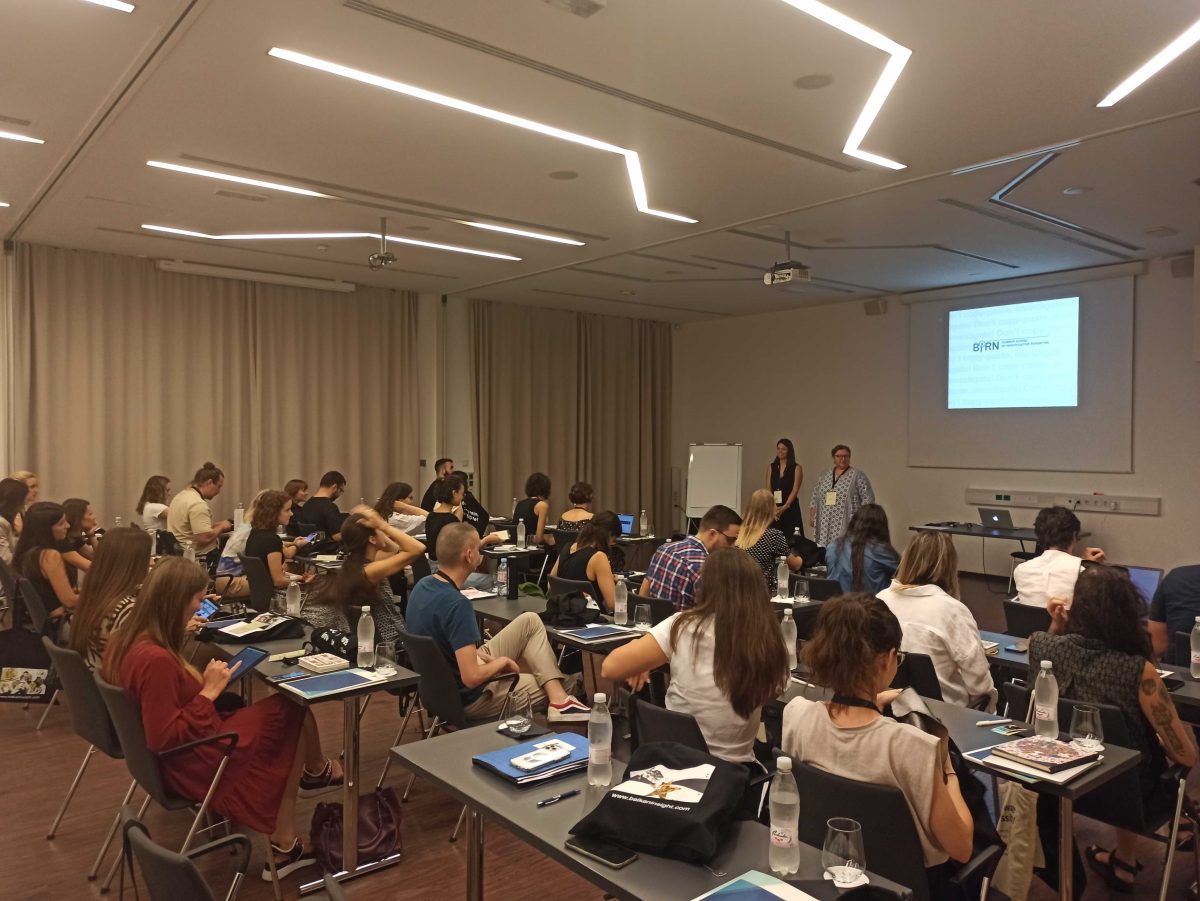
For the 12th time, BIRN’s Summer School of Investigative Reporting is bringing together 30 journalists from South-East and Central European countries for a week-long training programme to develop skills, explore new techniques and start cross-border cooperations.

This year’s Summer School of Investigative Reporting started on Monday in the Slovenian town of Portoroz.

During the week-long programme, journalists from Albania, Bosnia and Herzegovina, Bulgaria, Croatia, Czechia, Greece, Hungary, Kosovo, Moldova, Montenegro, North Macedonia, Poland, Romania, Serbia, Finland and Ukraine will learn new skills and techniques and work on investigative stories.

The head of Regional Operations at BIRN, Dusica Stilic, welcomed the participants selected from a record-breaking number of applications – 180 this year.

“We are very proud to have this extraordinary group of people eager to learn to become the best version of an investigative journalist they possibly can be,” Stilic said.

Ivana Nikolic, leading the Investigative Reporting Initiative Programme at BIRN, presented the agenda and encouraged the participants to work towards pitching powerful stories.

“This week, you will learn a lot about innovative journalism techniques and skills from award-winning journalists and editors,” Nikolic said, adding that for the first time this year, participants will have the opportunity to learn how to stay safe online while working on their investigations.

Freelance coder and data specialist Friedrich Lindenberg gave an introduction to open data for investigations. Lindenberg has been working with investigative journalists and anti-corruption activists for the past decade and has built data-driven tools that support their work.

Lindenberg gave practical advice on effectively searching and cross-referencing open databases and using various tools to track documents.

“It’s important to remember that a search doesn’t make any document or information reliable and doesn’t take away the journalist’s responsibility,” he told the participants.

The first day ended with the journalists sharing ideas and starting to work on pitching cross-border investigative stories.

Open Call: Audience-Engaged Journalism Grants

Media outlets from Albania, Bosnia and Herzegovina, the Czech Republic, Hungary, Kosovo, Montenegro, North Macedonia, Poland, Serbia and Slovakia that want to engage the public in their investigative reporting are invited to apply for Audience-Engaged Journalism Grants.

BIRN is inviting media outlets interested in connecting with their audiences and reporting on original stories that will make an impact to apply for Audience-Engaged Journalism Grants.

Individual grants will be awarded to selected media outlets that wish to cover national/regional/local topics on their own. Collaborative grants will be awarded to selected media outlets that want to investigate cross-border issues with a media partner.

Audience-engaged reporting, in which ordinary people’s voices are heard and unresolved issues are tackled, has proven a game-changer. Using it helps media outlets to listen to these voices and report on essential topics for their communities while bringing innovation to their investigative reporting and newsrooms.

Audience-Engaged Journalism Grants support media outlets that want to engage their audiences in reporting by providing them with training and mentorship in engagement journalism and usage of the B-Engaged tool, developed by BIRN.

Audience-Engaged Journalism Grants are part of the Media Innovation Europe project managed by a consortium led by the Vienna-based International Press Institute. The consortium includes the Kyiv-based Media Development Foundation, the Berlin-based Thomson Foundation and BIRN.

Ten (10) successful applicants will receive grants based on this call.

BIRN will grant €4,000 to five (5) successful applicants interested in making an individual audience-engaged story.

BIRN will grant €5,000 to five (5) successful applicants interested in making a cross-border collaborative story.

If you already know a media partner with whom you want to work on a cross-border story, you will receive €10,000 to cover expenses for both partners involved. If you are interested in investigating a cross-border story but don’t have a partner, BIRN can find you a matching media outlet.

Content may include news, analysis, investigations etc, and can be in any form – text, audio, video. The content must be promoted through the outlets’ social media channels.

The selected grantees will undergo a four-day training programme that will be offered online, as well as on-the-job mentoring by BIRN editors on how to use and implement innovative, effective audience-engagement tools for investigative community-based reporting.

The participating media will receive training in the use of the B-Engaged tool, developed by BIRN, an online tool that enables the direct engagement of members of the public who are interested in sharing information and evidence related to issues they are facing.

Through training and mentoring, media outlets will also learn: how to select engaging topics; what is important to the audience; how to develop a callout; how to analyse crowdsourced data; how to incorporate data in stories, and how to shape a story according to engagement journalism standards.

The call is open until October 28, 2022 at midnight CET.

To read the full call for application click here.

To apply for a grant, use the online application form and send us a proposal for a story and the required documents.

You can register for the info session on September 15, 2022 via this link.

Follow BIRN on Facebook, Instagram and Twitter to get more notifications.

Co-funded by the European Union. Views and opinions expressed are however those of the author(s) only and do not necessarily reflect those of the European Union or European Commision. Neither the European Union nor the granting authority can be held responsible for them.

Ukrainian Journalists Urge International Media to Combat Russian Propaganda during Launch of BIRN’s Eyewitness Ukraine Project

At the launch of BIRN’s new video project Ukrainian journalists call for international media to keep covering the country’s Russian invasion and combat the Russian propaganda, while they are on the ground verifying the information and simultaneously trying to save their families.

During the launch of BIRN’s new video project, Eyewitness Ukraine, on Thursday, Ukrainian journalists and representatives of international and national organizations, called on international media to contribute in fighting against the Russian propaganda on the invasion of Ukraine while explaining their efforts to verify the information on the ground and obstacles in gathering evidence of war crimes.

“European journalists should reach out to cover reality, to keep the focus on Ukraine and the larger are the chances for us to win,” Alya Shandra editor-in-chief of Ukrainian and English-language outlet Euromaidan Press, said.

The Russian invasion of Ukraine has been followed by constant propaganda and disinformation war, which has been proven very difficult for journalists on the ground who are fighting to combat it by verifying everything in its source. However, they are also in danger for their and their families’ lives due to often being a target by the Russian military despite being press representatives.

The war in Ukraine has already proved deadly for journalists. At least 12 media workers have been killed while covering the conflict so far, and many more have been injured, according to the New York-based Committee to Protect Journalists.

There is evidence that one of them, photojournalist Maks Levin, was executed by Russian forces, media freedom organisation Reporters Without Borders has claimed.

“Thirty eight journalists have been killed (since February 24, 2022) including those on the field (while reporting), those that enlisted as soldiers, and those that were killed during shelling of their cities,” said Ukrainian journalist Lina Kushch, who is also the secretary of the National Union of Journalists of Ukraine and coordinates the work of 24 regional offices with more than 18,000 members.

The Balkan Investigative Reporting Network launched its Eyewitness Ukraine project on Thursday – a new webpage featuring interviews with Ukrainian journalists speaking about their personal experiences of living and working through the Russian invasion of their country.

The Ukrainian journalists are facing constant struggles, including what they had not considered at first.

Angelina Kariakina, the head of news at the Ukrainian Public Broadcaster, said there are many “the journalists on the ground are verifying information but you need an entire car of supplies… like going in a forest”.

Kariakina says they often look “through Russian propagandastic channels and media” as a source of information to identify prisoners of war.

“They have these videos of hundreds of people in prisons, and you can see a familiar face,” she says explaining that “around 7000 people went missing during this war”.

Shandra, who has had to deal with “wanting to cover the war but had to leave to evacuate my children,” calls on international media not to use the recordings being made of prisoners of war saying that “Defenders of Mariupol (were taken prisoners) and they were recorded admitting their crimes”.

Ukrainian journalists are trying to gather as many evidence of war crimes as possible, in close collaboration with the prosecution and legal experts, to prepare cases when the time comes for the crimes to be tried in courts. However, this has been also rather difficult, especially in occupied areas.

As Kariakina explains, the journalists are dependent on information from the citizens in occupied areas who could only provide it if they manage to leave. The only way of leaving, she says, is through Russia and they can only return and provide information if they have enough resources.

Maja Sever, the president of the European Federation of Journalists, EFJ, said that she is “amazed that journalists in Ukraine have the will to fight for the truth,” considering they are in the most difficult situation a journalist can be.

As the war continues, BIRN will add more interviews to the Eyewitness Ukraine webpage to give more insights into how media workers are dealing with the ongoing stress of living through months of conflict while continuing to do their jobs.


Eyewitness Ukraine Project Shows Journalists’ Experiences of War

BIRN’s new video project features interviews with Ukrainian journalists about how the Russian invasion has changed their work and personal lives, creating a record of media workers’ experiences during the war.

The Balkan Investigative Reporting Network launched its Eyewitness Ukraine project on Thursday – a new webpage featuring interviews with Ukrainian journalists speaking about their personal experiences of living and working through the Russian invasion of their country.

The journalists talk frankly about how they reacted when they first heard that the invasion had started in February, the dangers that they have faced reporting on the war, and how their work during wartime has affected their personal lives.

They also discuss issues like the war’s impact on media freedom, the challenges of upholding objectivity while reporting on an invasion of your own country, and the problems posed by official restrictions imposed under martial law, as well as Russian disinformation and propaganda.

“These interviews highlight Ukrainian journalists’ commitment to reporting the war in their country despite the risks they face,” said Matthew Collin, BIRN’s editor on the Eyewitness Ukraine project.

“Almost six months into the conflict, they have remained dedicated to seeking the truth, informing the public and upholding media freedom as best they can in a state under invasion,” Collin added.


Among the interviewees are prominent media figures like Angelina Kariakina, the head of news at the Ukrainian Public Broadcaster, Andriy Tsaplienko, a television journalist for 1+1 TV who is renowned for his war reporting, and Nataliya Gumenyuk, co-founder of the Public Interest Journalism Lab and of Hromadske TV.

In her interview for the Eyewitness Ukraine project, Kariakina said that she and other Ukrainian journalists have witnessed terrible violence during the conflict.

“I’ve seen the bodies on the streets, I’ve seen the horrific demolitions of the residential areas, I’ve seen villages just burned down,” she said.

“But I’ve also seen and I’ve witnessed incredible examples of solidarity and courage and help,” she added.

Kariakina argued that the purpose of journalism has remained the same despite the war – “to put light into dark places, to give voice to the voiceless, to report the truth, and just to be there for the people”.

As the war continues, BIRN will add more interviews to the Eyewitness Ukraine webpage to give more insights into how media workers are dealing with the ongoing stress of living through months of conflict while continuing to do their jobs.

The war in Ukraine has already proved deadly for journalists. At least 12 media workers have been killed while covering the conflict so far, and many more have been injured, according to the New York-based Committee to Protect Journalists.

There is evidence that one of them, photojournalist Maks Levin, was executed by Russian forces, media freedom organisation Reporters Without Borders has claimed.

See the Eyewitness Ukraine interviews here.


Calling all newsrooms: Four innovation support schemes open for applications

Four new funding and support programmes that will bring innovation to newsrooms accross Europe are open for applications for media outlets. Choose between the Transition Accelerator, Deep-Dive Business Consultancies and Audience-Engaged Journalism Grants, and Media Innovator’s Mentorship Programme. Find out which suits your newsroom needs.

  • The Media Innovation Europe consortium is excited to announce the launch of four new calls for newsroom innovation, business strategy and digital transition projects for publishers in Europe.
  • The Transition Accelerator, Deep-Dive Business Consultancies and Audience-Engaged Journalism Grants are open to applicants until 28 October at 23:59 CET.
  • The International Press Institute is also opening a two-year rolling application for the Media Innovator’s Mentorship Programme, matching industry leaders with individuals and newsrooms for peer-to-peer support for challenges in their newsrooms.
  • See full information and frequently asked questions.

VISIT THE MEDIA INNOVATION EUROPE WEBSITE AND APPLY

Newsrooms across Europe face new challenges that demand innovative solutions. Against a backdrop of waning trust in media and plummeting ad revenues, publishers are pressed to find new ways to engage audiences, restore public confidence and navigate digital transformation. For publishers, starting the innovation journey requires buy-in from their teams, identifying a problem to solve and fitting solutions into a broader strategy for sustainability and growth.

The Media Innovation Europe consortium, led by the International Press Institute (IPI) and in partnership with Thomson Foundation (TF), the Balkan Investigative Reporting Network (BIRN) and the Media Development Foundation (MDF), is launching calls for four new funding and support programmes across Europe to help newsrooms solve these challenges.

“Together, we believe that innovation is key to the editorial independence and financial sustainability of newsrooms as they navigate the digital transition and build back trust in independent journalism,” said Jacqui Park, IPI’s head of network strategy and innovation.

Transition Accelerator

 Managed by IPI, the Transition Accelerator is a six-month programme for small to mid-sized digital or legacy media outlets seeking to transform their journalism, products or business by investing in audience research, experimenting with new revenue models, deepening audience engagement, or investing in new content and distribution products based on user needs, among other strategies. Participating teams will benefit from being part of a smart cohort of European media, access to some of the smartest media thinkers and doers and structured learning and mentoring opportunities. Drawing on design thinking practice and centering the audience, media teams will have the space and support to experiment and build new journalism, product and revenue models.

Participants in the Transition Accelerator will also have access to grants of up to €20,000 plus training, mentoring and networking opportunities.

Who is eligible?

The Transition Accelerator is open to independent media eager to invest in digital transformation and serve their communities with journalism of value. To apply, you must have a team of at least two staff members that will participate in the six-month accelerator.

Applicants must be based in one of the following countries: Albania, Austria, Belgium, Bosnia and Herzegovina, Bulgaria, Croatia, Republic of Cyprus, Czech Republic, Denmark, Estonia, Finland, France, Germany, Greece, Hungary, Ireland, Italy, Kosovo, Latvia, Lithuania, Luxembourg, Malta, Moldova, Montenegro, the Netherlands, North Macedonia, Poland, Portugal, Romania, Serbia, Slovakia, Slovenia, Spain, Sweden and Ukraine.

How to apply?

Applications are open until 28 October 2022 at 23:59 CET and can be submitted here. For any questions, email us at [email protected].

Deep-Dive Business Consultancies

 Run by Thomson Media, the Deep-Dive Business Consultancies are designed to level up the business capacities of print and online media outlets that need strategic guidance in order to set their path toward business viability. The consultancy will be implemented by Thomson Media’s network of business consultants, media professionals working in the industry in the EU and Western Balkans.

The consultancy will last nine months. After the completion of month five, participants will receive a grant to support activities related to the implementation of new products and/or strategy. Once a clear business strategy has been established, the media outlets and business consultants will meet on a bi-weekly basis to evaluate the strategy and progress direction.

The available grant funding is between €4,500 and €10,000 per media outlet.

Applications are open until 28 October 2022 and can be submitted here. Eligible countries include: Albania, Austria, Belgium, Bosnia and Herzegovina, Bulgaria, Croatia, Republic of Cyprus, Czech Republic, Denmark, Estonia, Finland, France, Germany, Greece, Hungary, Ireland, Italy, Kosovo, Latvia, Lithuania, Luxembourg, Malta, Moldova, Montenegro, the Netherlands, North Macedonia, Poland, Portugal, Romania, Serbia, Slovakia, Slovenia, Spain, Sweden and Ukraine.

For any questions, email Davor Marko at davorm@thomsonfoundation.org.

Unable to decide which best suits your needs? Sign up for the upcoming info session on the accelerator and business consultancies or read the FAQs at the bottom of the page.

 Audience-Engaged Journalism Grants

 Run by BIRN, the Audience-Engaged Journalism Grants support innovative investigative journalism projects that embed audiences and strengthen the capacities of independent media outlets across the Visegrad and Western Balkan region. The call for application is open to 10 participants in the first year and 10 participants in the second year (one media outlet per country per training cycle). Individual grants of €4,000 will be awarded to each selected media outlet that wants to cover national/regional/local topics on its own. Collaborative grants of €5,000 will be awarded to selected media outlets that want to investigate cross-border topics with a partner.

 Who is eligible?

The grants are open to newsrooms based in Albania, Bosnia and Herzegovina, Czech Republic, Hungary, Kosovo, Montenegro, North Macedonia, Poland, Serbia and Slovakia, and applications can be submitted until 28 October 2022.

How to apply?

Find the application here.

For any questions, email Karla Junicic, karla.junicic@birnnetwork.org or look at the FAQs.

Media Innovator’s Mentorship Programme

The mentorship is an opportunity for media innovators to connect with experts in their field and engage in peer-to-peer learning. Participants will answer a few questions to assess their needs and based on this, they will be matched with experts in this area to provide support.

The mentorship is designed to allow mentors and mentees to agree on a framework for interaction that best suits the participant’s need for guidance and availability, ranging from short-term rapid response mentoring to longer-term guidance over several months.

Who is eligible?

Media houses in the following countries: Albania, Austria, Belgium, Bosnia and Herzegovina, Bulgaria, Croatia, Republic of Cyprus, Czech Republic, Denmark, Estonia, Finland, France, Germany, Greece, Hungary, Ireland, Italy, Kosovo, Latvia, Lithuania, Luxembourg, Malta, Moldova, Montenegro, Netherlands, North Macedonia, Poland, Portugal, Romania, Serbia, Slovakia, Slovenia, Spain, Sweden and Ukraine.

How to apply?

 The mentorship will operate as a rolling scheme for the next two years. Prospective mentees can apply anytime here. If you’d like to participate as a mentor, reach out to us at [email protected].

Sign up for our newsletter for regular updates on innovation in Europe!
 

BIRN Journalists Threatened by Turkish Far-Right ‘Wolves’

BIRN journalists Nermina Kuloglija and Hamdi Fırat Buyuk have received threatening messages from members of a Turkish far-right nationalist organisation.

Nermina Kuloglija and Hamdi Fırat Buyuk received threats via phone calls, text messages and on social media from the Turkish far-right Grey Wolves organization’s Bosnian branch.

The threats were sent from Bosnia and Herzegovina, and from Turkey, on June 28, and since then, after BIRN published an investigation into the Grey Wolves organisation’s branch and its activities in Bosnia.

Kuloglija and Buyuk continued to receive messages on their phones with intimidating content after the publication of the article.

The European Centre for Press and Media Freedom on its Mapping Media Platform reported on the incidents of harassment, psychological abuse, intimidation and threats against the two BIRN journalists.

“Threats against journalists are unacceptable. In this case it has an international element to it which must be handled not only in the country where the journalists are based,” said Gürkan Özturan, Coordinator of Media Freedom Rapid Response at the European Centre for Press and Media Freedom, a nonprofit that promotes and defends media freedom.

The Grey Wolves is an international Turkish ultra-nationalist and pan-Turkic organization that rose to prominence in the late-1970s. In 2021, the European Parliament called on the EU to add the Grey Wolves to its list of terrorist organisations. The Grey Wolves in Turkey have been involved in multiple acts of harassment for decades, Özturan told BIRN.

“These threats [ against BIRN journalists] cannot be overlooked and authorities in both Turkey and Bosnia and Herzegovina, as well as other regional and international organizations must be involved in investigations,” he concluded.

Threats to journalists are growing, the UN rights chief, Michelle Bachele, warned in an event marking World Press Freedom Day 2022. Journalism remains a dangerous and even deadly profession.

Worldwide, threats against journalists, online and off-line, imprisonments continue are rising, while online violence and harassment spurs self-censorship and, in some cases, physical attacks, said UNESCO’s 2021/2022 online report, “World Trends in Freedom of Expression and Media Development”.


BIRN Kosovo Holds Workshop on Reintegration and Resocialisation of Returnees from Conflict Zones

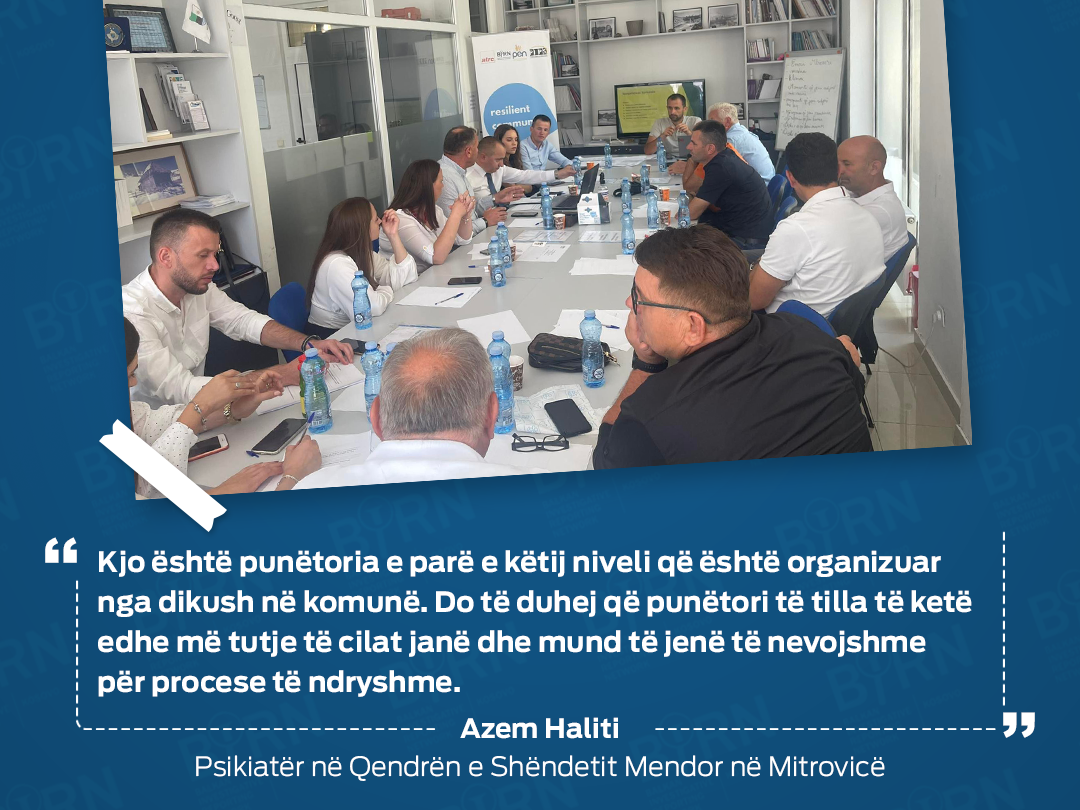
BIRN Kosovo held a regional workshop on July 22 on reinforcing the role of Centres for Social Welfare and relevant municipal directorates in strengthening the reintegration and resocialization of returnees from Middle Eastern conflict zones, to prevent violent extremism and terrorism in Kosovo.

The workshop consisted of two sessions. The first, delivered by Kreshnik Gashi, editor-in-chief at KALLXO.com, focused on the state’s vision for preventing radicalism and violent extremism that leads to terrorism, as well as reflecting this vision in communication with the public.

The second was delivered by Gani Mustafa, Director at the Centre for Social Work in the municipality of Mitrovica.

This focused on the role of Centres for Social Work in the early identification of radical behaviour, as well as in the treatment of people affected by violent extremism.

In total, 15 representatives from Centres for Social Welfare, the Directorate of Health, Directorate of Education, Probation Services and the Centre for Mental Health participated in the workshop.

This workshop was the third held by BIRN Kosovo as part of the “Resilient Community Program”, which is funded by the Global Community Engagement and Resilience Fund, GCERF.


BIRN Kosovo Holds Anti-Disinformation Summer School

From July 25-29, 2022, BIRN Kosovo held its first Anti-Disinformation Summer School in Prishtina, hosting 19 students and young journalists from different communities all over Kosovo.

BIRN Kosovo’s first Anti-Disinformation Summer School, held between July 25 and 29 at Amazona Hotel in Prishtina, brought together a diverse group of students and young journalists from all corners of Kosovo, to train them in identifying and debunking fake news and disinformation and develop their skills in fact-checking journalism.

The sessions consisted of various activities, including training modules delivered by renowned local journalists and editors, discussion sessions with distinguished guest speakers in the field of journalism and beyond, Q&A sessions with representatives from public institutions in Kosovo and field trips to cultural sites in and around Prishtina.

On the first day, BIRN Kosovo welcomed the Ambassador of Switzerland in Kosovo, Thomas Kolly, who, together with BIRN’s Executive Director, Jeta Xharra, gave opening statements at the kickoff of the Anti-Disinformation Summer School. Participants were then introduced to the history of fake news and disinformation by Kreshnik Gashi, managing editor of BIRN Kosovo’s KALLXO.com platform, followed by the first training module, delivered by Gashi on the basic principles of journalism and investigative reporting.

The first day ended with a field visit to the Archives of the Republic of Kosovo in Prishtina, where participants met Bedri Zybera, the Executive Chief Officer, who briefed them on the role of this institution in the preservation of archival material, its systematization and handling, and the process of making it available for all interested parties, including journalists. Participants then visited the storehouse where the all the archival material owned by this institution is kept.

Some of the highlights of day two included: a Q&A session with Bekim Kupina, Adviser to the President of Kosovo, who discussed the mechanisms used by this institution to debunk fake news and disinformation directed at the President of Kosovo and the Presidency; a training module on international fact-checking mechanisms and fact-checking economics, politics, security and current affairs issues, delivered by Visar Prebreza, editor at KALLXO.com; and the field visit to the Documentation Center Kosovo, where participants viewed the exhibition “Once Upon A Time And Never Again”, in memory of the 1,133 children killed in the war in Kosovo 1998-2000.

During the third day of the Summer School, participants were joined virtually by two prominent guest speakers, Elida Zylbeari, editor-in-chief at PORTALB/Metamorphosis in North Macedonia, and Marija Ristic, Regional Director of the Balkan Investigative Reporting Network, BIRN.

Among other things, Zylbeari talked about the role of PORTALB as the only fact-checking platform in North Macedonia. Ristic spoke on the regional context of disinformation and fake news as well as the role of BIRN in strengthening the resilience of the media against fake news and malign influences.

As part of the Q&A session on “Disinformation from an Institutional Point of View”, participants spoke to Flora Ahmeti-Haziri, from the Information Office of the Kosovo Police, on key public communication challenges faced by this institution and ways to overcome them. Part of the third day’s activities was also a training module on media ethics and the legal consequences of defamation and libel, delivered by Labinot Leposhtica, head of the Legal Office at BIRN Kosovo.

This was followed by an interactive group activity in which participants had to identify violations of the Code of Ethics in two articles given to them. Day three of the Summer School ended with a visit to the studio of RTV Dukagjini, where participants witnessed first-hand the process of news production and broadcasting.

One day four, participants welcomed guest speaker Imer Mushkolaj, Executive Director at the Press Council of Kosovo, PCK, who discussed the importance of regulatory and self-regulatory bodies such as the PCK in fighting fake news and disinformation. Participants were later joined by Ersan Qavolli, Prosecutor at the Basic Prosecution in Peja, who spoke about the mechanisms used by this institution to communicate with the public as well as the cooperation (or lack of it) between local media and the Prosecution.

Participants then gained hands-on skills in conducting citizen-based reporting and investigating stories on human rights and corruption, followed by a training module on producing and editing videos and identifying deep-fake content, delivered by Internews Kosova’s Producer, Valdet Salihu. Day four ended with a cultural visit to the Grand Hotel, where participants saw artworks exhibited in this hotel as part of the Manifesta 14 Biennal festival currently taking place in Prishtina.

Executive Director of KoSSev Tatjana Lazarevic joined participants on the last day of the Anti-Disinformation Summer School, to talk to them about propaganda and fake news in the context of the Serbian community in Kosovo as well as about the role of KoSSev in providing objective and trustworthy information to the community.

The end of the Summer School was marked with a small reception, before which participants were asked to reflect on lessons learned, challenges ahead, and their plans for the future. All participants were awarded a Certificate of Acknowledgment for having attended the Summer School.

A total of 19 participants attended, of whom 11 were women. One participant joined the Summer School virtually via Zoom, while the remaining 18 followed in person at Amazona Hotel. Of the 19 participants, five were from minority communities in Kosovo, including three from the Bosniak community, one from the Roma community and one from the Turkish community.

The Anti-Disinformation Summer School was organized in the framework of the project “Contribute to increasing transparency and accountability of the Kosovo government and raise citizens’ awareness on disinformation”, funded by the Swiss embassy in Kosovo.


BIRN’s ‘Bitter Land’ Mass Graves Project: Call for Contributions

The Balkan Investigative Reporting Network is seeking to commission material about forced disappearances and mass graves in the former Yugoslavia as part of its online mass graves database project, Bitter Land, and for potential inclusion in a forthcoming book.

BIRN’s research into forensic evidence, court documents and witness testimonies, combined with field research, led to the creation of the Bitter Land database, a unique multimedia resource about mass graves from the Yugoslav wars.

Bitter Land maps the largest of around 1,600 clandestine war graves that have been found so far – most of them in Bosnia and Herzegovina, followed by Croatia, Kosovo and Serbia.

Many of the largest mass graves of the 1990s wars now stand neglected and unmarked, while many of those responsible for massive cover-up operations to conceal thousands of victims’ corpses remain unpunished.

As BIRN’s team continues to update the database and add new grave sites, we also want to expand the scope of the Bitter Land project by commissioning a diverse range of new material.

We want to open up the project to external collaborators as well and engaging with the groups outside journalism who are interested in contributing – from photographers to scholars, civil society groups, historians and artists.

Submissions are open to anyone who is involved, or wants to become involved, in wider research around mass grave sites in the former Yugoslavia.

What kind of contributions are we looking for?

  • Feature stories, analysis pieces and opinion articles focusing on wider issues related to enforced disappearances and clandestine gravesites
  • Original research focused on the topic (historical, forensic, etc)
  • Video and photo contributions
  • Artistic contributions (graphics, visual presentations, 3D modelling, etc)

We are also open to any other suggestions of material that would enrich the resources of our Bitter Land database. The most outstanding pieces will be selected for a book publication focusing on mass graves in the former Yugoslavia, edited by Marija Ristic, BIRN’s regional director.

If you would like to get involved, please send us a brief pitch – up to 200 words – to [email protected] by August 26. All contributors whose pitches are accepted will receive a fee.


Media Freedom Coalition: Stop Pressure on Jelena Zoric

Former State Secretary in Serbia’s Ministry of Interior Dijana Hrkalovic, who is accused of abusing her official position, in a guest appearance in the show Ćirilica (Cyrillic) on Happy Television, aired on Tuesday, presented a series of incorrect pieces of information about BIRN and Vreme journalist Jelena Zoric, and also mentioned her brother.

Addressing “this Jelena Zoric, whose confession we finally got a few days ago”, she said: “Vlada Gajic from the People’s Party says that Sasa Drecun, [deputy state prosecutor for organized crime and a prosecutor in the Jovanjica case] is the source of her information.

“Everyone is saying she has a very close relationship with him. I hear her brother saying she had a problem with the newsroom of the television where she previously worked because she’d covered up the correspondence between Drecun and a criminal … which had arrived at that newsroom’s email. Look, she hid it from her editors! What is that called? Selective investigative journalism, or what?”

Hrkalovic’s action was a continuation of the pressure on Zoric. Following a guest appearance on Pregled dana (View of the day) on NewsMax Adria, a few days ago, representatives of the opposition accused her of “selling out herself” because she had stated that, in the Jovanjiac affair, “there is no Andrej Vucic”, referencing President Vucic’s brother.

The Jovanjica affair is the case concerning the largest ever illegal marijuana plant discovered in Europe. Two trials are ongoing, Jovanjica 1, concerning the owner and employees, and Jovanjica 2, concerning police and secret service officers that were allegedly working with them. Jovanjica 2 trial has been repeatedly delayed, and although it has started more than a year ago, only one hearing was held so far. According to BIRN’s own findings, there were contacts between high officials of security services and Predrag Kuruvija, owner of Jovanjica.

The Media Freedom Coalition, a coalition of professional media and journalists’ associations in Serbia, said it sees Hrkalovic’s latest act as an attempt to discredit the multi-awarded journalist since Zoric published a story about the disputed correspondence for N1 television station, where she worked at the time, while the mention of her family can only be with the aim of threats and intimidation.

In earlier guest appearances in pro-government media, Hrkalovic used the opportunity to libel independent media. Journalists, such as N1, Nova, Danas, as well as Vukasin Obradovic, were already her target.

The Media Freedom Coalition said it strongly condemns the threats directed to Zoric as well as the libelling of journalists by Hrkalovic. Such acts can only further threaten the safety of independent journalists, it said, who have been the subject of a campaign for years by the authorities and media sympathetic to them.

It called on all political actors to stop putting pressure on the media and journalists, and for the police to protect them so they can do their job professionally and without fear.