MEPS Quiz Commission on BIRN-Solomon Report on Greek Surveillance Systems

MEPs have submitted tough questions to the European Commission about BIRN’s and Solomon’s report on EU-funded surveillance systems deployed in reception areas in Greece.

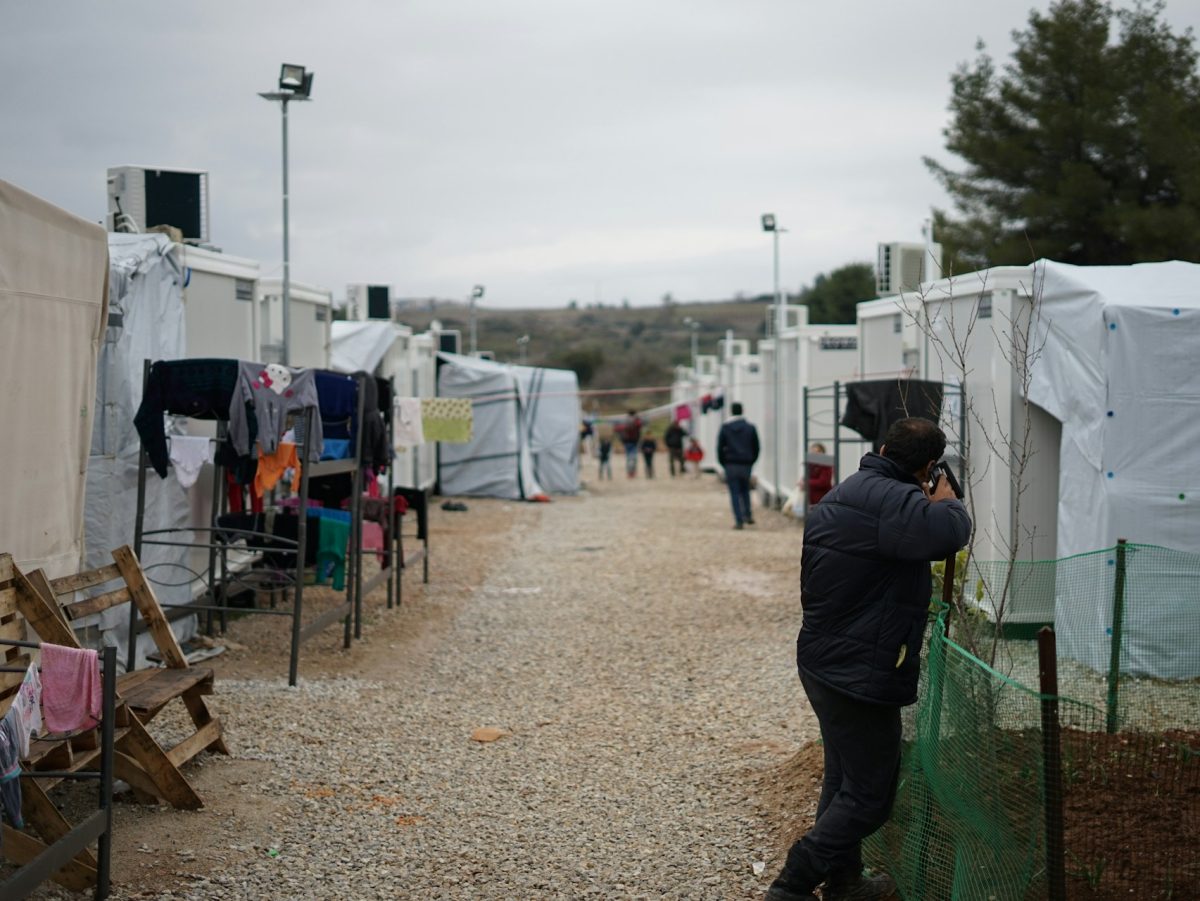
Members of the European Parliament sent written questions to the European Commission on September 16 about the EU-funded “Centaur” and “Hyperion” surveillance systems deployed in reception areas in Greece. Their questions came after BIRN and Greek investigative outlet Solomon published a joint investigation on this on September 9.

BIRN and Solomon revealed in “Asylum Surveillance Systems Launched in Greece without Data Safeguards” that the “Centaur” and “Hyperion” systems were crafted and initially implemented with funds from the EU’s Recovery and Resilience Facility – without prior recruitment of a Data Protection Officer at the Ministry of Migration and Asylum, a requirement under the GDPR, the EU’s General Data Protection Regulation, to ensure adequate oversight.

Nor were mandatory Data Protection Impact Assessments, DPIA, conducted in the design phase.

Tineke Strik, a member of the Group of the Greens, one of the eight MEPs who signed the questions to the Commission, published it yesterday on her Twitter account.

“EU funding of surveillance technology used on migrants in violation of fundamental rights must stop,” Strik said.

The MEPs asked the Commission how much money the EU spent on the two surveillance systems, from which funds this came, and how much funding has been or will be provided for similar systems.

BIRN and Solomon established that the planning of Hyperion and Centaur began in 2020. The Hyperion system monitors movement in and out of state-run asylum camps. Centaur deploys behavioral analysis algorithms and transmits CCTV and drone footage to a control room inside the Greek Ministry of Migration and Asylum.

Humanitarian organisations say the two surveillance systems violate asylum seekers’ fundamental rights and freedoms.

The MEPs said the Greek government was clearly unwilling or unable to conduct an “independent investigation” following allegations of non-compliant expenditure of EU funds in violation of fundamental rights.

“What is the Commission’s assessment of compliance with fundamental rights, and how is the Commission investigating this?” they asked.

“Is the Commission taking action to reject cost reimbursement or retract funding for the Centaur and Hyperion projects? What measures are being taken to prevent future EU-funding of projects in violation of fundamental rights?” they added.

Meet the People Behind BIRN: Karla Juničić

Each month, BIRN introduces you to a different member of its team. For September, meet Karla Juničić, Engagement Editor and Coordinator at Balkan Investigative Reporting Network.

Karla is from Croatia and is based in the United Kingdom. She studied literature and philosophy and political sciences. She has been working as a journalist for five years, starting her career reporting on international affairs and global events.

Karla joined BIRN in October 2021, leading our Engagement Journalism programme; BIRN has developed a tool whereby media outlets can engage readers in their investigative reporting.

“The biggest challenge remains restoring faith in the media in the age when audiences are vulnerable to disinformation. Engagement journalism can be a solution because it allows audiences to be active participants in making the news,” Karla says.

BIRN participates in the Media Innovation Europe and within this context has launched a call for Audience-Engaged Journalism.

As she introduces BIRN’s new initiative, let’s meet her.


  1. What do you like most in your job and what is the most challenging thing?

Joining BIRN in October 2021 on a project of engagement journalism has taught me that, by listening to the audience, significant stories can be made that will have a visible impact and promote positive change in local communities. Audiences can use their power to report on issues that matter to them, and the journalist can serve as a facilitator who will factcheck their input, write about their concerns and influence other people or authorities to act upon them. People will relate easier to an issue of local concern. Often it is the local perspective or event that will draw national and even international interest.

The biggest challenge remains to restore faith in media in the age when the audience is vulnerable to disinformation. Engagement journalism can be a solution because it allows audiences to be active participants in making the news. People today want to be heard, and want to be listened to, which is obvious from a simple glance through social media. At the same time, local media need to be empowered to become independent and financially resilient, to offer trustworthy information in a complex media environment.

  1. BIRN participates in the Media Innovation Europe consortium of the International Press Institute, Thomson Foundation and Media Development Foundation. Tell us more about this initiative and its main scope

Launched on June 1, 2022, Media Innovation Europe is an exciting new initiative run by the International Press Institute, Thompson Foundation, the Media Development Foundation and BIRN. The main idea is to bring innovation to newsrooms, build stronger business models and foster collaboration among media outlets from 35 European countries; besides EU member states, this means Balkan countries, Moldova and Ukraine.

  1. Within the context of Media Innovation Europe, BIRN is launching the Audience-Engaged Journalism call. Tell us about this.

BIRN has developed a tool which enables journalists to crowdsource information on topics of citizens’ interest and engage audience in reporting. Within the project Media innovation Europe, BIRN will offer Audience-Engaged Journalism grants to expand tool usage and train journalist to implement audience engagement journalism. Grants of up to €10,000 will be offered to journalists in 10 Visegrad and Balkan countries to develop investigative in-depth stories by engaging citizens in reporting. The call, which is open until October 28, invites journalists to send in story proposals. Journalists can choose to work on collaborative cross-border stories or on their own individual story. The most interesting proposals, which demonstrate commitment to engage citizens from diverse communities and develop investigative stories will be selected by an international independent jury and receive the funding.

  1. Since December 2020, 51 media outlets from six Balkan countries have used BIRN’s Engaged Citizens Reporting ECR tool and produced investigative stories based on surveys, polls, and questionnaires. Can you select a story that made a difference and impacted the local community?

BIRN’s tool to engage citizens in reporting has been pilot-tested since 2020 and 51 media outlets from Balkans has implemented it. BIRN offered training and mentoring for journalists on how to make engagement stories within the Supporting Greater Media Independence in the Western Balkans project. Many interesting stories made an impact, so it is hard to pick just one. It was inspiring to see how some stories initiated local environmental initiatives. Citizens were desperate to report about ecological issues in each Balkan country to media outlets. They were also concerned about issues of local infrastructure, corruption, healthcare and minority rights. A story by Albanian media outlet Historia Ime about a transgender person who was refused a taxi service prompted an antidiscrimination process. The company had to issue a public apology and teach its staff about LGBTQ issues while the story itself was picked up by national and international media. Another example of impact was by SDK from Skopje, which collected evidence of unresolved court cases from ordinary people. In the end, the courts decided to look into these cases, collected by the outlet. You can check some of these stories on BIRN’s YouTube channel, “Engagement journalism in the Balkans”.

  1. How difficult or easy is it for media today to engage readers and get local communities to participate in their investigations by answering ECR’s online questionnaire? How can media achieve this type of engagement?

As mentioned before, BIRN offers outlets a tool, training and mentoring. But this is only the beginning of the process. Media outlets need to get familiar with their audiences’ interests and concerns. The tool offers this possibility. It is an initial instrument which will help journalists gather data and multimedia material, like photos or videos. The journalist’s job is to check the information and then use it to make stories. The tool offers audiences a chance to report while staying anonymous, or by giving their contact details. According to media outlets, this feature helps to bridge the gap with marginalised and underrepresented communities who have often lost faith in the media and institutions. Through investigations, many communities got acquainted with audience engagement and participated more actively in reporting.

  1. What are BIRN’s plans and goals for its Engaged Journalism program (ECR tool)?

From the technical aspect, the plan is keep adapting the tool to make it more approachable to users. The next goal is to expand the tool among journalists who will use it to engage their communities, which will be done through Media Innovation Europe project. Many media outlets have continued to use the tool even after their projects with BIRN ended. That is an important step towards the sustainability of engagement journalism in the Balkans.


BIRN Albania Holds Roundtable on Healthcare

The Balkan Investigative Reporting Network in Albania on September held a roundtable on the state of healthcare in the country.

Two dozen journalists, civil society activists and experts in the field healthcare held a roundtable on healthcare in Tirana on Thursday as part of the project: “Promoting Accountability through Investigative Journalism,” financed by the National Endowment for Democracy, NED.

This project aims to build bridges between journalists, experts and civil society activists, so that they can strengthen the fight against corruption and impunity through investigative journalism.

The aim of the roundtable was to identify important issues or problems that civil society believes should be investigated in the private and public health systems in Albania.

The findings of the roundtable will guide the main areas of BIRN Albania’s upcoming open call for three journalists to produce investigative articles on the healthcare system.

During the roundtable, the participants discussed the following themes and topics: the cost of treating patients suffering from diabetes and other chronic diseases; the lack of funding for medical equipment for diabetic patients; the treatment of diabetic foot problems and amputations; and the quality of drugs in Albania’s healthcare market and poor supply of costly drugs for serious diseases.

The lack of anesthesiology doctors hospitals, medical waste treatment and contracts as well as the cost and benefits of concessionary/PPP agreements in healthcare were also debated.

The participants also discussed palliative care in Albania, vaccinations and low compensation rates of COVID-19-related ambulatory costs for patients.


BIRN Debate Calls for Faster Prosecution of Corruption in Bosnia

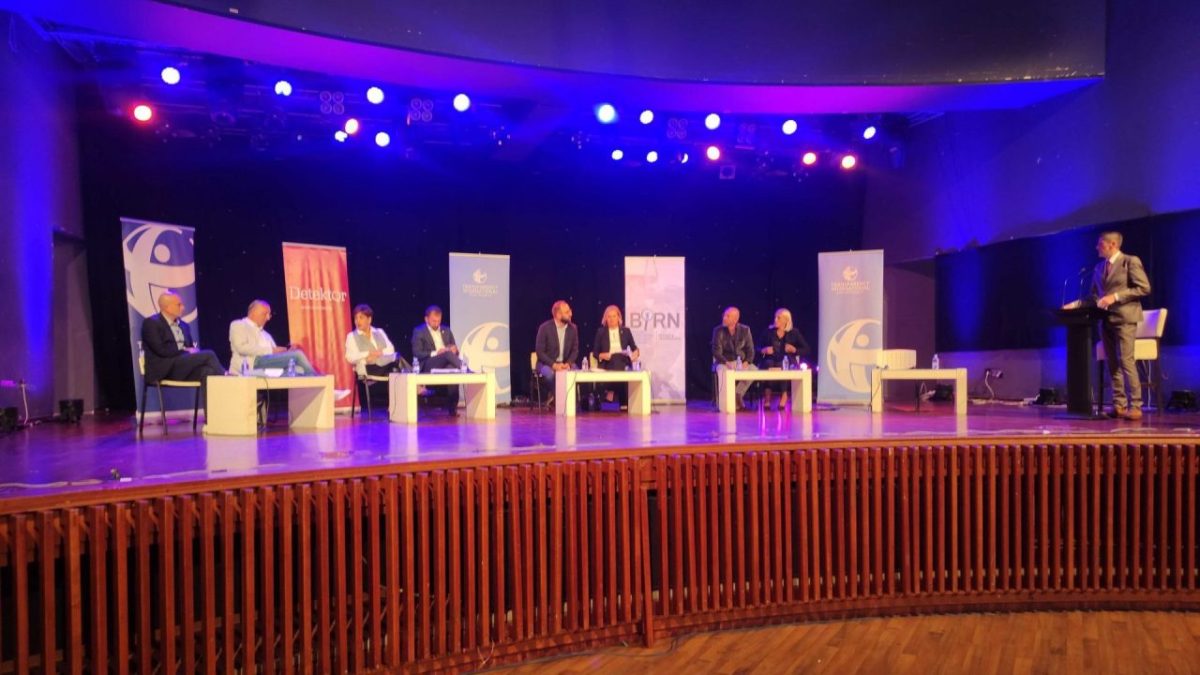
During the debate, ‘(Anti)Corruption in Focus’, organised by Bosnian BIRN and Transparency International in Sarajevo, members of eight political parties presented their anti-corruption strategies.

Candidates of eight political parties in the Federation of Bosnia and Herzegovina, Bosnia’s larger entity, called for faster and more agile prosecution of corruption cases during a public debate held in Bosnia’s capital, Sarajevo.

“I ask all actors to process corruption more effectively,” said Alma Colo, from the [Bosniak] Party of Democratic Action, SDA, adding that “they haven’t done much” at state level, citing the blockade of state institutions as the reason. “It’s a captive system that works that way,” she added.

“On average, it takes about four years of pre-investigative actions before an indictment,” noted Sanela Prasovic-Gadzo from the Union for Better Future, SBB, commenting on the slow steps taken to process corruption cases.

One issue mentioned during the debate was [lack of] transparency in public spending, which weakens citizens’ trust in government.

An improvement to the law on public procurements, and the law on conflict of interest, which is not being implemented in the Federation, were mentioned as possible solutions, reducing corruption in Bosnia and Herzegovina.

Damir Masic, from the Social Democratic Party, SDP, said that 90 per cent of all problems in the country were caused by “people who are not able to explain the origin of their property”.

The second public debate organised by BIRN and TI will be held on September 19 in Banja Luka, the main city of Republika Srpska, Bosnia’s other entity, where party representatives will talk about their plans for the upcoming term. General elections in Bosnia are scheduled for October 2.

Call for Applications for BIRN Internship Programme

BIRN is offering a three-month internship programme for students from Albania, Bosnia and Herzegovina, Kosovo, Montenegro, North Macedonia and Serbia who are interested in investigative reporting.

As part of its Investigative Reporting Initiative programme, the Balkan Investigative Reporting Network is looking for five journalism students who would like to learn from dedicated journalists and editors in a course of three months.

The programme will provide the successful candidates with a theoretical foundation, followed by systematic but very practical investigative work. The students will receive online training from experienced journalists at the beginning of the programme and spend the rest of the internship working on investigative stories, while receiving support to understand and learn about the most relevant procedures.

BIRN is offering the five placements to applicants from six Balkan countries: Albania, Bosnia and Herzegovina, Kosovo, Montenegro, North Macedonia and Serbia. You can work from home or from your newsroom, as the programme is due to take place online.

Who can apply?

Journalism students from Albania, Bosnia and Herzegovina, Kosovo, Montenegro, North Macedonia and Serbia.

How to apply?

Applicants should submit the following documents to [email protected] in English before September 21, at midnight Central European Time:

  • Applicant’s CV (in English)
  • Motivation letter (in English)
  • Work sample (translated into English; school assignments are eligible)
  • Evidence of status (in English or local language)

The motivation letter should show how you expect to benefit from the programme and your motivation for participating.

Applicants who do not have any published work can submit their student assignments from practical courses in journalism.

Applicants should provide evidence of their current situation. This evidence should include, but not be limited to, confirmation of enrolment at university.

Language:

All applications must be submitted in English; proof of status may be in local languages.

The programme’s working language will be English, so advanced knowledge of the English language is required.

DURATION OF INTERNSHIP: October 1, 2022 to December 23, 2022.

DEADLINE: September 21, 2022 at midnight Central European Time.


BIRN Hit by Cyber-Attacks After Turkish Fraudster Investigation

BIRN’s Balkan Insight website was buffeted by hacker attacks for two days after the publication of an investigation into how a Turkish businessman bought his way to honorary Greek citizenship.

The Balkan Investigative Reporting Network and its Greek partner media outlet Solomon’s websites came under DDoS attack by hackers from early Saturday morning onwards in the wake of the publication of an investigation into a controversial Turkish businessman.

The attack began on Saturday morning and continued into Sunday. BIRN’s server was not compromised but at one point, BIRN’s flagship Balkan Insight website was completely inaccessible.

“The attack started on Saturday at 7.30am. That’s when the alarms went off, and around eight we had already started to react. It was a fierce battle, I never experienced a fight like that,” said an IT security expert.

“At one point on Saturday, we had 35 million different IP connections from all over the world.  The site was brought down by the number of connections,” explained.

BIRN’s technical experts determined that the attack was specifically aimed at bringing down the page on which the investigation into how a Turkish businessman who had been convicted of fraud bought his way to honorary Greek citizenship.

By Sunday evening, the attack had been repelled. But Solomon’s website remained under attack and was still offline on Monday morning.

Solomon, a Greek independent media outlet which worked with BIRN on the investigation, initially announced on Twitter on Saturday that it was experiencing difficulties because of a “massive DDoS attack on our site”.

A distributed denial-of-service (DDoS) attack is a malicious attempt to disrupt the normal traffic of a targeted server, service or network by overwhelming the target or its surrounding infrastructure with a flood of Internet traffic.

It is often used in attempts to target specific content published online and strike a blow at websites that need time to recover from such huge amounts of visits.

The investigation believed to have caused the DDoS attack looks at the case of Yasam Ayavefe, a Turkish businessman who was convicted of defrauding online gamblers in his home country in 2017 and arrested in Greece in 2019 while trying to cross the border into Bulgaria on a false Greek passport. He was later awarded honorary Greek citizenship.

The BIRN and Solomon investigation “examined how honorary citizenship, a state honour long reserved for those who have significantly promoted Greek culture, was turned into a golden visa scheme for those with deep pockets”, Solomon said in a Twitter post on Monday.

The investigative outlet Inside Story first broke the news in July, triggering a fierce debate over Ayavefe’s suitability for such an honour. Inside Story also came under DDoS attack after publishing its report on Ayavefe.

Grantees Praise Benefits of BIRN-Led ‘Engaged Citizens Reporting’ Tool

Users of the BIRN reporting tool say it has transformed the way they communicate with their audiences who feel empowered by helping shape the content of their own media.

It is a new method in a new time of doing journalism,” Dorjana Daka, editor of Albanian newsportal Informimi, told BIRN, describing what the Engaged Citizens Reporting tool, ECR, has brought to her outlet.

The impact of the project led by Balkan Reporting Network BIRN on journalism in the region has been significant.

From December 2020, 51 media outlets from six Balkan countries used the tool to change the way they communicate with citizens, investigate stories and publish their findings.

“Through the project, we saw that citizens want concrete, direct, communication with journalists, they want to point out the problems they are facing, and they want someone to investigate them, since they can’t find solutions to their problems themselves,” Dinko Dundić, editor-in-chief of Sarajevo-based media Fokus, said.

Media outlets from Albania, Bosnia and Herzegovina, Kosovo, Montenegro, North Macedonia, and Serbia, awarded with Media for All project grants, produced a total of more than 400 videos, articles, features, and podcasts, based on more than 200 surveys, polls, and questionnaires created with the Engaged Citizens Reporting tool, a platform designed by BIRN, enabling journalists to collect information, analyse data and incorporate it into their reporting.

As Dundić, noted, “this is not just a tool, this is a new way to communicate with citizens”.

Through ECR, media outlets strengthen bonds with their communities. Having established two-way communication, citizens become not only passive receivers of information but active content creators on topics that are their biggest interest and concerns.

“It was important that the tool targets a burning issue, something that is under the radar in the public and core media, and something that is not talked about enough but is bothering the population,” said Ivana Pavlović, editor of Nova ekonomija, a Belgrade-based news portal that engaged citizens in the under-reported topic of the cost of online schooling during the Covid pandemic.

Audiences shaped the content of media by providing original testimonies; precise information by uploading photos, videos, documents, or by giving their contacts for further research and collaboration.

“Readers gave us directions on where to look and where to ask; we got examples that were ‘juicy’,” Goran Mihajlovski, whose Skopje-based portal SDK gathered evidence of unresolved court cases from ordinary people, recalled.

The audience had the choice to stay anonymous, giving people a chance to speak out even if they weren’t comfortable with going public. This proved a successful way to reach out to marginalised and discriminated communities, guaranteeing their safety.

“There was a gap between this trust in really reporting about stories about the LGBTQ community and staying anonymous, because it’s still a quite sensitive topic in Albania. A platform like ECR helped to breach this gap, because it made sure this anonymity was preserved,” said Kevin Jasini, editor of Albanian news portal Historia Ime, which resolved a case of transphobia and discrimination thanks to a recording received through the ECR tool.

“It has direct impact on mobilizing communities to solve a problem, because we provide data … that they can rely on, and continue to seek their rights,” said Daka whose website Informimi investigated stories of the Roma community who often have no access to the internet, or trust in journalists.

Building trust is one of the main assets ECR has brought to media outlets, considering the negative aspects of the media environment in the region, with the surge in disinformation and general loss of confidence in democracy and institutions.

Users of the tool recognise that reporting about the issues of their greatest concern makes an impact in their local communities.

“Officials from Tivat municipality used the data we received using the ECR tool from citizens about cruise tourism strategy at an international meeting. They presented and referred to the results of the Boka News research,” Miroslav Marušić, editor-in-chief of a small Montenegrin media portal, said.

Through professional training and mentorship organised by BIRN, media practiced more effective engagement with their audiences.

Suzana Nikolikj, editor of Kumanovo News, from North Macedonia, praised the support of the mentoring.

“The mentor gave us guidance in preparing the questionnaire and guided us through the approach to our readers: how to create the questions, how to avoid pitfalls and how to filter the most important answers. The analysis of data for our stories was also helpful,” said Nikolikj.

ECR has the potential to expand in the region, since many outlets have continued to use the tool after the project grants finished, to further gather people’s opinions, data and information.

“We have continued, and will continue to use it, in future. There are enormous advantages: we can easily gather opinions on a large number of subjects, can easily see and select data, and then present this data to the public, graphically,” said Marija Vujović, journalist of portal Onogošt, which throughout the project used the tool to collect citizen’s photos and locations of pollution in Nikšić, Montenegro.

Positive reactions would seem to guarantee the sustainability of ECR in the future.

“Now we write far more about ordinary topics, human stories, and much less about politics,” Anđelka Ćup from Gračanica online from Kosovo, said. “We have become more professional – our approach to investigative journalism has improved,” Vujović agreed.


Open Call: Workshop for Visual Storytelling Using War Crime Archives

Young people from Bosnia and Herzegovina, Croatia, Kosovo, Montenegro and Serbia are invited to apply for a workshop that offers an introduction to visual storytelling practices and the role of domestic and international courts’ war crime trial archives in the transitional justice process.

The Balkan Investigative Reporting Network, BIRN, will hold a two-day training course for ten (10) young journalists, students, activists and individuals aged 18 to 30 who want to contribute to reconciliation and memorialisation processes by exploring archives and using them for independent video storytelling.

Participants will also learn how to create a safe, non-partisan and compassionate space for victims to share their stories in a short video format. The workshop will be led by BIRN’s award-winning journalists and editors and will examine how to avoid producing stories that trivialise war crimes and victims’ experiences.

Upon successful completion of the workshop, participants will receive funding and mentorship.

The best five applicants will be selected for a one-month exchange programme in 2023 in Sarajevo, Bosnia and Herzegovina. This unique opportunity will enable the participants to foster closer networks, learn more about different facets of the war, gain skills and do more research into courts’ archives.

After the workshop, participants will produce short video interviews with people who survived the wars in the former Yugoslavia.

Storytelling is crucial to the process of transitional justice; it has the power to highlight atrocities and hidden personal memories that can be used to encourage the further sharing of similar experiences, but also can help change the narrative on personal experiences of war trauma.

For victims of war crimes and atrocities, storytelling has a healing aspect, giving them a voice and recognising their experiences and traumas. Court archives represent a powerful tool that can be used in visual storytelling but also in general media reporting on justice issues.

WHO CAN APPLY?

Young journalists, students, and activists from Bosnia and Herzegovina, Serbia, Kosovo, Croatia and Montenegro who are interested in addressing these questions. We particularly encourage young people from marginalised communities to apply. No previous experience is necessary. Applicants must be aged 18 to 30.

HOW TO APPLY?

Submit your application (CV and motivation letter) in English to [email protected]

DATE OF WORKSHOP:

October 13-14, 2022 (two-day session)

WHERE: Sarajevo

LANGUAGE: The working language of the workshop is English

DEADLINE: September 12, at midnight Central European Time


BIRN Summer School Ends with Investigative Pitches

A week-long training programme in Portoroz ended with participants presenting their investigative story proposals to BIRN editors.

The 12th annual BIRN Summer School of Investigative Reporting ended on August 27with 30 participants from SEE, CE, Ukraine and Finland pitching their investigative story proposals to BIRN editors.

A total of 11 pitches were presented; some focus on country-based issues while the majority are of a cross-border nature. BIRN editors will choose the best pitches, whose owners will receive funding, editorial support and mentoring from BIRN.

Proposed stories look into environmental issues, corruption allegations, reproductive rights and the ongoing war in Ukraine, to name a few.

Ivana Nikolic, in charge of BIRN’s Investigative Reporting Initiative, thanked all the participants for their motivation and hard work during the past week and urged them to keep in touch and collaborate.

Summer School is not only about learning innovative skills and techniques; it is also about networking, making friends and finding partners for your next cross-border story,Nikolic said.

During the week, 30 participants selected from record-breaking 180 candidates learned about OSINT, database search, digital security, visual storytelling, and financial journalism from award-winning journalists from Germany, the UK, the US and the Balkans.

They also attended a panel discussion about war reporting, giving them a unique opportunity to hear different perspectives and experiences of journalists and filmmakers from Ukraine, Palestine and Serbia. More information about lectures and panels can be found here (https://birnsummerschool.org/)


Open Call for Participation in BIRN Kosovo’s one-day training module for journalists to report on labour rights issues

Are you a student of journalism, young or mid-career journalist eager to expand your journalistic reporting skills? Do you want to develop your capacities in reporting and advocating for labour rights in the Kosovo labour market? Do you think you have the ambition and creativity to be one of the prospective winners of a 500 Euro bursary to write a story on labour rights, health and safety at work? Then look no further!

BIRN Kosovo has the ideal opportunity for you.

BIRN will select the 10 best story pitches to be supported through a bursary amounting to 500 Euros, through which the 10 journalists with the winning pitches will have the opportunity to conduct research, analysis, investigative articles and other publications on various issues that pertain to the field of labour rights.

Moreover, on September 27, 2022 BIRN will organize a one-day training module with journalists and journalism students on the process of reporting on labour rights issues who wish to benefit from the bursary. Please note that in order to be part of the bursary program, interested parties should apply and participate in the above-mentioned training.

The one-day training module will bring together 20 young and mid-career journalists as well as students of journalism from different communities, who will have the opportunity to acquire knowledge and hands-on skills on how to report on labour rights issues, including reporting on injuries at work and labour rights abuses, safety in the workplace, mistreatment and breaches of employee rights, failure to adhere to work schedules, working without proper contracts or lack of employment contracts, violating annual leave and maternity leave entitlements, to name a few. The training module will be delivered by BIRN’s own team of award-winning journalists and editors, who have extensive experience in investigating, reporting on and advocating for labour rights issues.

BIRN Kosovo’s team of journalists and editors will provide editorial support to the winning journalists in the process of identifying their topic of interest, in the drafting of their editorial work and in the final publication of their media products. Notably, journalists’ works will be published on BIRN’s flagship anti-disinformation platform, KALLXO.com in a TV/online format. The platform enjoys high viewership and readership rates among the Kosovo public, including its social media platforms, such as Facebook, YouTube and Instagram.

The bursary and the one-day training module are organized in the framework of the EU-funded project “Protecting and promoting labour rights of vulnerable groups in the labour market” implemented by ATRC and BIRN Kosovo.

The aim of this project is to improve the working conditions for vulnerable categories of employees, notably within the private sector, including workplace health and safety for women and men, through the promotion of social dialogue between workers and duty bearers.

Who can apply?

Students of journalism, young and mid-career journalists across different regions in Kosovo, who are interested to learn more about reporting and advocating for labour rights issues and become one of the potential winners of ten 500 Euro bursaries, are eligible to apply for this call.

Applicants from marginalized communities in Kosovo, including members of minority ethnic communities and women, that fulfill the above-mentioned criteria are encouraged to apply for this call.

To apply for the one-day training module on reporting on labour rights issues, click here.

The deadline to apply is September 16, 2022.


Thirrje e hapur për pjesëmarrje në trajnimin njëditor të BIRN Kosovë për gazetarët që raportojnë mbi çështjet e të drejtave të punës

Jeni student i gazetarisë, gazetar i ri apo gazetar në mes të karrierës, i etur për t’i zgjeruar shkathtësitë tuaja gazetareske? Dëshiron t’i zhvillosh kapacitetet tuaja në raportim dhe avokim për të drejtat e punës në tregun e punës në Kosovë? Mendon se ke ambicie dhe kreativitet për të qenë një nga fituesit e mundshëm të bursës prej 500 euro për të shkruar storie mbi të drejtat e punës, shëndetin dhe sigurinë në punë? Atëherë mos kërko më tej!

BIRN Kosovë ofron mundësinë ideale për ju.

BIRN do të zgjedhë 10 storiet më të mira të propozuara që do të mbështeten me bursë në shumë prej 500 euro, përmes së cilës bursë 10 gazetarët me propozimet fituese do të kenë mundësi të realizojnë hulumtime, analiza, artikuj hulumtues dhe publikime të tjera për çështje të ndryshme që kanë të bëjnë me fushën e të drejtave të punës.

Për më tepër, më 27 shtator 2022 BIRN do të organizojë një trajnim njëditor me gazetarët dhe studentët e gazetarisë të cilët dëshirojnë të përfitojnë nga bursa, ku fokusi do të jetë në procesin e raportimit për çështjet e të drejtave të punës. Ju lutem keni parasysh se për të qenë pjesë e programit të bursave, të interesuarit duhet të aplikojnë dhe të marrin pjesë në trajnimin e lartpërmendur.

Trajnimi njëditor do t’i mbledhë 20 gazetarë të rinj dhe në mes të karrierës, si dhe studentë të gazetarisë nga komunitete të ndryshme, të cilët do të kenë mundësinë të marrin njohuri dhe t’i ngrisin shkathtësitë praktike në raportimin për çështjet e të drejtave të punës, përfshirë raportimin për lëndimet në punë dhe shkeljet e të drejtave të punës, sigurinë në vendin e punës, keqtrajtimin dhe shkeljen e të drejtave të punëtorëve, mosrespektimin e orarit të punës, punën pa kontratë të rregullt ose mungesën e kontratave të punësimit, shkeljen e të drejtave të pushimit vjetor dhe lehonisë, mes tjerash. Trajnimi do të ofrohet nga ekipi i BIRN-it së bashku me gazetarë dhe redaktorë të vlerësuar me çmime, të cilët kanë përvojë të gjerë në hulumtimin, raportimin dhe mbrojtjen e çështjeve të të drejtave të punës.

Ekipi i gazetarëve dhe redaktorëve nga BIRN Kosovë do të ofrojë mbështetje editoriale për gazetarët fitues në procesin e identifikimit të temës së tyre të interesit, në hartimin e angazhimit të tyre editorial dhe në publikimin përfundimtar të produkteve të tyre mediatike. Në veçanti, storiet e gazetarëve do të publikohen në platformën kryesore të BIRN kundër dezinformimit, KALLXO.com në një format televiziv/online. Platforma gëzon shkallë të lartë shikueshmërie dhe leximit nga qytetarët e Kosovës, përfshirë platformat e saj të mediave sociale si Facebook, YouTube dhe Instagram.

Bursa dhe trajnimi njëditor organizohen në kuadër të projektit të financuar nga BE “Mbrojtja dhe promovimi i të drejtave të punës të grupeve të cenueshme në tregun e punës” zbatuar nga ATRC dhe BIRN Kosovë.

Qëllimi i këtij projekti është përmirësimi i kushteve të punës për kategoritë e punonjësve të cenueshëm, veçanërisht brenda sektorit privat, përfshirë shëndetin dhe sigurinë në vendin e punës për gratë dhe burrat, përmes promovimit të dialogut social ndërmjet punëtorëve dhe bartësve të detyrës.

Kush mund të aplikojë?

Në këtë thirrje kanë të drejtë të aplikojnë studentët e gazetarisë, gazetarët e rinj dhe ata në mes të karrierës nga rajone të ndryshme të Kosovës, të cilët janë të interesuar të mësojnë më shumë rreth raportimit dhe avokimit për çështjet e të drejtave të punës dhe të bëhen fitues të mundshëm të njërës nga dhjetë bursat prej 500 euro.

Inkurajohen aplikuesit nga komunitetet e margjinalizuara në Kosovë, duke përfshirë pjesëtarët e komuniteteve nga pakicat etnike dhe gratë, që plotësojnë kriteret e lartpërmendura.

Për të aplikuar për trajnimin njëditor mbi raportimin për çështjet e të drejtave të punës, klikoni këtu.

Afati i fundit për të aplikuar është 16 shtator 2022.


Otvoreni poziv za učešće u jednodnevnom modulu obuke BIRN Kosovo za novinare za izveštavanje o pitanjima radnih prava

Da li studirate novinarstvo ili ste mladi novinar ili novinar sa karijerom u usponu koji želi da proširi svoje veštine izveštavanja? Da li želite da razvijete kapacitete u izveštavanju i zagovaranju radnih prava na kosovskom tržištu rada? Da li mislite da imate ambiciju i kreativnost da budete jedan od potencijalnih dobitnika stipendije od 500 evra za pisanje priče o radnim pravima, zdravlju i bezbednosti na radu? Onda, ne tražite dalje!

BIRN Kosovo ima odličnu ponudu za vas.

BIRN će izabrati 10 najboljih kratkih opisa priča koje će biti podržane stipendijom u iznosu od 500 evra, a kroz koju će 10 novinara sa pobedničkim kratkim opisom priča biti u prilici da sprovedu istraživanja, analize, istraživačke članke i druge publikacije o različitim pitanjima koja se odnose na oblast radnih prava.

Štaviše, BIRN će 27. septembra 2022. organizovati jednodnevni modul obuke za novinare i studente novinarstva koji žele da dobiju stipendiju o procesu izveštavanja o pitanjima iz oblasti radnih prava. Imajte na umu da kako bi mogli da učestvuju u programu stipendije, zainteresovani moraju da se prijave i učestvuju u gore pomenutoj obuci.

Jednodnevni modul obuke će okupiti 20 mladih novinara i novinara u karijeri u usponu, kao i studente novinarstva iz različitih zajednica, koji će imati priliku da steknu znanja i praktične veštine o tome kako izveštavati o pitanjima iz oblasti radnih prava, uključujući, između ostalog, izveštavanje o povredama na radu i zloupotrebama prava na radu, bezbednosti na radnom mestu, maltretiranju i kršenju prava zaposlenih, nepoštovanju radnog vremena, radu bez odgovarajućih ugovora ili nepostojanju ugovora o radu, kršenju prava na godišnji odmor i porodiljsko odsustvo. Modul obuke će održati BIRN-ova ekipa nagrađivanih novinara i urednika, koji imaju veliko iskustvo u istraživanju, izveštavanju i zagovaranju za pitanja radnih prava.

Novinarski i urednički tim BIRN Kosovo će pružiti uređivačku podršku stipendisanim novinarima u procesu identifikacije njihove teme od interesa, u izradi nacrta njihovog uređivačkog rada i konačnom objavljivanju njihovih medijskih proizvoda. Pored toga, radovi novinara će biti objavljeni na vodećoj platformi za borbu protiv dezinformacija BIRN-a, KALLXO.com, u TV/onlajn formatu. Platforma uživa visoku stopu gledanosti i čitanosti među kosovskom javnošću, uključujući njene platforme na društvenim medijima, kao što su Facebook, YouTube i Instagram.

Stipendija i jednodnevni modul obuke su organizovani u okviru projekta koji finansira EU „Zaštita i promocija radnih prava ranjivih grupa na tržištu rada“, koji implementiraju ATRC i BIRN Kosovo.

Cilj ovog projekta je unapređenje uslova rada za ugrožene kategorije zaposlenih, posebno u privatnom sektoru, uključujući zdravlje i bezbednost na radnom mestu za žene i muškarce, kroz promociju socijalnog dijaloga između radnika i nosilaca dužnosti.

Ko se može prijaviti?

Studenti novinarstva, mladi novinari ili novinari sa karijerom u usponu iz različitih regiona na Kosovu, koji su zainteresovani da saznaju više o izveštavanju i zagovaranju za pitanja radnih prava i postanu jedan od deset potencijalnih dobitnika stipendije od 500 evra, imaju pravo da se prijave na ovaj poziv.

Podstičemo podnosioce prijava iz marginalizovanih zajednica na Kosovu, uključujući pripadnike manjinskih zajednica i žene, koji ispunjavaju gore navedene kriterijume da se prijave na ovaj poziv.

Da biste se prijavili za jednodnevni modul obuke o izveštavanju o pitanjima radnih prava, kliknite ovde.

Rok za prijavljivanje je 16. septembar 2022.