Meet the Mentors Strengthening Bosnia’s Media Landscape: Katarina Zrinjski

Katarina Zrinjski has been working on projects promoting peacebuilding and reconciliation in the Balkans since 2010. As a project manager for BIRN BiH, she has broadened her knowledge and scope of work to security and corruption topics.

She has expertise in project management in the media sector and high analytical skills.

Katarina is also a mentor in the Western Balkans Media for Change project. Find out more about this important role in strengthening Bosnia and Herzegovina’s media landscape.

  1. What support do you offer media outlets?

Over the years, I was tasked to help journalists in the use and implementation of the ECR tool (training, assistance) as well as in story production. My main goal is to educate and empower journalists to use the ECR tool in their work, to help them understand all the benefits it can offer and to guide them on how to reflect received information from their readers in their stories.

  1. What does the mentorship process look like?

At the beginning of each cycle, the first task is to introduce and explain the ECR tool to each media. Beside training, I like to give them simple examples from everyday life, so they can understand the tool, its parts, as well as convenient tricks they can use to make their life easier.

The next phase is the so-called preparation phase, working on detecting topics that are of interest to their community and readership. It usually means that we are focusing on burning issues and problems in their local environment and trying to foresee what they could do to change the current situation with information received through ECR.

Next, a questionnaire is developed, making sure that the potential answers can be used for further development of the story. One more important step is helping the media to process the received data; sometimes they receive just a few answers but once we faced over 1,500 received answers, which was quite a challenge to operate with.

After organising the received data, the next phase is what I call the “digging phase,” where journalists proceed with obtaining information from institutions, archives and literature, but also from experts and, if needed, more details from the people who shared their stories through ECR, reaching for more details. After receiving a draft of a story, my task is to read it and give possible guidelines on how to improve it, check if anything is missing, if there is equal representation of both genders, etc.

  1. What have been the biggest successes achieved through this type of mentorship?

Besides the concrete results that several media managed to achieve with their stories, it is very important to emphasize that this project has managed to empower journalist to strive for more and to show them that their job can change communities and resolve problems. I recall that many smaller, locally based newsrooms, with just a few people involved in production, were quite skeptical at the beginning that they could change anything. But over time and practice, we saw the impact of their stories, the positive reactions from the people and local-based authorities who actually heard them, and, more importantly, the heard people who raised their voices using their platforms i.e. the media. There are many newsrooms that continue to use the ECR after finalizing the grant. I think this is the best indicator of how one tool, which has been developed to serve journalists, can completely change their perceptions and approach to work.

  1. What reactions did you receive from the media outlets supported through this process?

Reactions were different through different phases – there was frustration with challenges in receiving information from official institutions, there was happiness to see the impact, and excitement when readers shared their stories with the potential to grow into something bigger. It is never boring, since each phase of this journey comes with its challenges but also with lots of satisfaction, after seeing the final result.

The Western Balkans Media for Change project is funded by the UK government and implemented by the British Council in partnership with the Balkan Investigative Reporting Network, Thomson Foundation and The International NGO Training and Research Centre, INTRAC.

Call for Applications: BIRN BiH training on transitional justice for Ukrainian journalists and editors

The Balkan Investigative Reporting Network in Bosnia and Herzegovina (BIRN BiH) is announcing an open call for the training How and Why to Report About Transitional Justice, which will be held in Sarajevo, Bosnia and Herzegovina, from September 16 to September 18, 2024.

As an organization with 20 years of experience in reporting on complex transitional justice topics in post war Bosnia and Herzegovina, we want to share our knowledge and skills related to high-quality reporting on transitional justice issues and other such sensitive topics with journalists in Ukraine who are facing challenging times in their reporting. BIRN BiH is organizing a three-day specialized training for journalists from Ukraine in Sarajevo, the capital of BiH.

We will select 10 experienced journalists and editors who are ready to follow the complex topics and extensive curriculum of the training. The specially-developed curriculum will aim to introduce the journalists to the concept of transitional justice and give insights into the challenges journalists face while covering transitional justice issues, including court reporting.

After the training BIRN BiH journalists will provide mentorship and editorial help to the journalists from Ukraine, who will be tasked with producing a total of four in-depth analyses (individually or in teams) from Ukraine about the ways in which the country plans to deal with each of the four pillars of transitional justice, as well as 10 news/media analyses (at least one piece per journalist/editor). Production of pieces after the training is obligatory for all journalists/editors who attend the training.

The journalists from Ukraine – who will receive comprehensive journalistic training as well as mentorship regarding the production of highly sensitive media content – will develop an in-depth understanding of what lies ahead for Ukrainian society in transitional justice processes as well as how to investigate war crimes, report on war crimes trials, contact and communicate with journalistic sources, conduct interviews with war crime victims, find human angles in the stories, counter disinformation and utilize investigative reporting techniques.

WHEN

The training will take place from September 16 to September 18, 2024. The arrival date is September 15 and the departure date is September 19.

WHO CAN APPLY

  • Mid-career journalists from Ukraine
  • Editors from Ukraine

WHAT WE OFFER

BIRN BiH will fully cover transportation, accommodation and meal costs.

Working language is English.

APPLICATION PROCESS

Interested journalists should send their:

  • CV
  • letter of interest
  • if possible two written pieces related to transitional justice topics (Ukrainian or English language)

DEADLINE

All documents and any additional questions should be sent to Katarina Zrinjski at [email protected] by August 4, 2024.

Draft agenda

TRAINING: How and why to report about transitional justice

Sarajevo, September 15-19, 2024

Day 1, September 15

ARRIVAL DAY

Day 2, September 16

09:00 – 09:30 Introduction session

09:30 – 10:45 What is transitional justice – four pillars

10:45 – 11:00 Coffee break

11:10– 12:30 War crime prosecutions – how to monitor and report from the court

12:30 – 13:30 – Lunch break

13:30 – 14:45 Interviews with war crime victims – practical guidelines

14:45 – 15:30 Truth commissions – how to avoid mistakes from the former truth commissions: case study

15:30 – 15:45 Coffee break

15:45 – 16:45 Missing persons – how to report on missing persons

16:45 – 17:15 Summary and closing remarks

Day 3, September 17

09:00 – 10:00 Reparations – legal framework, focus on victims

10:00 – 11:00 Memorialization – challenges and recommendations

11:00 – 11:15 Coffee break

11:15 – 12:30 Role of media in post war countries

12:30 – 13:30 Lunch break

13:30 – 14:30 Institutional reforms – vetting

14:30 – 15:30 How to fight war crime denial; reporting on hate crimes

15:30 – 15:45 Coffee break

15:45 – 16:45 PTSD – dealing with war trauma

16:45 – 17:15 Summary and closing remarks

Day 4, September 18

Study visits to Srebrenica Memorial Center

Departure at 8am

Visiting exhibits; lecture on oral history; talking with genocide survivals

Day 5, September 19

DEPARTURE DAY

Balkan Journalists Trained in Podcast Production and Distribution Skills

Journalists from six Western Balkan countries recently gathered online for a specialized training session on Podcast Production and Distribution led by international and regional professionals.

On July 18 and 19, over 40 journalists participated in this engaging online training, a key component of the Western Balkans Media for Change project’s learning circles.

Representing media outlets from Albania, Montenegro, North Macedonia, Serbia, Bosnia and Herzegovina and Kosovo, the journalists honed skills crucial for modern newsrooms. This training empowered them to launch their own podcasts and foster discussions on sensitive and impactful topics.

The training was led by Wojciech Oleksiak, Katz Laszlo and Zeljko Crnjakovic. Laszlo, a producer and reporter for The Europeans, weekly independent podcast focusing on the affairs over the continent, specializes in narrative podcasting, focusing on climate change and the intersection of politics and personal lives from her base in Amsterdam.

Oleksiak, a Warsaw-based producer, sound designer and reporter for The Europeans, created the English-language podcasts Stories From The Eastern West and The Final Curtain. He brought expertise in human rights issues and sound design for narrative episodes.

Crnjakovic, an internet entrepreneur and founder of Solutium, a digital audio and video production agency, is a seasoned podcast author and producer who coordinates the Inspirahub coworking centre and contributes his knowledge to the Thomson Foundation.

Day one focused on launching a podcast. Topics included podcast launchpads, recording and narration techniques, crafting engaging audio stories, and practical steps to bring podcast ideas to life. Laszlo presented narrative techniques for addressing gender-sensitive and underreported topics.

The second day covered the podcasting toolbox, guiding participants from concept to global audience. It explored different podcast formats, technical essentials for starting a podcast, tools for seamless online recording, postproduction tips and strategies for distribution and promotion.

Albina Vickovic, Director for Development and Innovation at RTV Slon, showcased their successful podcasts Tuzla Calling and Taboo Show. She shared insights on their inception, the ideas and topics they cover, and monetization possibilities.

The training highlighted the importance of careful planning in podcast production, topic and guest selection, and ensuring audience engagement. The use of the Engaged Citizens Reporting tool, developed by BIRN through the Media for All project, was emphasized as giving added value, bringing citizen voices into podcasts. The potential of podcasts as a medium for covering gender-sensitive topics and under-represented communities was also discussed.

The Western Balkans Media for Change project, funded by the UK government and implemented by the British Council in partnership with the Balkan Investigative Reporting Network, Thomson Foundation, and The International NGO Training and Research Centre (INTRAC), supports the work of media outlets and individual journalists across the Western Balkans.

BIRN Kosovo’s Report on Transitional Justice Highlights Need for Establishing Database on War Victims

On the 17th of July, the Balkan Investigative in Kosovo published the report ‘The Other’ who does not exist – which analyses publications from 16 Kosovo’s public institutions between 2023 and early 2024, focusing on their adherence to transitional justice principles and inclusivity.

The report finds significant shortcomings, particularly in the Judicial Council and State Prosecutor’s Office, which lacked centralized platforms for archiving war crimes cases. Many institutional publications and political speeches predominantly mentioned victims of one ethnicity, neglecting others. This study identified deficiencies in Kosovo’s institutional approach to transitional justice and historical memory.

The panel discussions which consisted of representatives from institutions, international organisations and civil society, were followed by comments and questions by a very active and interested audience which was very keen to delve more in details regarding the data produced by this report.

Among many things discussed and on the importance of such reports in the field of transitional justice and its processes in Kosovo the Minister of Justice – Albulena Haxhiu noted that “there has never been any documentation of war crimes in Kosovo and as a result today when we talk about war crimes there are different reports that speak with different statistics”.

Recommendations from the report include establishing comprehensive databases of war victims, reviewing and standardizing online content, and enhancing transparency in judicial processes, including archiving trials from UNMIK and EULEX. The report also emphasized the need for structured and validated databases, standardized publication practices, and improved transparency in documenting and archiving judicial processes related to war crimes. The report underscored the importance of inclusivity and accuracy in historical narratives and memorialization efforts across Kosovo’s public institutions.

This event was attended by 82 participants of whom 38 were women. The participants came from different backgrounds including victim groups, practitioners, public officials, representatives of diplomatic missions, members of civil society, students, activists, and youth.

This activity falls under the project ‘Dealing with conflict legacy in Kosovo’, funded by the Foreign, Commonwealth, and Development Office through the British Embassy in Pristina and the United Nations Development Program (UNDP) and implemented by BIRN Kosovo.

To download a copy of the report in English, click here.
To download a copy of the report in Albanian, click here.
To download a copy of the report in Serbian, click here.

Albania Supreme Court Upholds BIRN Albania’s Landmark FoI Verdict

The Supreme Court of Albania on Wednesday rejected a challenge to an Administrative Appeals Court verdict that told the Independent Qualification Commission (IQC) to reveal the name of a private sponsor who had paid for a retreat in a luxury resort.

The IQC is one of three institutions tasked with vetting judges and prosecutors in Albania.

BIRN Albania sought the records from the IQC in 2022. After the IQC refused to release them, an FoI complaint was filed with the Commissioner on the Right to Information. The Commissioner ruled in BIRN’s favour but the IQC filed a countersuit against his decision.

In the First Instance Administrative Court in Tirana, BIRN Albania journalist Edmond Hoxhaj joined the case as a third party. When the court ruled in favour of the IQC, Hoxhaj appealed. On January 23, 2024 the Administrative Court reversed its verdict, upholding the earlier decision of the Commissioner for the Right to Information.

The IQC then appealed in the Supreme Court, which has ruled in favour of public transparency, upholding the Administrative Court verdict.

Call for Applications: Reporting Digital Rights and Freedoms – Fellowship 2024

The Balkan Investigative Reporting Network (BIRN) is announcing an open call for the Digital Rights and Freedoms Journalist Fellowship 2024, designed to mentor journalists and media outlets in producing investigative stories that highlight the critical challenges of digital rights violations.

Empowering Journalism in the Digital Age

Awarded journalists will have a unique opportunity to collaborate closely with BIRN editors and our specialized digital rights team. As part of the fellowship, you will gain access to BIRN’s comprehensive monitoring database along with other valuable resources to support your investigative work. This collaboration is designed to equip you with the tools and knowledge necessary to delve deep into digital rights issues and produce impactful journalism. Ultimately, your written content, upon editors’ approval, will be showcased as a long-form investigative piece on one of the BIRN channels – including but not limited to Balkan Insight, BIRD and local BIRN websites – offering a platform for amplifying your work with the aim of informing and engaging a wide audience.

Fellowship Overview

In an era where digital rights and freedoms are under increasing threat, the need for vigilant, informed and courageous journalism has never been more crucial. From the misuse of algorithms and the spread of hate speech to breaches of privacy and unchecked surveillance, digital spaces are becoming battlegrounds for rights and freedoms. The Digital Rights and Freedoms Project Fellowship aims to equip journalists with the financial support, mentoring and training they need to navigate and report on these complex issues, fostering an informed public discourse.

What We Offer

  • Grants of 1,000 euros for individual journalists or collaborative teams, intended to support six months of research focused on in-depth storytelling related to digital rights and freedoms.
  • On-the-job mentoring from BIRN editors and our Digital Rights Support Team, plus a two-day online training session to hone your investigative skills.
  • Networking opportunities with like-minded journalists and tech researchers across the region, building a network of professionals dedicated to safeguarding digital rights.

Who Can Apply?

  • Professional journalists and tech researchers, both individuals and teams, from media outlets from Albania, Bosnia and Herzegovina, Kosovo, Montenegro, North Macedonia, Serbia and Turkey.
  • Previous participants in BIRN trainings are especially encouraged to apply.
  • We welcome cross-border team applications, to foster regional collaboration.

Application Process

To apply for the Digital Rights and Freedoms Project Fellowship, please use this Google Form to submit your application. Ensure you include:

  • A detailed proposal outlining your intended story or investigation, focusing on its relevance, originality and potential impact.
  • Your professional CV, with an emphasis on your past work in journalism or digital rights research.
  • A declaration form, affirming the authenticity of the information provided and your commitment to the project’s ethical standards.

Submission Deadline: August 6, 2024

Selection Criteria

Applications will be evaluated based on:

  • Relevance and significance of the proposed story
  • Feasibility and originality
  • Applicant’s professional qualifications and experience

A committee established by BIRN’s editorial team and an external professional will review the proposals.

Contact Us

For more information, please contact [email protected].

Join us in our mission to defend digital rights and freedoms. Apply now for the Digital Rights and Freedoms Project Fellowship 2024!

Meet the Mentors Strengthening Bosnia’s Media Landscape: Dzana Brkanic

Dzana Brkanic joined the BIRN team in May 2013. She has been a journalist since 2005, starting her career as a reporter for Radio Free Europe. Since December 2019, she has been Deputy Editor in BIRN BiH.
Dzana is also a mentor in the Western Balkans Media for Change project. Find out more about this important role in strengthening Bosnia and Herzegovina’s media landscape.

  1. What type of support do you offer media outlets?

As a mentor, I provide support in the development of capacities, skills, sustainability, innovation in creating more interesting, high-quality and gender-sensitive content, for the media that are part of the Western Balkans Media for Change. This mentorship is in line with the project`s overall aim, to support independent media and journalists. I work with the media in the selection of topics, ensuring that they are of importance to minorities, women, the elderly, people with disabilities, or youth.

In my role as mentor, I guide media outlets to use Engaged Citizens Reporting (ECR), to reach a larger and different target audience. Sometimes, I also advise how they can analyse data collected for their stories. I also share editorial suggestions with them on how to further improve their texts or articles, as well as contacts of interlocutors and other colleagues with whom I can collaborate on joint domestic projects or regional stories.

Through our monthly meetings, I discover other challenges they face and propose solutions based on similar experiences I had in my work as a journalist and editor. My support does not interfere with their editorial work. My role is advisory and focused on supporting the media in coming up with solutions, and taking a more inclusive approach, aiming to positively influence changes in our society.

  1. What does the mentorship process look like?

The process begins with the media and the mentor getting to know each other, which usually takes time. You have to understand the media outlet, the way their newsroom breathes, their needs, capacities, and capabilities and get the best out of them, providing them with experiential and best practices based on your personal experience. It is really important that the mentored newsrooms accept me as a part of their team. I am an outsider with whom they share ideas, thoughts, but also difficulties and challenges.

Monthly meetings are mandatory, but with members often showing a desire for greater development, these meetings turn into more frequent gatherings, invitations, exchanges of materials, mutual compliments, and, I can safely say, friendship.

Through being a mentor, I am also learning a lot. One of the most important lessons is to have a greater understanding of others, which I believe I now possess to a greater extent. Mentoring is also a trust, a mutual development, networking, sharing, learning to listen and helping someone in choosing and achieving goals, and then sharing in the happiness brought by the results of work.

  1. What were the biggest successes achieved through this type of mentorship?

The biggest success for me is the impact of the stories we came up with together. For example, when there is a reaction from the authorities or institutions after an irregularity has been discovered, when laws are changed after writing in the media where I was a mentor and others. Then, success is seeing the increasing confidence of the newsrooms where you are a mentor, more professional work, selection of topics and interlocutors with special empathy towards marginalized groups, and improved content. Success is seeing them search for new goals themselves, striving for them, and achieving them.

  1. What reactions have you received from the media outlets supported through this process?

The reactions of the media with whom I have collaborated so far have been really positive. Most of them have focused on the support provided by the project in their work and development, as well as financial sustainability. I am happy to see reactions that I was for them during the process – and that my advice helped and improved their ideas.

The Western Balkans Media for Change project is funded by the UK government and implemented by the British Council in partnership with the Balkan Investigative Reporting Network, Thomson Foundation and The International NGO Training and Research Centre, INTRAC.

BIRN Albania Holds Workshop on Data Processing and Protection

On July 16, the Balkan Investigative Reporting Network in Albania held a workshop in the city of Elbasan on data processing by journalists and on personal data protection.

The workshop was held as part of the project “Greater Internet Freedom” funded by the US Agency for International Development and Internews.

The project aims to enhance awareness of digital rights with a special focus on vulnerable groups.

The workshop was attended by 13 participants, including journalists, editors, journalism students and representatives from non-governmental organisations who work with the media sector or vulnerable groups in the region of Elbasan.

The workshop was held by Silva Arapi, Data Protection Consultant, and Gjergj Erebara, BIRN journalist and editor.

Arapi presented the Personal Data Protection Law, the principles of data processing by journalists, specifically sensitive data, freedom of expression vs. privacy concerns, etc.

Erebara focused on specific cases and lessons learned in the field on the processing and protection of sensitive data.

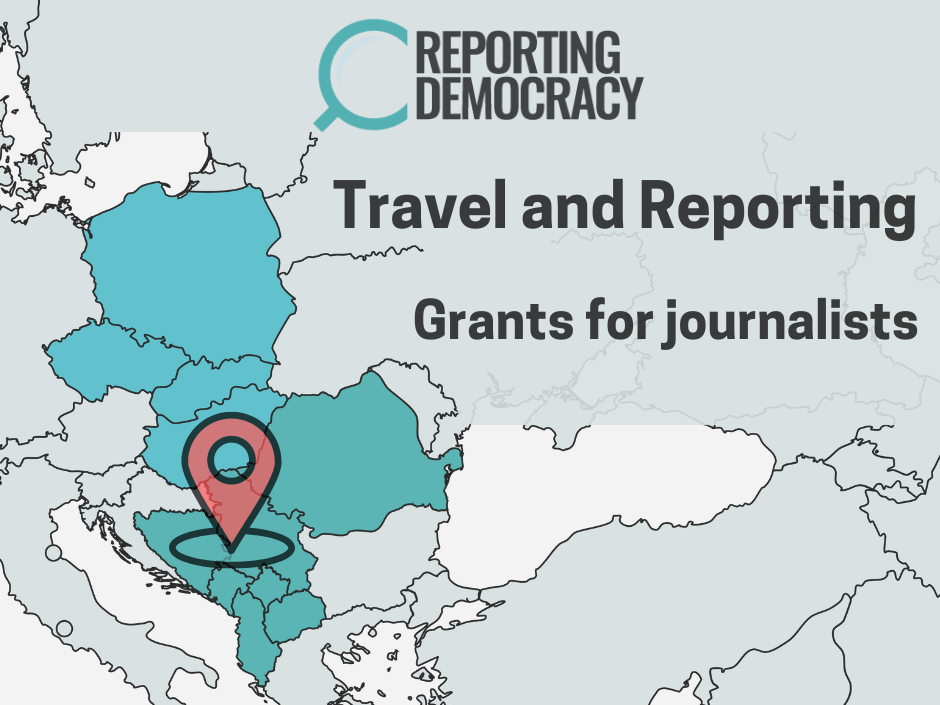
Delve into the Balkans: Apply Now for BIRN’s Travel & Reporting Grants

BIRN’s Reporting Democracy Travel & Reporting Programme invites journalists from the Visegrad region (Poland, Hungary, Czech Republic and Slovakia) to apply for grants covering fees and field research expenses. This unique opportunity allows journalists to delve into Balkan reporting, fostering deeper insights into this dynamic region.

In line with our commitment to nurturing journalistic collaboration and strengthening relations between the two regions, we are launching the call for applications for our Travel & Reporting Grants Programme. This exclusive opportunity provides financial assistance, regional expertise, and on-the-ground support in countries where BIRN network has offices (Albania, Bosnia and Herzegovina, Kosovo, North Macedonia, Romania, Serbia, and Montenegro).

Journalists interested in covering stories in the Balkans are encouraged to apply for this opportunity, which is designed to foster on-the-ground reporting and a deeper understanding of the region in all its complexities. Participation in the programme should result in the journalistic output being published in the local media in the applicant’s country, with the possibility of the content being republished also on BIRN’s Reporting Democracy platform and in local media in the Balkan region.

What We Support

We encourage the submission of projects for the production of relevant journalistic content. We support various forms, including analysis, investigations, features and interviews. Cross-border stories, serialized articles and multimedia content – including videos, photos, and/or radio/podcast productions – are encouraged.

Enhance your journalistic pursuits, extend your impact and contribute to a dynamic media environment. Apply now with an idea for a story that resonates across the borders.

Who Can Apply?

Journalists from Poland, Hungary, the Czech Republic and Slovakia can apply for this grant. We welcome applications from a diverse range of applicants, including:

  • Individual journalists, whether working within newsroom structures or as freelancers;
  • Collaborative teams of reporters, producers, photographers and video editors;
  • Media organizations eager to pursue international and cross-border stories.

In this grant cycle, we will award up to 10 grants to the most deserving applicants.

Grant Details

Successful applicants will receive a grant of €2,500 to undertake in-depth and impactful journalistic stories.

Important Dates:

Application Deadline: August 9, 2024

Grant Completion Deadline: February 28, 2025

Each applicant may submit only one application under this grant scheme.

Application Guidelines

To be considered for this grant, your application should include:

  • Engaging Topics: Clearly articulate the compelling topic(s) you intend to report on, showcasing their relevance for your target audience.
  • Balkan Expedition: Present your plans for visiting one or more countries within the Balkan region, supported by a tentative timeline that demonstrates your commitment to thorough research and reporting.
  • Publishing and Dissemination Plan: Outline a robust and strategic plan for sharing your journalistic output. Highlight the platforms and channels you will use to maximize the impact of your work.

Eligible Expenses

The grant covers a broad range of essential expenses, including:

  • Professional fees
  • Travel costs
  • Accommodation expenses
  • Subsistence allowances during fieldwork
  • Various production costs, such as translation services, fixers, photographers, etc.

How to Apply

Interested individuals and organizations should use the designated application form. Two types of application forms are available: one for individual journalists and teams, and another for media organizations.

Any additional documentation required can be submitted in an online format.

The Application Form must be completed in English.

Ensure all information is clear and comprehensive, as requests for clarification will only be made when the information provided is insufficient for objective assessment.

Submit your completed application to: [email protected] by 23:59 CET on August 9, 2024.

Application Forms:

Application for individual journalists and teams

Application for media organizations

For any further inquiries or assistance, please do not hesitate to contact us. We are here to support you throughout the application process.

Evaluation and Selection Process

Step I: Technical Evaluation

BIRN staff will conduct a thorough technical evaluation to ensure applicants have adhered to the application procedures and submitted all required documents.

Step II: Editorial Board Evaluation

The editorial board will then assess the applications based on the quality of the proposed idea, feasibility of the plan, and the potential to effectively reach the intended audience.

Step III: Notification of Applicants

All applicants will be promptly notified of the outcomes. Successful applicants will be notified by August 25, 2024.

We appreciate your patience during the evaluation period and assure you that we will provide timely updates about your application. We value your dedication to journalistic excellence and eagerly anticipate the opportunity to work with the selected individuals and organizations.

Telecom Companies in Albania Ranked on Freedom of Expression and Privacy – Report

In collaboration with RDR, BIRN produced a follow-up report of its initial findings about Albanian telecommunications companies after a merger.

In its latest report, BIRN analysed the practices of Vodafone Albania and ONE Albania in several key areas linked to freedom of expression and privacy.

Since early 2023, Albania has had two operators in the telecommunications market, Vodafone Albania and One Albania. One Albania was created by the merger of ALBtelecom, the historical operator of fixed phone lines, which also operated a mobile operator named Eagle, and One Telecommunications, a company founded in 1995 as Albania Mobile Communication, a state-owned mobile operator.

The merger follows a consolidating trend in the country’s telecommunication market that has continued since 2017, when Plus Communication, the fourth mobile operator in the market, decided to get out.

The market is almost evenly divided, with Vodafone having 51 per cent of active users and One Albania, 49 per cent. Financial data from 2023 were not yet available by the time of publication but data from 2022 showed that Vodafone had revenues of some 16 billion leks while One Communications’ revenues were 9.6 billion. Data from ALBtelecom has not been published.

Overall, Albanians spent 38.1 billion leks on communication services in 2022.

Research found that Vodafone Albania performs satisfactorily in terms of access to its Terms of Service (ToS) and notifying users about changes to the ToS, but room for improvement remains. Access to Vodafone Albania’s ToS is relatively good; the ToS for both prepaid and postpaid mobile services are easily accessible and presented in a clear and understandable manner. Similarly, ONE Albania provides convenient access to its ToS.

However, ONE Albania’s Privacy Policy lacks a clear description of what data the company collects and how it handles it.

Both companies’ broad statements about collaborating with authorities, without distinguishing between administrative and judicial bodies, are a matter of concern.

Vodafone’s and One Albania’s ToS lack summaries and visuals for better legibility. Vodafone notifies users of ToS changes via SMS and media but doesn’t maintain a public archive. Both companies’ ToS enforce overbroad content restrictions and lack transparency on enforcement. They don’t disclose data on content restrictions, government demands or private requests. Privacy policies are available but vague on data handling and third-party information collection.

Recommendations outlined by the report include improving transparency, archiving ToS changes, and clearer privacy policies. The research showed that both companies should consider reporting periodically on the number of cases when public authorities or private parties seek to block access to certain information and why. Companies should also explain to their customers in a more detailed way what access the authorities have to their communications and data, based on what laws, and for what purposes.

Albania has some 611,000 customers with broadband internet access. One Albania is the largest operator with some 135,000 customers, followed by Vodafone with 128,000. Other smaller operators hold 56 per cent of the market.

In 2006, Albanian telecom companies were embroiled in a scandal involving Bosnian businessman Damir Fazlic, who allegedly demanded a $1 million investment for Albania’s Democratic Party to secure a telcos contract. Fazlic and his US partners planned to offer VoIP services through ALBtelecom. In 2017 and 2020, Albanian telcos faced investigations for price manipulation and for creating an oligopoly by raising tariffs and reducing services. In 2020, the Hungarian company 4iG bought significant shares in ALBtelecom and One Telecommunications, raising concerns about market duopolisation.