As part of a broader series of public discussions on transitional justice and missing persons in Kosovo, BIRN Kosovo organised a documentary screening and a town hall debate on May 12 in the Municipality of South Mitrovica.
This debate brought together institutional representatives, journalists, family members and citizens to discuss ongoing challenges to the search for missing persons and the role of transitional justice within the region of South Mitrovica and North Mitrovica.
The debate was preceded by the screening of a documentary produced by BIRN Kosovo that addresses the stories of persons who disappeared during the Kosovo war through testimonies from family members still searching for answers about the fate of their loved ones from both Albanian and Serbian communities.
Produced as part of the EU-funded project “Unveiling the Truth: Combating Monoethnic Journalism and Advocating for Missing Persons in Kosovo,” the documentary highlighted the lasting impact of war crimes on families and communities across Kosovo.
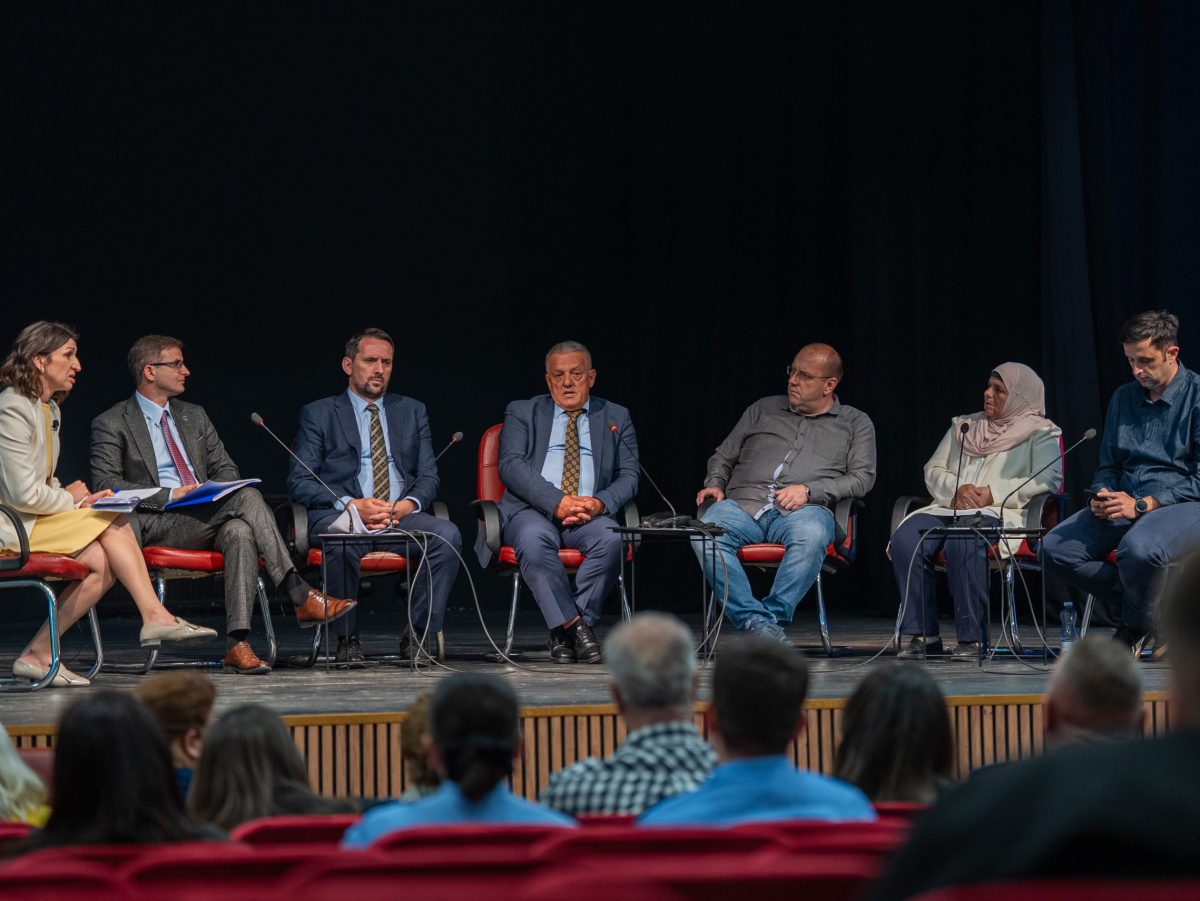
The discussion that followed was moderated by BIRN Kosovo Executive Director and journalist Jeta Xharra and included representatives from Kosovo institutions and civil society organisations involved in the process.
Panelists included Ilir Morina, from the Special Prosecution, Kushtrim Gara, from the Government Commission on Missing Persons, Gjyla Haziri, from the Association “Voice of the Parents”, Dushan Radaković, from the Advocacy Centre for Democratic Culture (ACDC), Arsim Gerxhaliu, from the Institute of Forensic Medicine, and Kreshnik Gashi, from KALLXO.com.
The search for missing persons from the Kosovo war remains an ongoing and deeply emotional process, particularly in the Mitrovica region, which institutions continue to treat as a priority area.
Prosecutor Ilir Morina revealed that 32 excavations were carried out during the past year alone, including six in the Mitrovica area, based on information received from the Kosovo Police, stressing that every piece of information shared by citizens could help uncover the fate of the missing. Around 100 persons from Mitrovica are still listed as missing.
Family advocate Gjyla Haziri underlined that relatives continue to live in constant uncertainty and waiting, while Dushan Radaković criticized the politicization of the issue, arguing that the pain of families is too often overlooked.
There were 54 participants attending the event, including 29 women. Among them were representatives of local authorities, municipal assembly members, civil society activists, media professionals, family members of missing persons in Mitrovica, citizens and students.
This event was organised in the framework of the “Unveiling the Truth: Combating Monoethnic Journalism and Advocating for Missing Persons in Kosovo” project, funded by the European Union.